
Whole-system duct and dryer vent check with before-and-after photos - you see exactly what came out of your vents
That "$99 whole-house special" is a bait ad - the real number appears once they are in your hallway, or the "clean" is a shop-vac at the register. We photograph the inside of your ducts before and after instead.
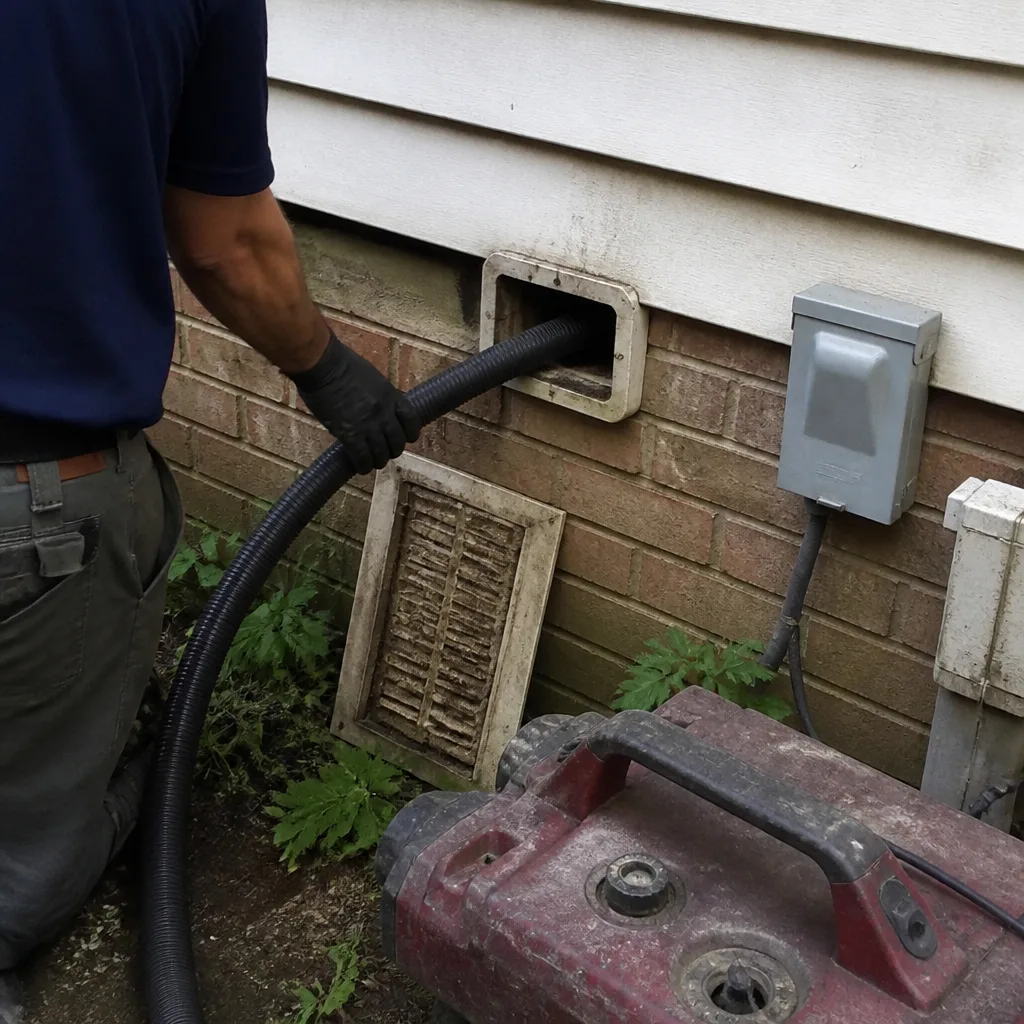 Before
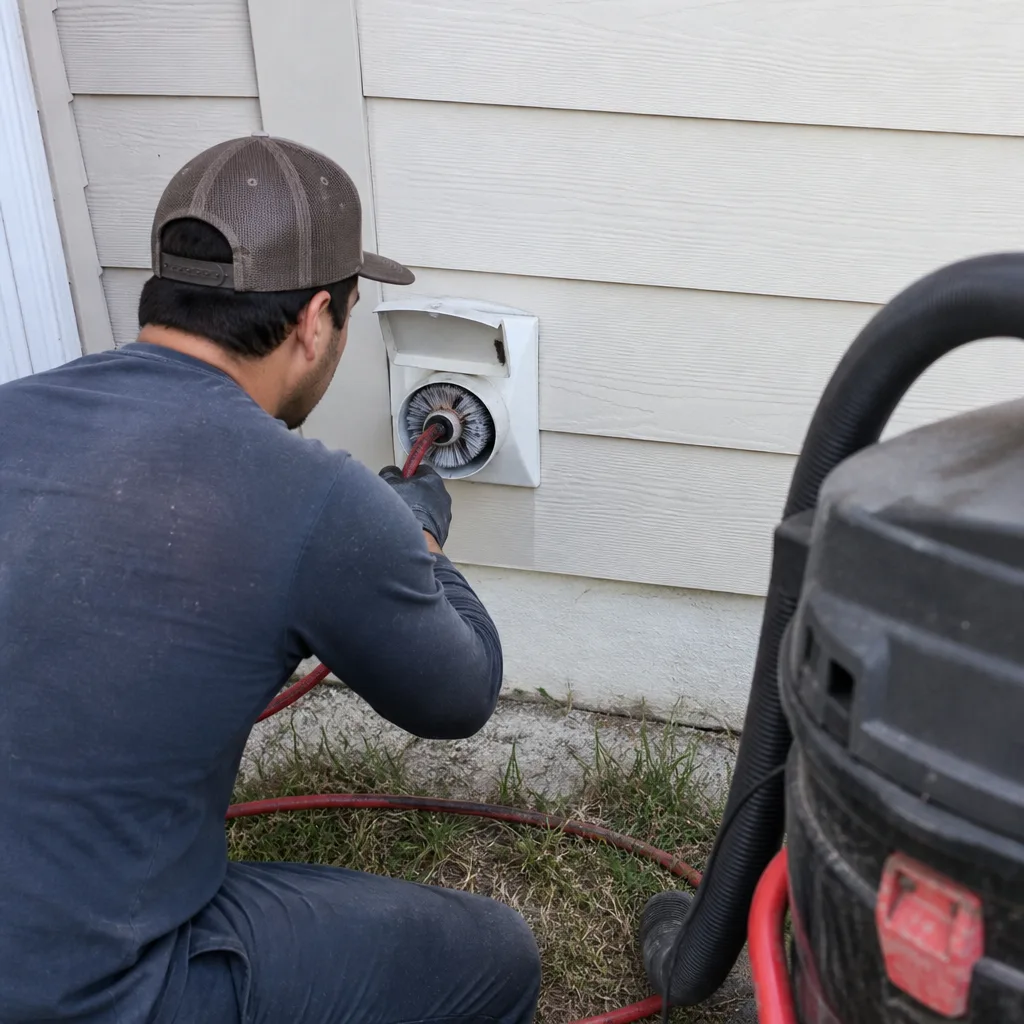 After
After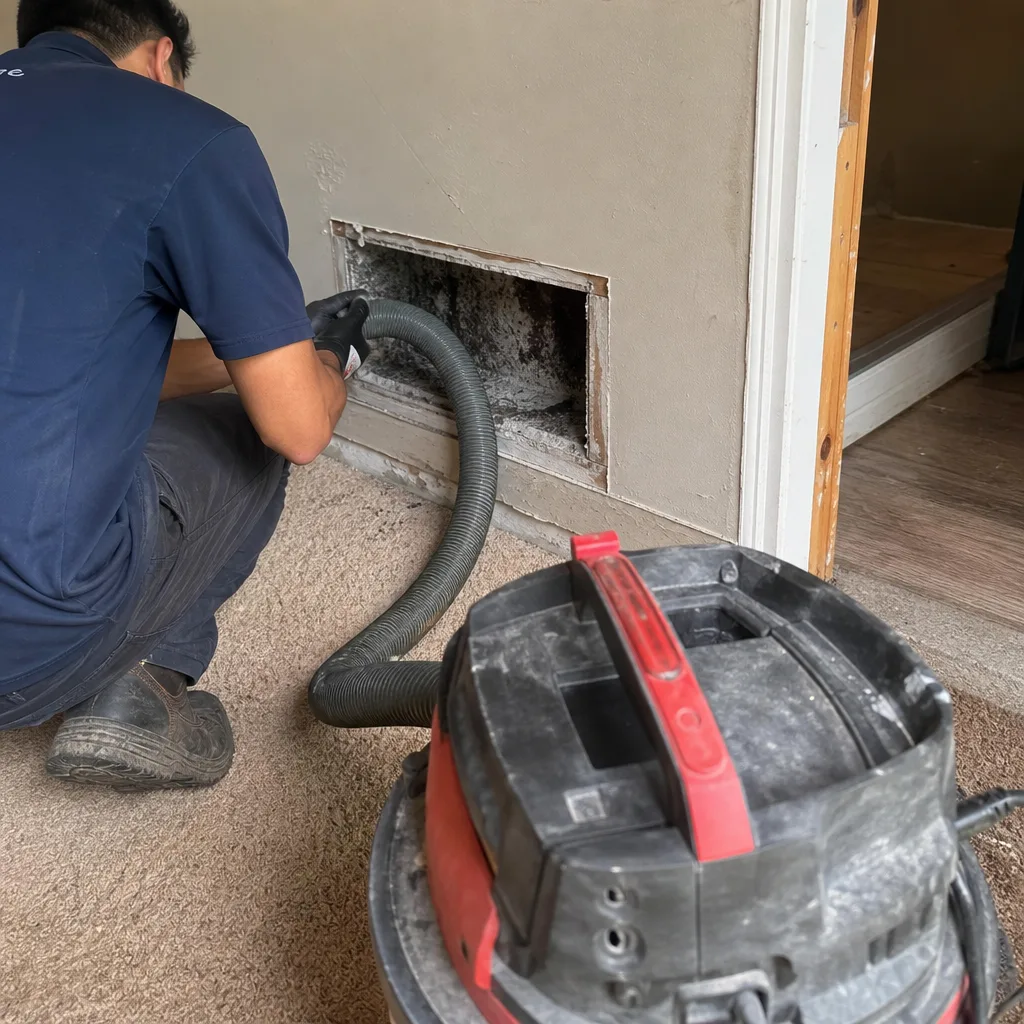 Before
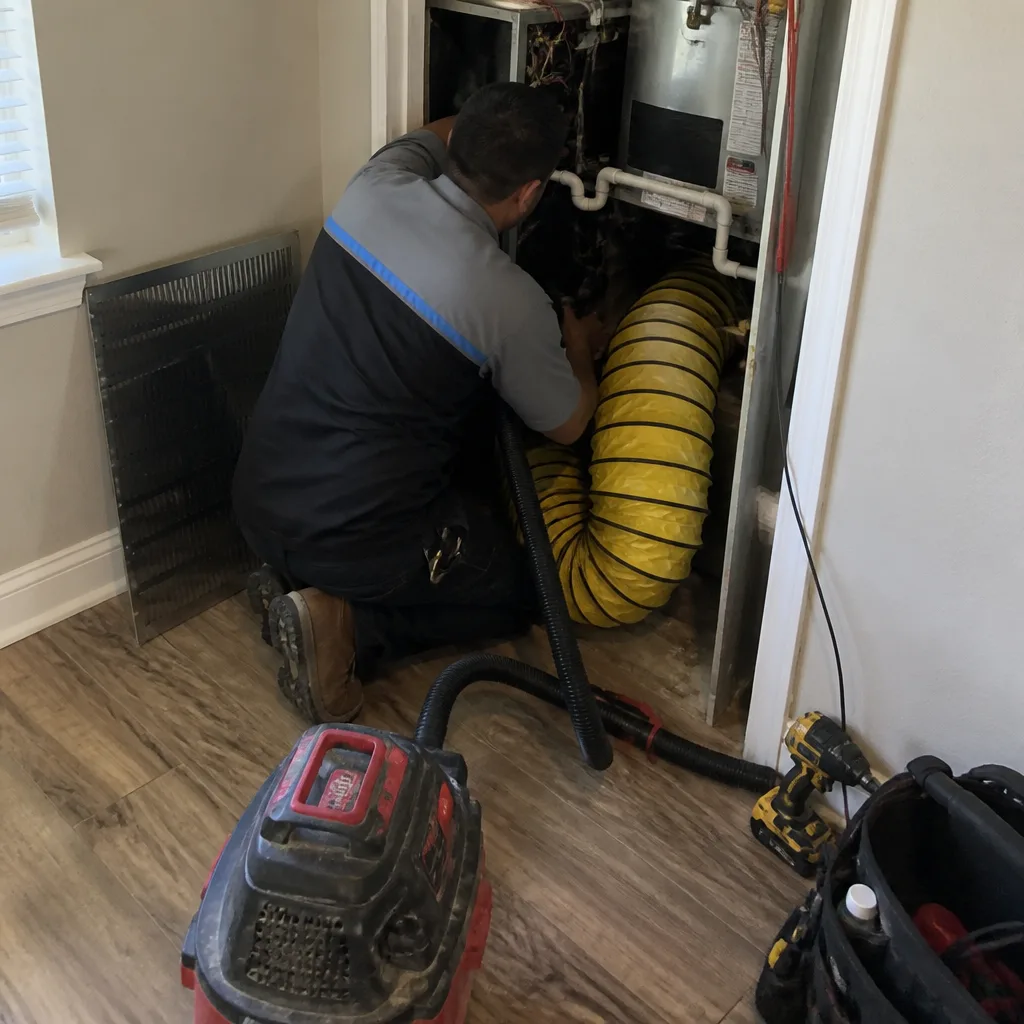 After
After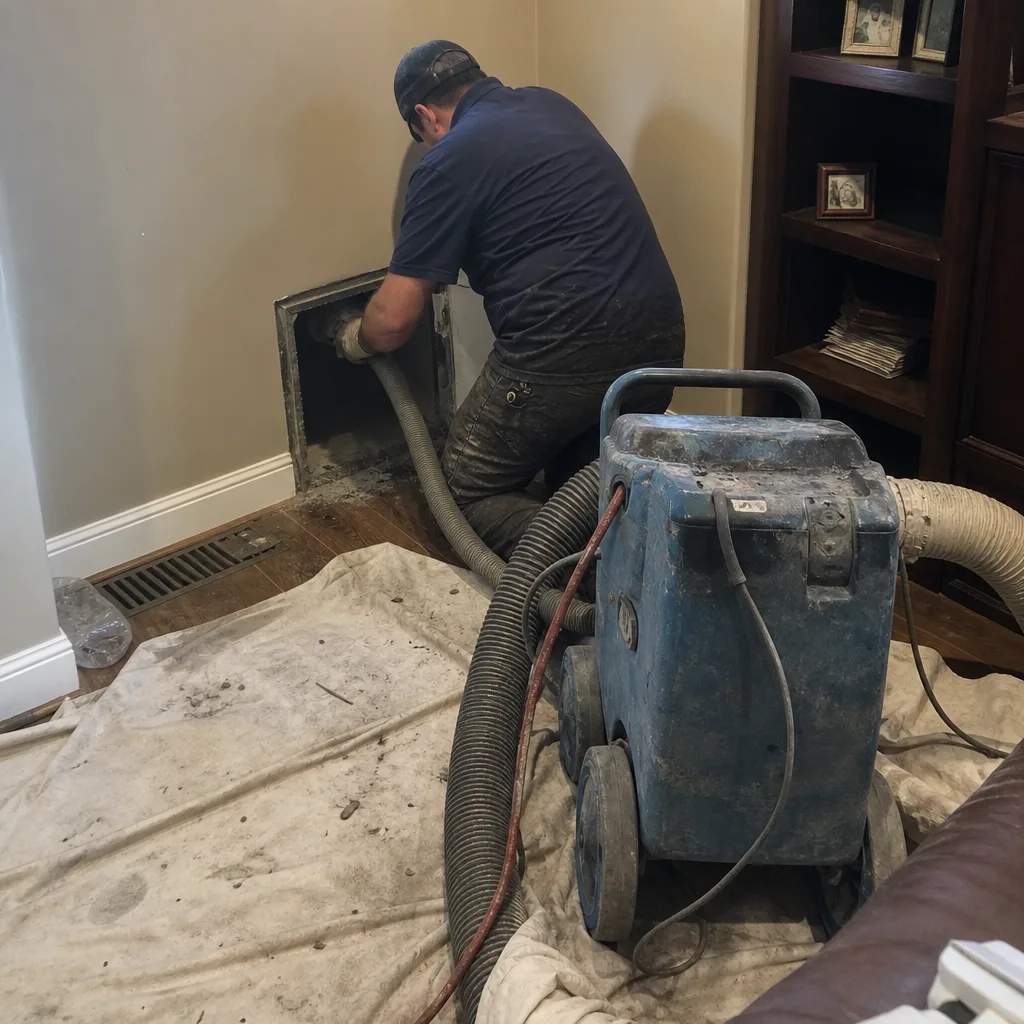 Before
 After
AfterReturn Duct Cleaning in Spring, TX
Return duct cleaning focuses on the side of your HVAC system that pulls air back to the unit – the return side – rather than the supply registers that push conditioned air into rooms. In Spring, TX, return ducts are the ducts that collect dusty, humid air from your living space and route it back through the air handler, which means whatever is floating around in your home gets drawn through those ducts every time the system runs. Cleaning them is not optional maintenance; it is the step most duct cleaning companies skip or rush, and the consequences show up on your filter, your coil, and eventually your energy bill.
If you want the full picture of what a proper duct cleaning includes – supply, return, and everything in between – our Air Duct Cleaning in Spring page covers the complete service scope. This page focuses on the return side specifically, because it deserves its own explanation.
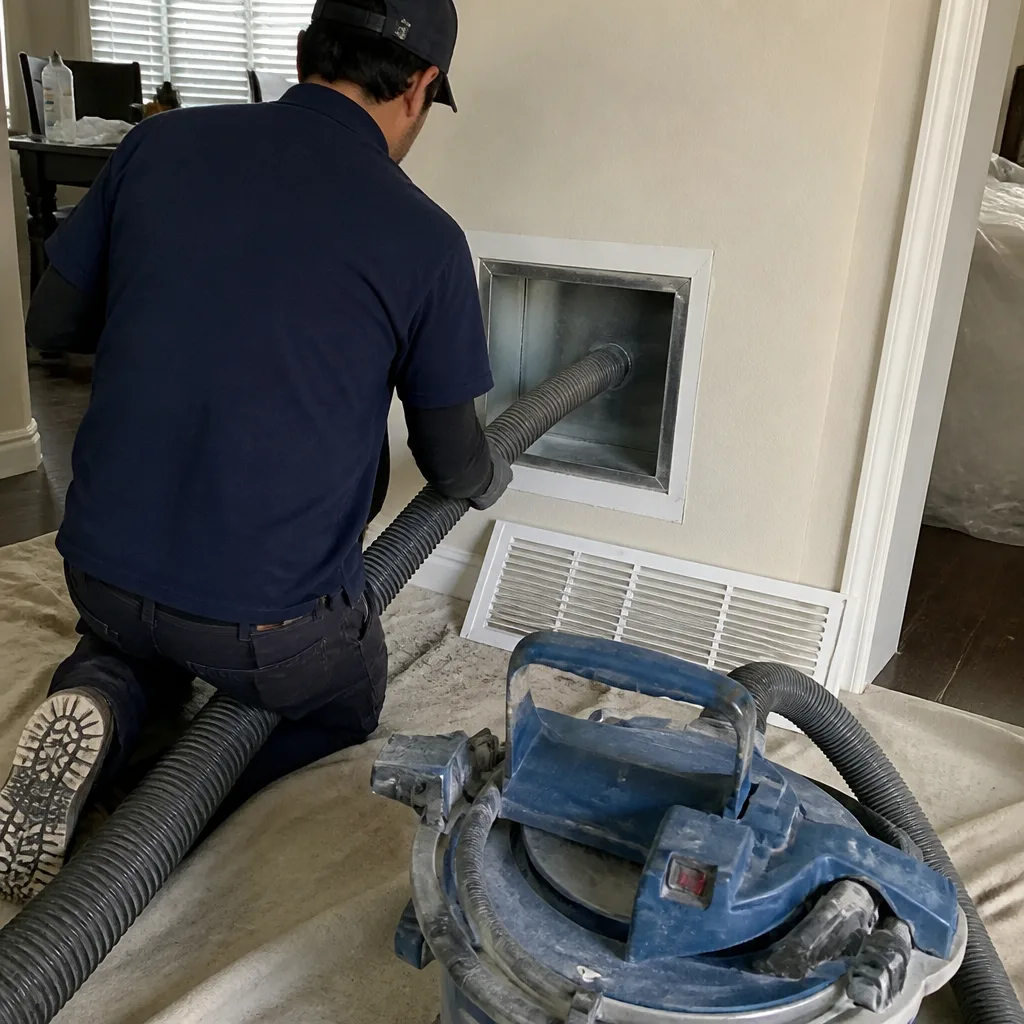
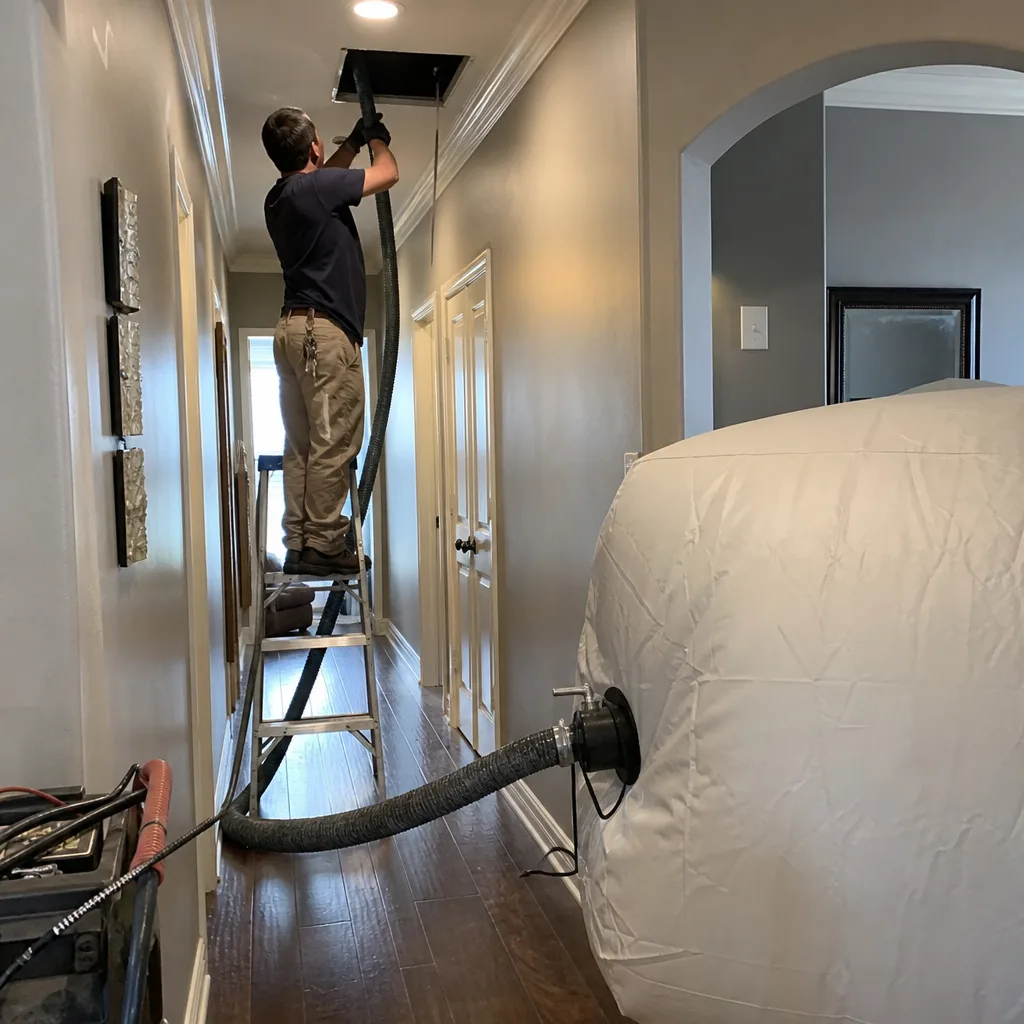
Return duct cleaning at CleanRun means every return run is photographed before we touch it, cleaned with professional-grade Nikro negative-pressure extraction equipment, and photographed again when we’re done. You receive that photo record as a standard deliverable, not as an upsell. The written price is on paper before a single panel comes off – Haven Standard Clause 1, on every job, no exceptions. Call (346) 423-3631 and a live person will pick up.
What the Return Side Actually Does – and Why Spring’s Climate Makes It Worse
Most homeowners picture ductwork as one system, but there are two distinct networks running through the house. Supply Duct Cleaning handles the ducts that carry conditioned air out, while return ducts pull unconditioned room air back to the air handler so it can be filtered, heated or cooled, and recirculated.
The return plenum – the large collection chamber that feeds the air handler – sits at the center of this. Every return run in the house drains into it. Whatever dust, humidity, pet dander, or debris those runs carry gets deposited at that plenum and, if the filter is undersized or poorly seated, gets pulled straight into the air handler coil.
Spring’s climate adds pressure to this system that homeowners in drier climates don’t deal with. The Houston metro sits in a humid subtropical zone. From late March through October, outdoor humidity in Spring regularly runs between 70 and 85 percent. When the system cycles – especially during the shoulder months when you’re opening windows during cooler evenings – humid air enters the return runs and stays there. That moisture feeds mold. It also causes debris to clump and adhere to duct walls rather than floating freely, which means a standard shop-vac approach doesn’t remove it. It requires the kind of agitation and sustained negative pressure that professional equipment like Nikro portable extractors are designed to deliver.
In neighborhoods like Gleannloch Farms, Canyon Lakes, and Breckenridge Forest – where most homes were built between 2002 and 2015 – we consistently photograph debris layers at the first return elbow that are 2 to 4 inches deep. That debris didn’t accumulate in one season. But it does need to be removed in one visit, done correctly, or it redistributes.
When You Need Return Duct Cleaning
- Your filter loads up faster than the manufacturer’s replacement schedule. If a MERV-8 filter that should last 60 to 90 days is visibly gray within three to four weeks, the return system is pulling more particulate than your filtration can handle. The duct walls are releasing debris back into the airstream rather than containing it.
- A musty or stale smell follows the air conditioning cycle. In Spring, TX, this almost always points to moisture accumulation in return runs – either from humid outdoor air pulled through unsealed return boots, or from condensation inside duct runs that run through unconditioned attic space. The camera shows it; the nose confirms it.
- You’re seeing uneven airflow or reduced cooling performance. Partial blockages in return runs create pressure imbalances across the system. The air handler can’t pull the volume it’s rated for, and rooms at the far end of the supply network feel the difference first.
- Your home was built before 2005 and has never had a documented duct cleaning. Many Spring homes in older sections near FM 2920 and Holzwarth Road were built with flex duct returns that are now past the 20-year mark. Flex duct accumulates debris differently than rigid metal – the corrugated interior creates drag that traps particulate. If there’s no record of a cleaning, there’s probably a reason to look.
- You recently finished a renovation. Drywall dust, insulation fibers, and construction debris reliably enter return runs during remodels, especially when the system was left running to manage temperature on the job. Before-and-after photos from these jobs are some of the most dramatic in our records.
- A household member has developed or worsened respiratory symptoms at home. We won’t diagnose what’s in your air – that’s not our role. But if symptoms improve when a family member leaves the house and return when they come back, the return ductwork is a logical first place to look with a camera.
BeforeAfterOur Return Duct Cleaning Process
-
Written Scope and Price Before Work Begins
A technician walks the home, counts every return register, identifies the return plenum location, and notes any visible access limitations – knee walls, finished ceilings, tight attic hatches. A written price is produced on site, before any equipment comes off the truck. This is Haven Standard Clause 1. There is no range on the invoice; there is a number. You approve it or you don’t. No work starts without your signature.
-
Pre-Cleaning Camera Inspection and Photo Record
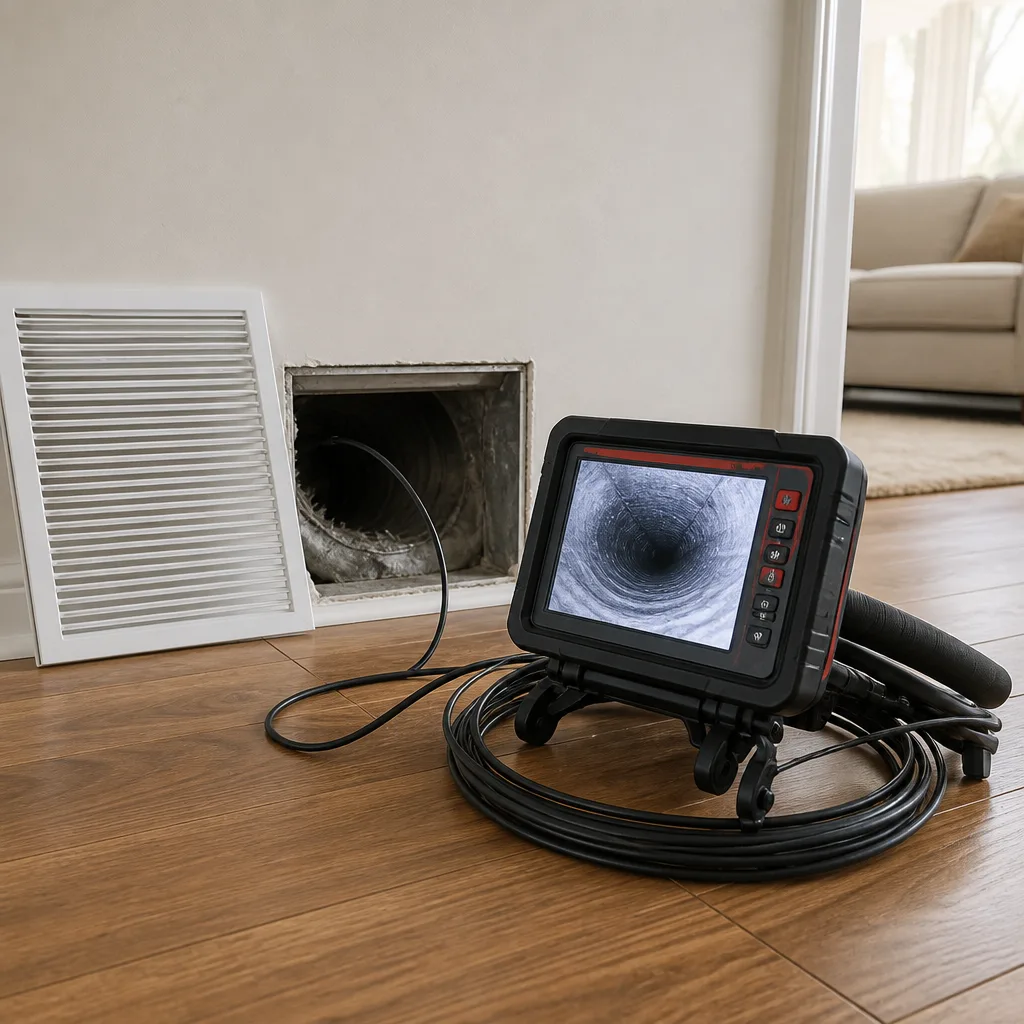
Before cleaning begins, a Video Inspection camera runs each return duct run from the register to the plenum. What the camera finds is documented – the debris depth at the first elbow, any visible moisture damage, any collapsed sections of flex duct, any evidence of pest activity. These images become Part One of your photo record, and they’re what the technician shows you before saying a word about what the job involves. Evidence first.
-
Return Register Removal and Negative-Pressure Setup
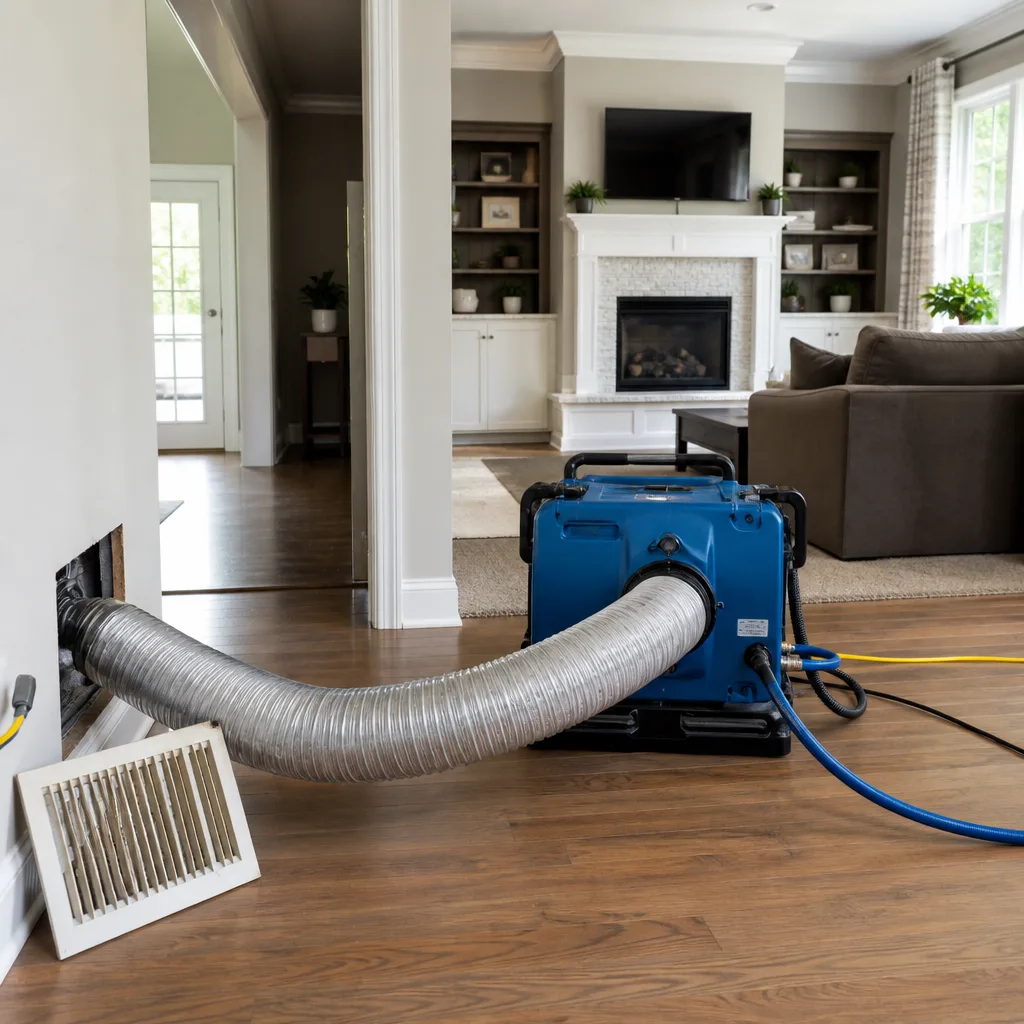
Return registers are removed individually. A negative-pressure extraction unit – we use Nikro equipment on return-side jobs in Spring because the sustained suction handles humid, clumped debris more reliably than lighter portables – is connected at or near the plenum. Negative pressure means the system pulls air toward the extraction point, so dislodged debris moves toward the machine rather than into the room. Registers not being actively cleaned are sealed to maintain the pressure differential in the run being worked.
-
Mechanical Agitation and Debris Extraction
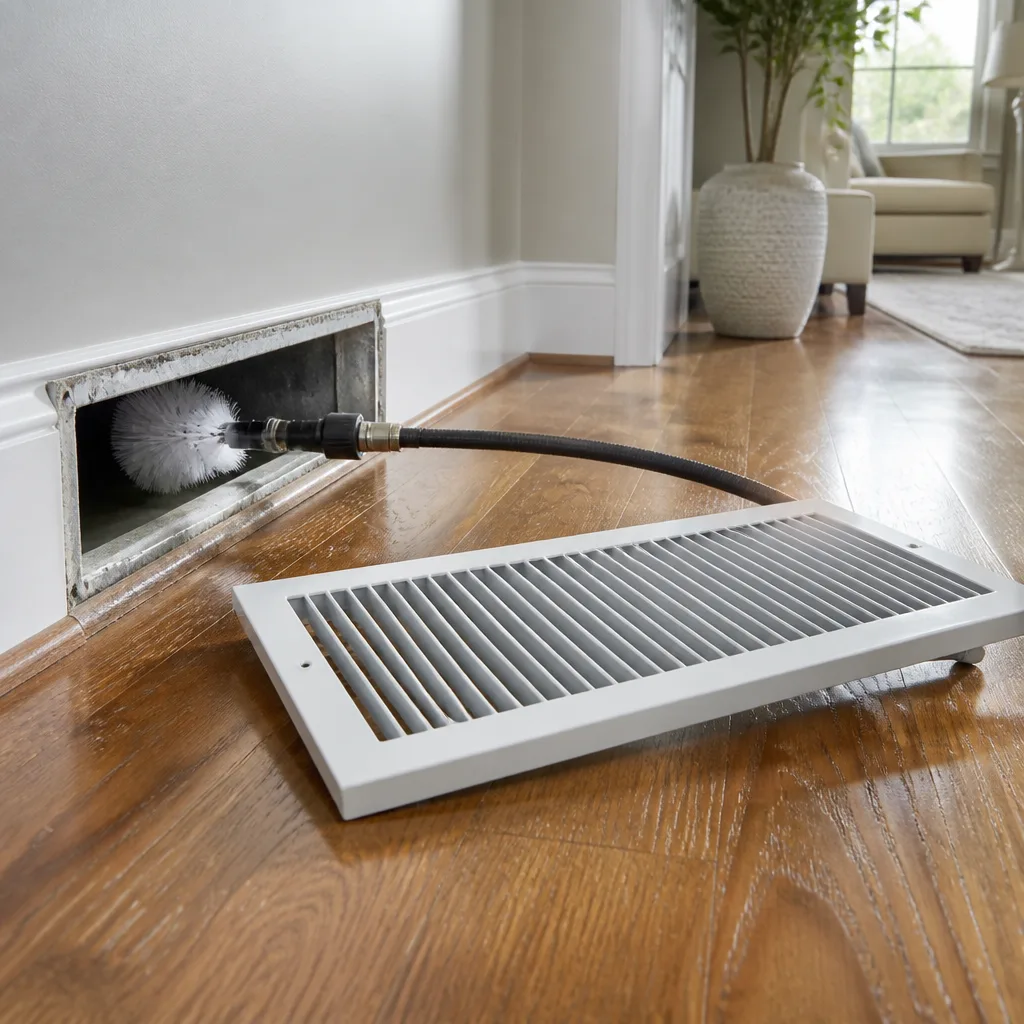
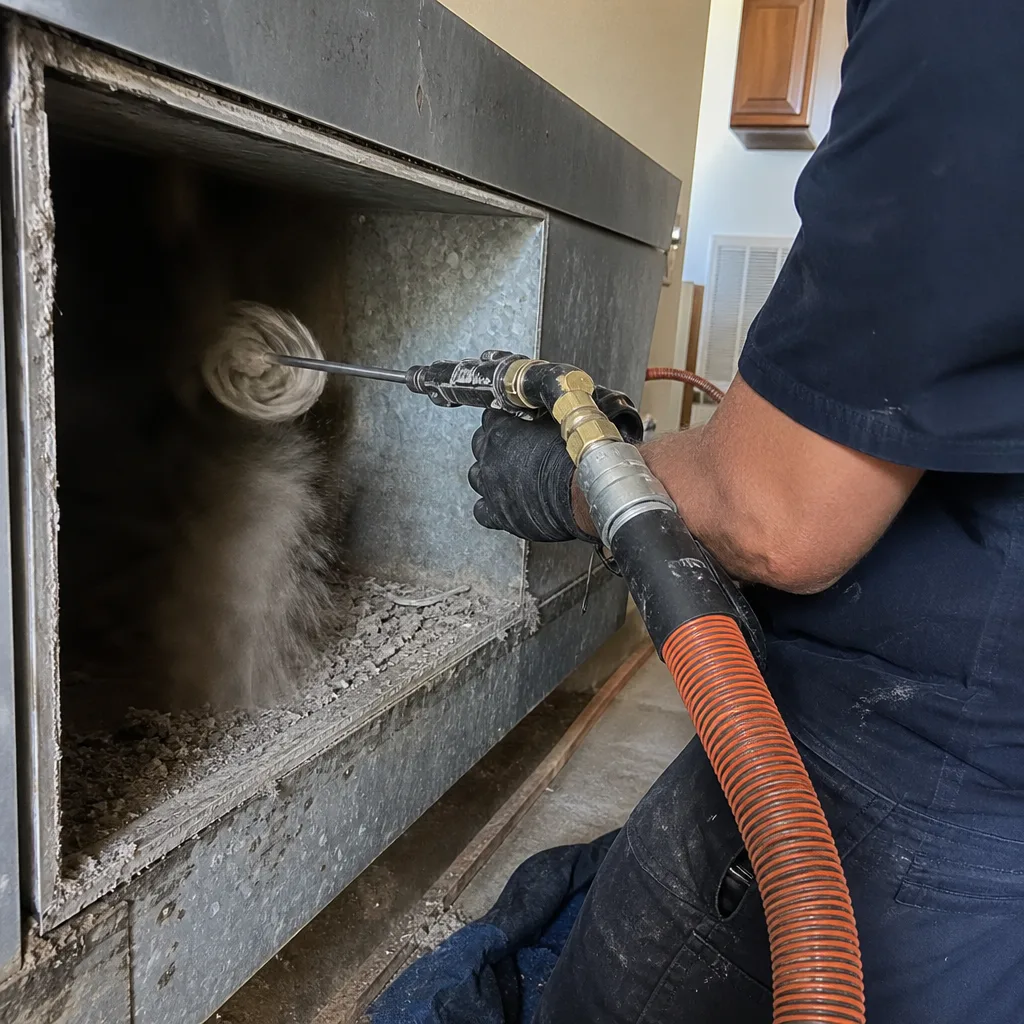
Each return run is agitated with flexible brushes from the register opening toward the plenum. The negative-pressure unit extracts the dislodged material as it moves. We work each run until the camera shows clean duct walls – not until the brush comes back relatively clean, which is a different and lower standard. In Spring’s humidity conditions, matted debris at bends sometimes requires two passes.
-
Return Plenum Cleaning
The plenum itself – the collection chamber where all return runs terminate before reaching the air handler – is vacuumed and wiped. This is the step most basic duct cleaning visits skip. Debris that settles in the plenum goes directly onto the evaporator coil surface when the blower runs, reducing heat transfer efficiency and eventually causing coil icing. It gets cleaned on every CleanRun return-side job.
-
Post-Cleaning Photo Record and Job Sign-Off
The camera reruns each duct and the plenum. Post-cleaning images are matched to pre-cleaning images by run position and delivered to you as a complete photo record – before and after, every run, in a format you can keep. The technician reviews the record with you before leaving. The 365-Day Done Right Promise is written on your job paperwork: if the work is not right, we make it right – no manager approval required.
Return Duct Cleaning Pricing in Spring, TX
Return duct cleaning in Spring, TX typically runs between $180 and $420 as a standalone service, depending on the number of return runs, duct material, access conditions, and the degree of debris accumulation found at inspection. If return cleaning is added to a full supply-and-return Air Duct Cleaning in Spring visit, the combined job reflects a single written price for the complete scope – not a base price with returns added as a line-item surprise.
| Factor | Typical Impact on Price |
|---|---|
| Number of return registers (most Spring homes have 4-12) | Core variable – more runs, more time |
| Flex duct vs. rigid metal return runs | Flex duct often requires additional agitation passes; adds $20-$60 |
| Attic-run returns with poor access | Access difficulty adds time; reflected in written scope |
| Heavy debris accumulation or moisture damage | Identified at inspection and priced before work starts |
| Combined with full duct cleaning visit | Single written price for complete scope |
The written price you receive at inspection is the price on the invoice. Surprises don’t appear after panels come off – Haven Standard Clause 1 makes that a written commitment, not a customer service pledge. If you have a written estimate from another company, bring it. CleanRun puts its own number next to it in writing, at no cost – that’s the Free Second Opinion, and it’s available on any written estimate.
Call (346) 423-3631 to schedule an on-site inspection and written quote. The estimate is free, and the price you’re given before work starts is the price you pay.
What’s Actually Inside Spring Return Ducts: What the Camera Finds
This isn’t a list of alarming possibilities – it’s a summary of what Tomas Reyes and the CleanRun crew actually photograph in Spring homes, regularly, across neighborhoods and construction vintages.
In homes built in the late 1990s and early 2000s – a large share of Spring’s housing stock in areas like Windrose and Augusta Pines – the return boots (the metal boxes that connect the register to the duct run) were often installed with gaps at the drywall or flooring connection. Those gaps pull unconditioned air from inside wall cavities rather than from the room. Wall-cavity air contains insulation fibers, rodent material, and in Spring’s older construction, legacy fiberglass from original blow-in attic insulation. The camera shows it as a distinct material – lighter-colored and fibrous – layered on top of the standard dust and dander accumulation. Both get removed. The boot gap gets flagged in the job record as a repair item if the homeowner wants it addressed separately.
In newer construction – particularly homes built after 2010 in Breckenridge Forest, Harmony, and Gleannloch Farms – return ductwork is typically Mylar-lined flex duct. The Mylar lining is easier to clean than older ductboard, but the corrugated exterior creates internal turbulence that collects pet hair and fine dust at every spiral ridge. Homes with dogs show this pattern clearly within three to four years of installation. The Nikro extraction process handles it, but it requires deliberate agitation rather than a single-pass vacuum.
FAQs – Return Duct Cleaning in Spring, TX
How is return duct cleaning different from regular duct cleaning?
Return duct cleaning specifically addresses the ducts that pull air back to the air handler, rather than the supply ducts that push conditioned air into rooms. Many duct cleaning visits focus primarily on supply runs because they’re more accessible and more visually obvious at the register; the return side – particularly the return plenum – is frequently under-cleaned or skipped. At CleanRun, return runs and the plenum are part of our Air Duct Cleaning services, and if you’re booking return cleaning as a standalone service, it covers every return run from register to plenum with the same camera-before-and-after process. Call (346) 423-3631 if you want to confirm exactly what your current ductwork setup includes before booking.
How much does return duct cleaning cost in Spring, TX?
How Much Does Air Duct Cleaning Cost? (2026 Price Guide) - Spring, TX: return duct cleaning typically runs between $180 and $420 as a standalone service, depending on the number of return runs, duct material, and access conditions. The exact written price is produced at inspection before any work starts – there is no range on your invoice, only the number you approved. Spring homes vary considerably in how return systems were built, which is why the written price comes after a technician walks the house rather than from a price list on a website. Call (346) 423-3631 to schedule a free on-site estimate.
Can dirty return ducts affect my HVAC system’s performance?
Yes, and in Spring’s climate the effect is more pronounced than in drier regions. Debris accumulation in return runs restricts the volume of air the air handler can pull, which reduces system efficiency and creates pressure imbalances that show up as uneven cooling room to room. Debris that reaches the return plenum settles on the evaporator coil surface, reducing heat transfer and – in humid conditions – contributing to coil icing. Neither outcome is a catastrophic failure on its own, but both increase operating costs and shorten equipment life. A camera inspection shows the current state of the return system clearly; the photos make the decision straightforward.
How often should return ducts be cleaned in Spring, TX?
For most Spring homes, a documented return duct cleaning every 4 to 6 years is a reasonable interval – shorter if the household includes pets, a smoker, recent construction work, or a family member with respiratory sensitivities. Spring’s humidity extends this slightly compared to arid climates because moisture in return runs accelerates debris adhesion and mold potential. The more useful metric than a calendar interval is what the camera shows at inspection: if the before photos show debris accumulation past the first elbow, it’s time regardless of when the last cleaning occurred. We’ve cleaned Spring homes that were professionally serviced two years prior and found legitimate accumulation, and we’ve seen homes at the eight-year mark that were in reasonable condition. The camera tells the story.
The 365-Day Done Right Promise – What It Actually Means
The 365-Day Done Right Promise is not a marketing line. It is a written commitment on every CleanRun job record: if the return duct cleaning is not done right, we come back and make it right. No time limit of 30 or 90 days. No manager approval. No fine print about “normal debris re-accumulation” as an excuse to walk away. If a return run we cleaned is not clean, we clean it again.
The photo record is what makes this promise enforceable. Because every return run is documented before and after the visit, there is no ambiguity about what was there and what was removed. If a future inspection shows a condition that the post-cleaning photos show should not exist, the record speaks for itself. Tomas Reyes built CleanRun on the position that documentation protects both the customer and the company – and after more than a decade and 52,000 homes served across the Houston metro, the photo record is still a standard deliverable on every single visit.
That standard is maintained under the H.A.V.E.N. Standard – the operational framework that governs every CleanRun job, from background-checked technicians identified by name before arrival to the written price that exists before any equipment comes off the truck. It is not a certification from a trade association. It is an internal standard that CleanRun holds itself to, written down and applied job by job.
Why Spring Homeowners Choose CleanRun for Return Duct Cleaning
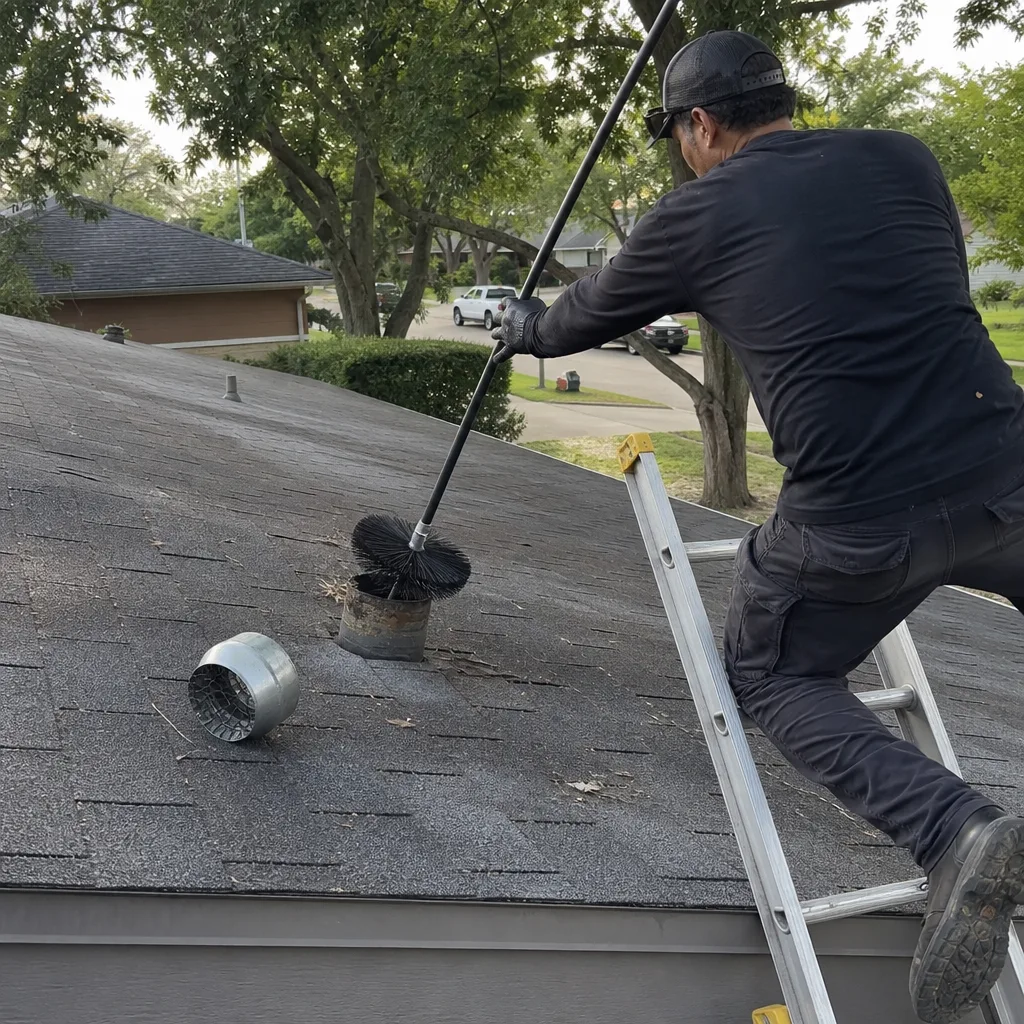
The short answer: CleanRun shows you the inside of your ducts before and after the work, gives you a written price before anyone touches anything, and backs the job for 365 days in writing. That’s the whole offer. It’s described in more detail on our home page if you want the full picture of how the business operates.
The slightly longer answer is that Spring’s HVAC market has no shortage of $79 duct cleaning coupons. Those visits typically involve one technician, a shop-vac-class machine, and registers blown with compressed air. The return plenum, if it’s accessed at all, gets a quick vacuum pass. There are no before photos because before photos would make the after photos look identical. CleanRun’s approach is the opposite – the documentation is the product, and the cleaning is what makes the documentation honest.
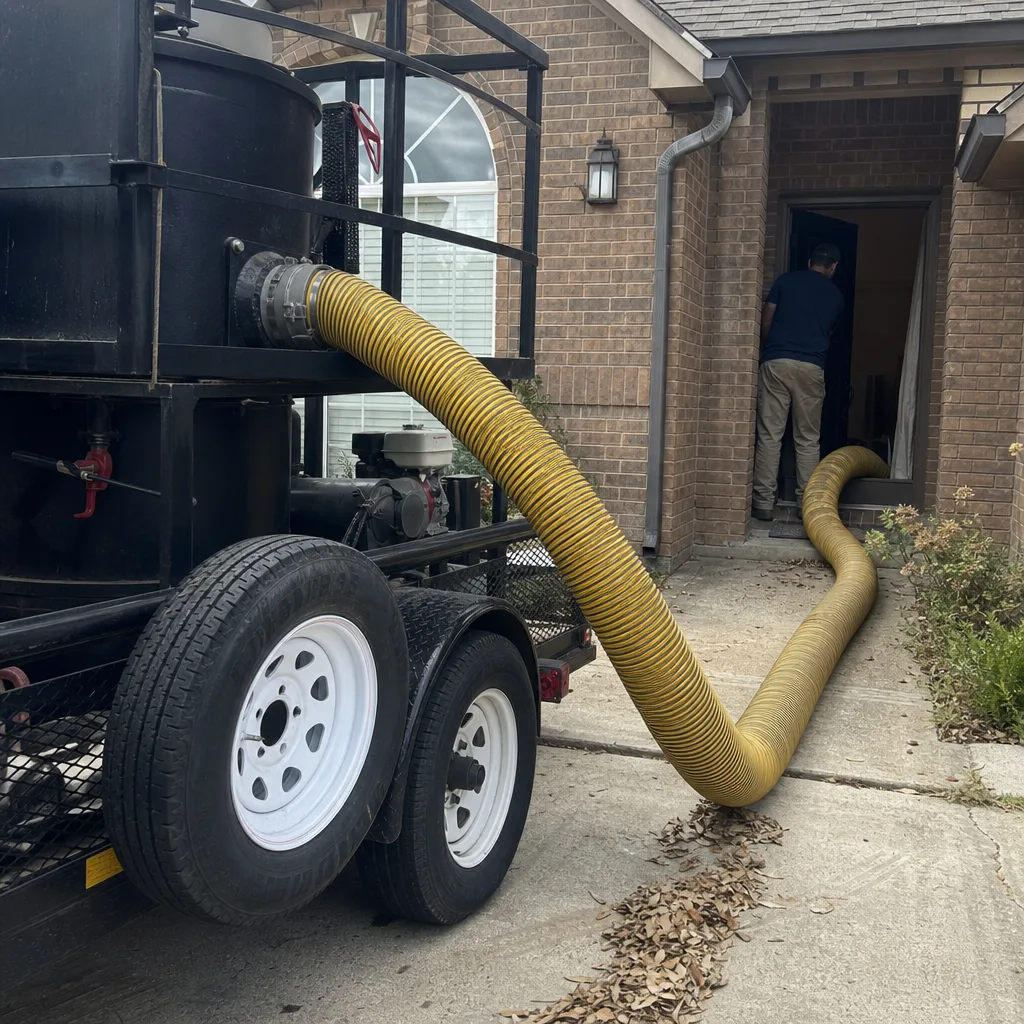
Professional-grade Nikro extraction equipment is not subtle. The difference between a sustained negative-pressure system rated for commercial duct cleaning and a portable shop-vac is measurable in the debris volume extracted and visible in the post-cleaning camera run. Spring homeowners who have had both done can see the difference in their own photo records.
Schedule Your Return Duct Cleaning in Spring, TX
If you want to know what’s inside your return ducts – not an estimate, not a range of possibilities, but an actual camera image of the first elbow and the plenum – call (346) 423-3631. A live person answers around the clock. Tomas Reyes and the CleanRun crew work throughout Spring, TX, including Gleannloch Farms, Canyon Lakes, Breckenridge Forest, Windrose, Augusta Pines, and Harmony.
The inspection is free. The written price comes before any work starts. The photo record is included when the job is done. And the 365-Day Done Right Promise is on the paperwork before the truck leaves your driveway.
Written by Tomas Reyes, Owner at CleanRun Air Duct Cleaning Spring, serving Spring since 2013.