
Last updated September 23, 2026
Whole-system duct and dryer vent check with before-and-after photos - you see exactly what came out of your vents
That "$99 whole-house special" is a bait ad - the real number appears once they are in your hallway, or the "clean" is a shop-vac at the register. We photograph the inside of your ducts before and after instead.
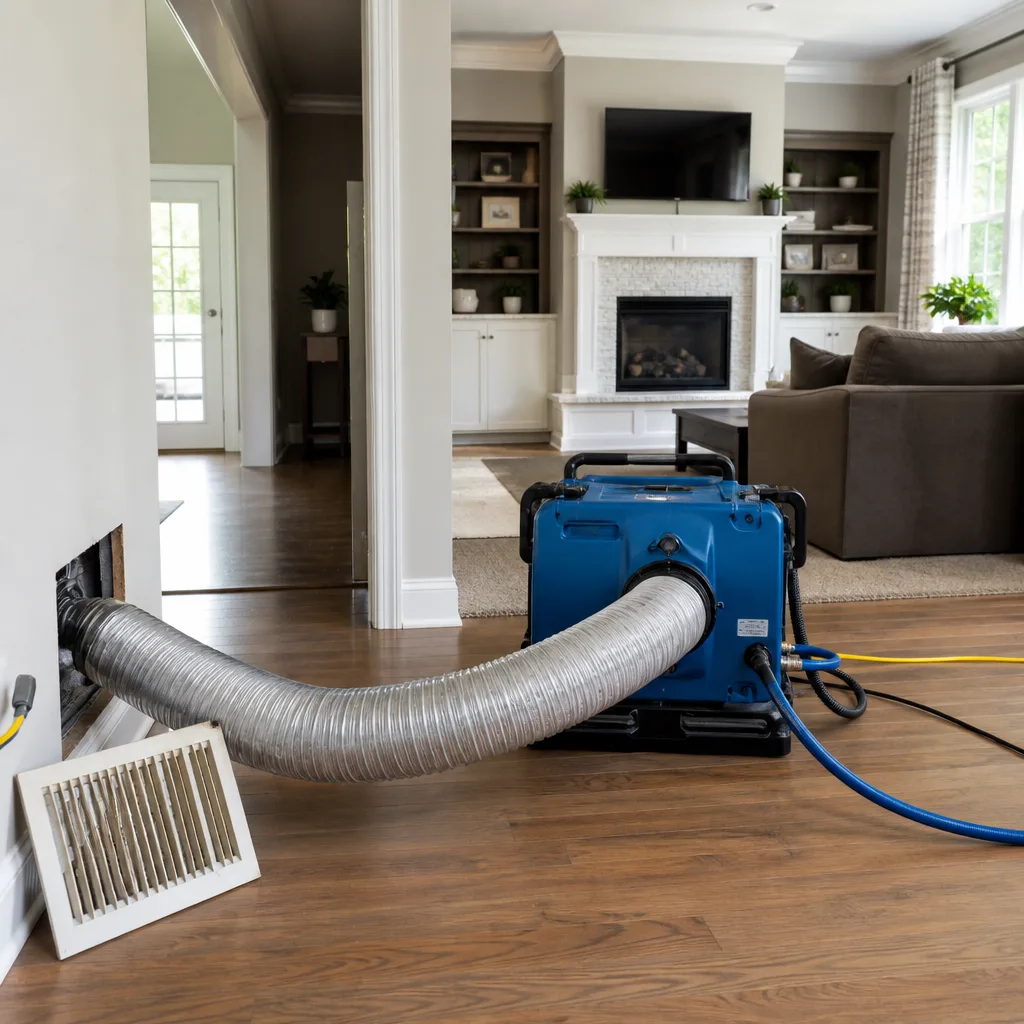
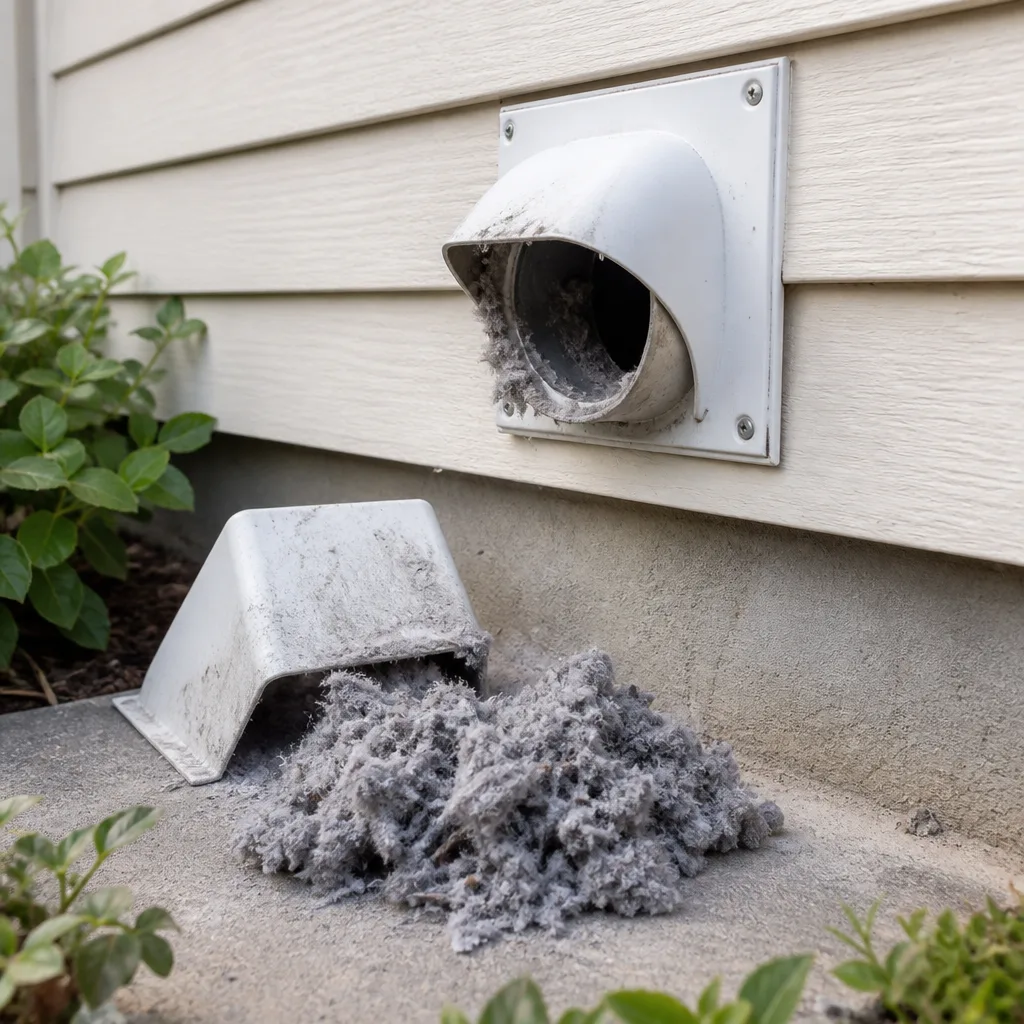
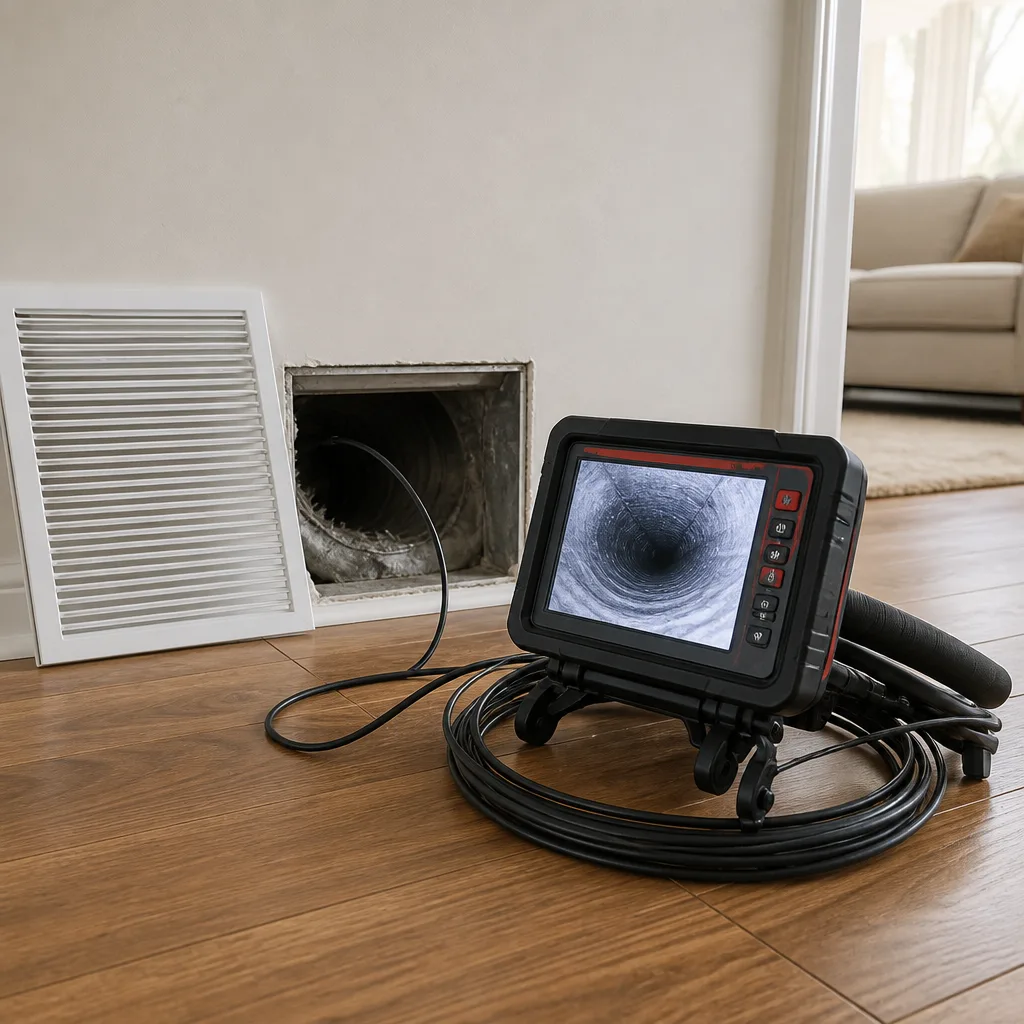
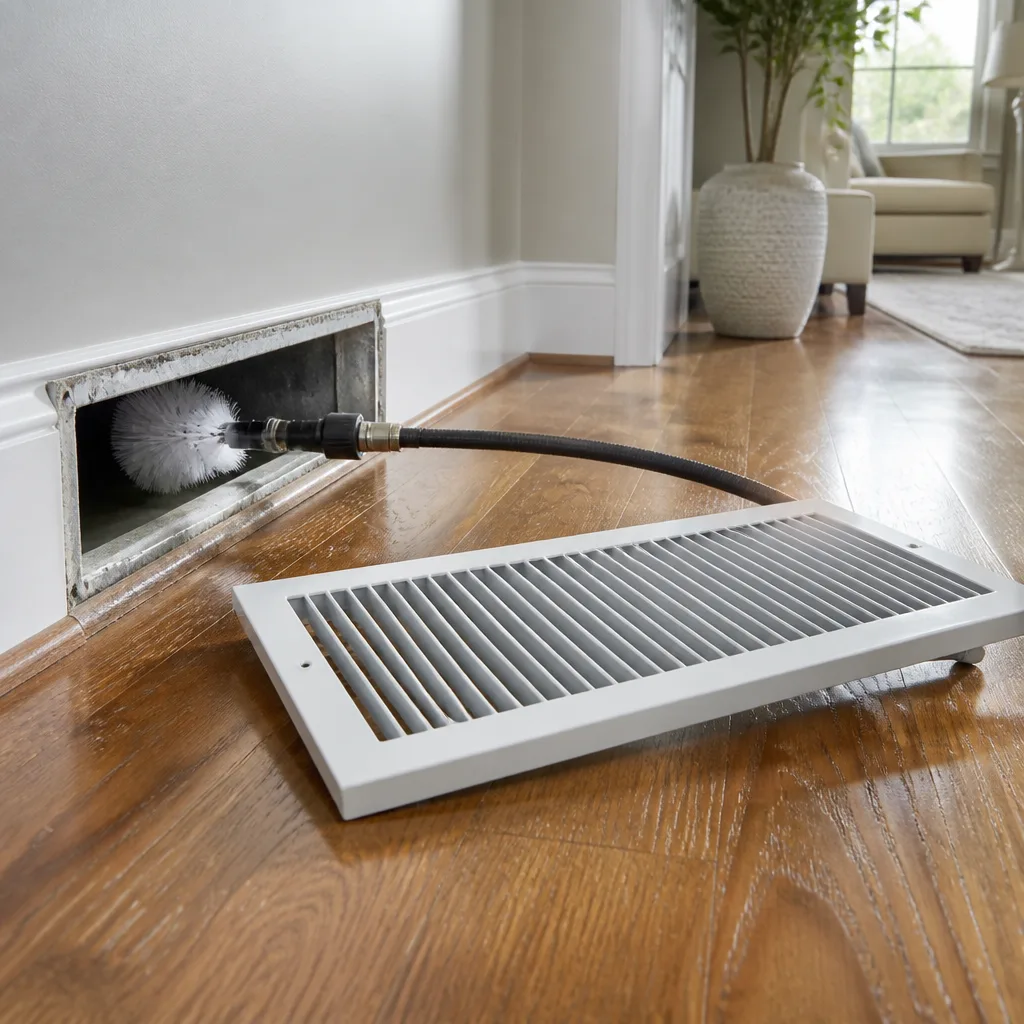
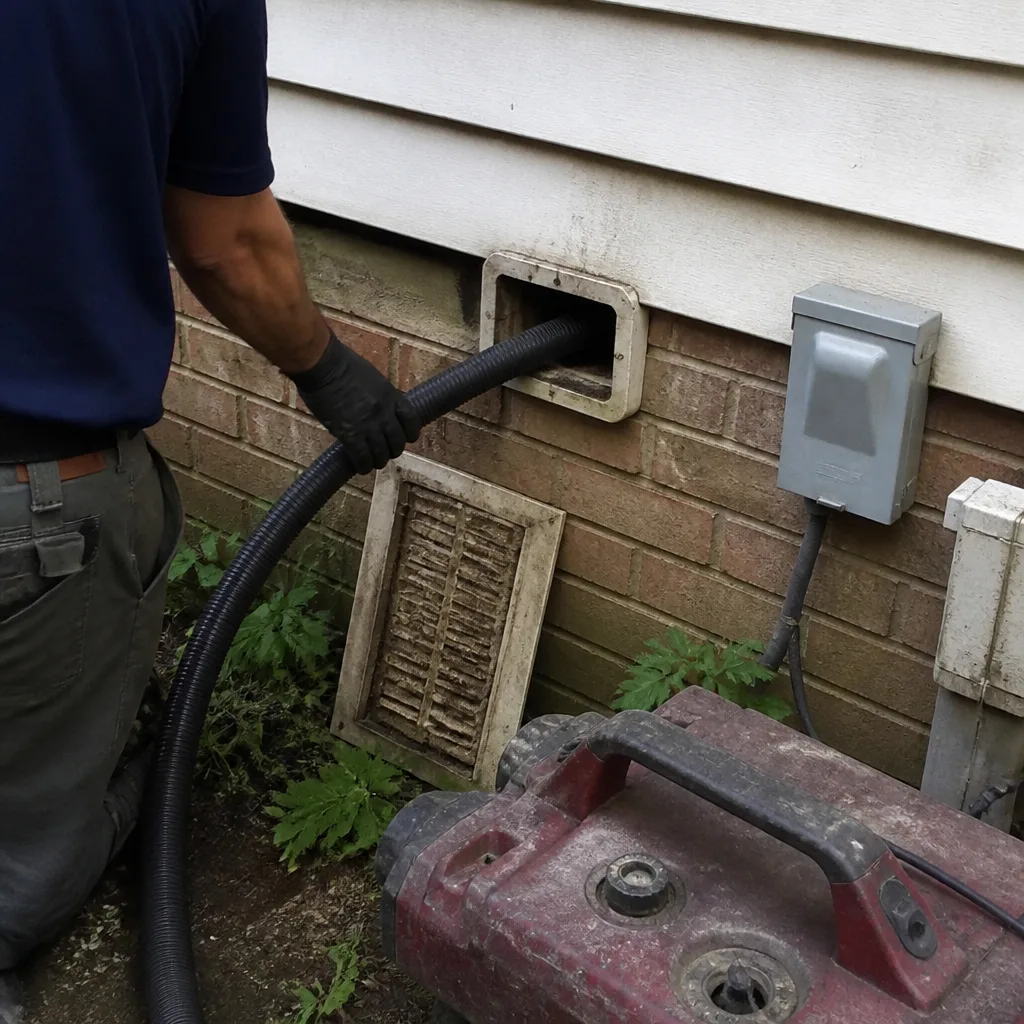 Before
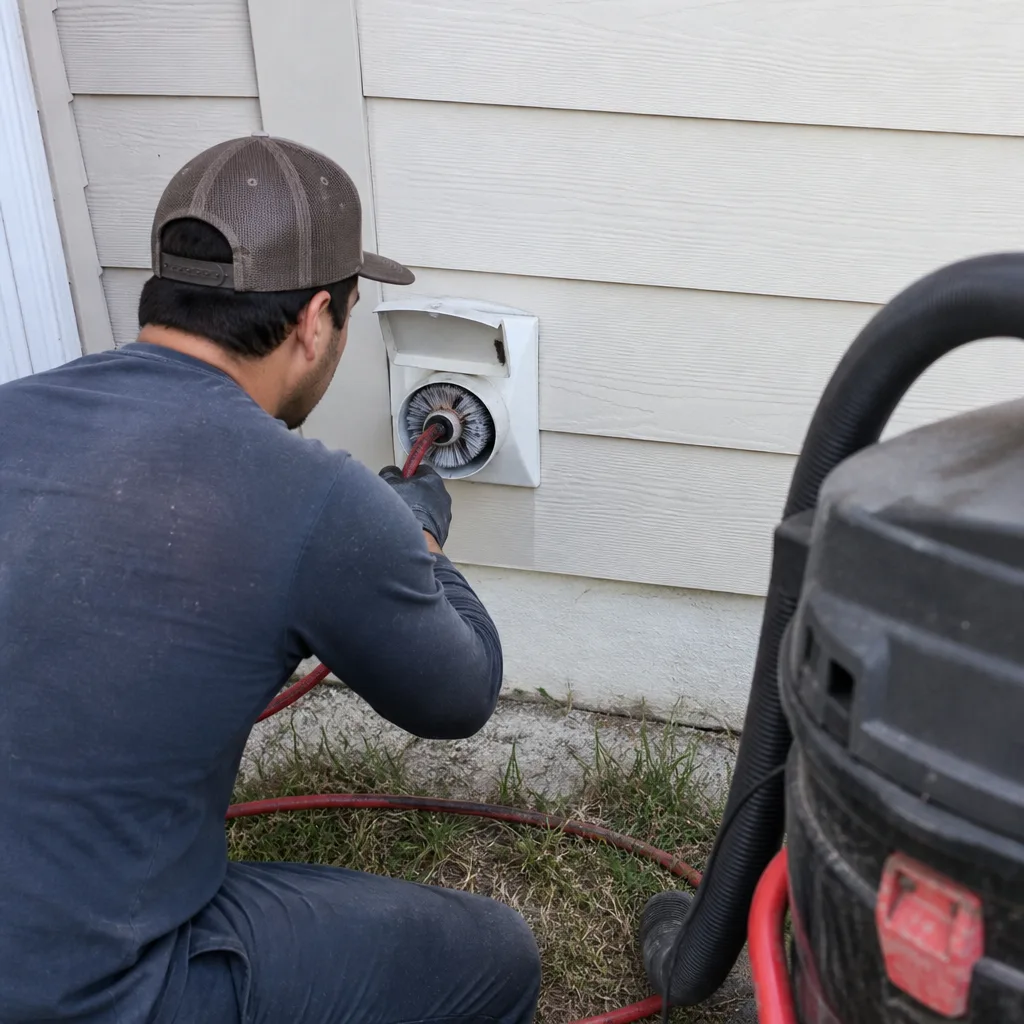 After
After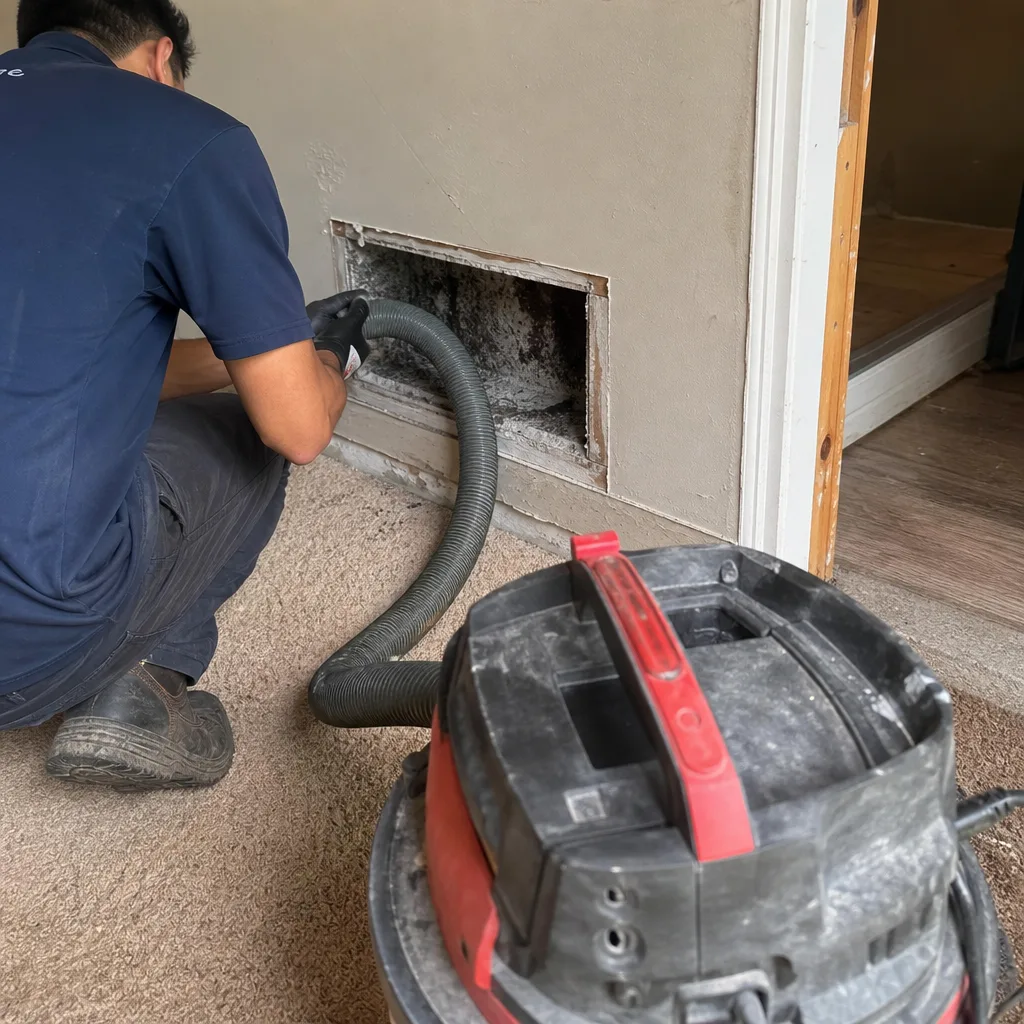 Before
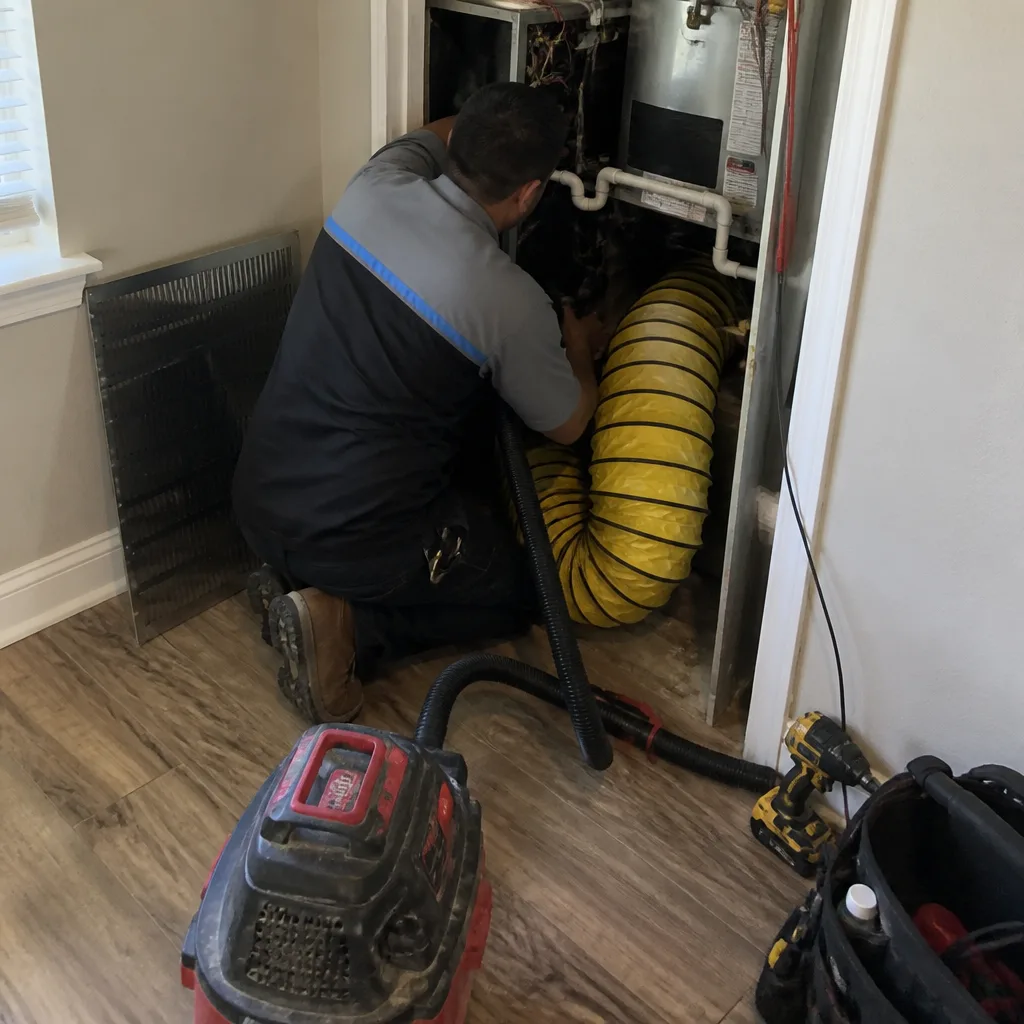 After
After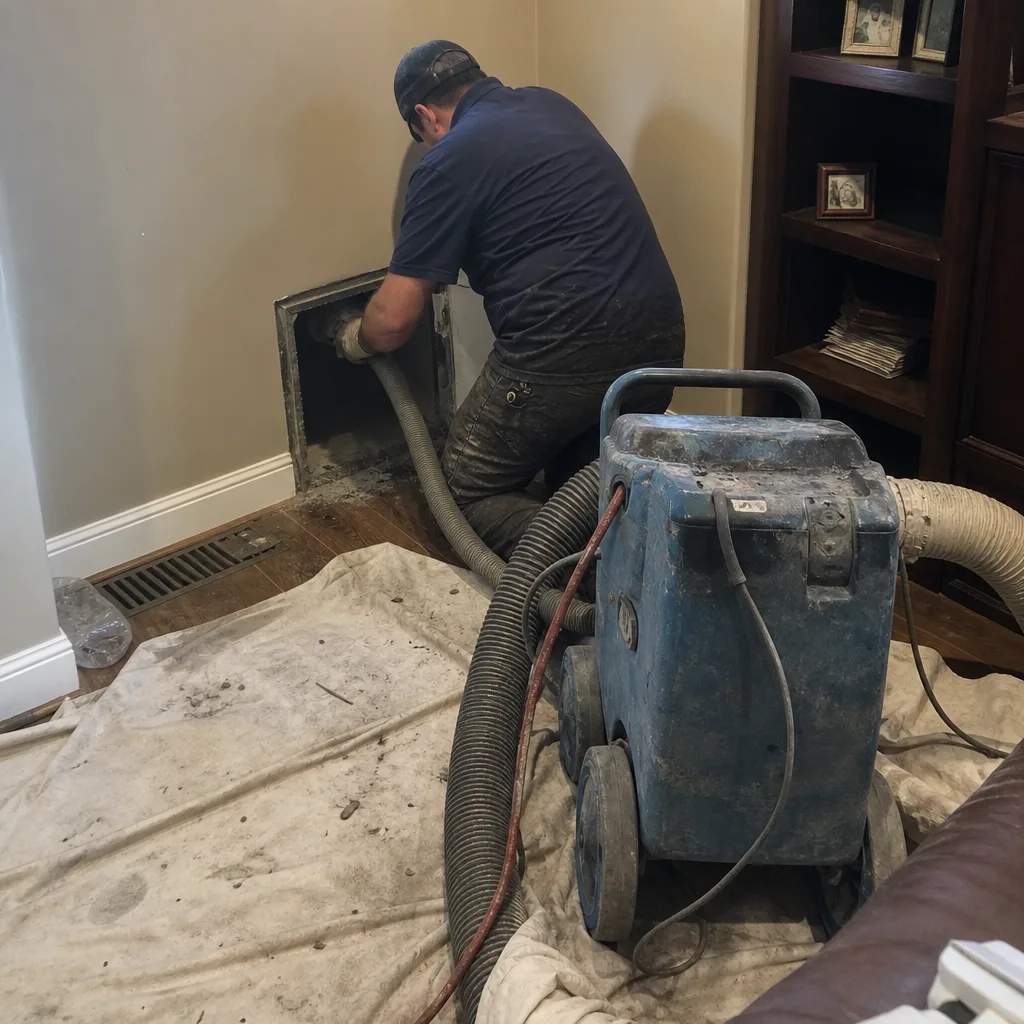 Before
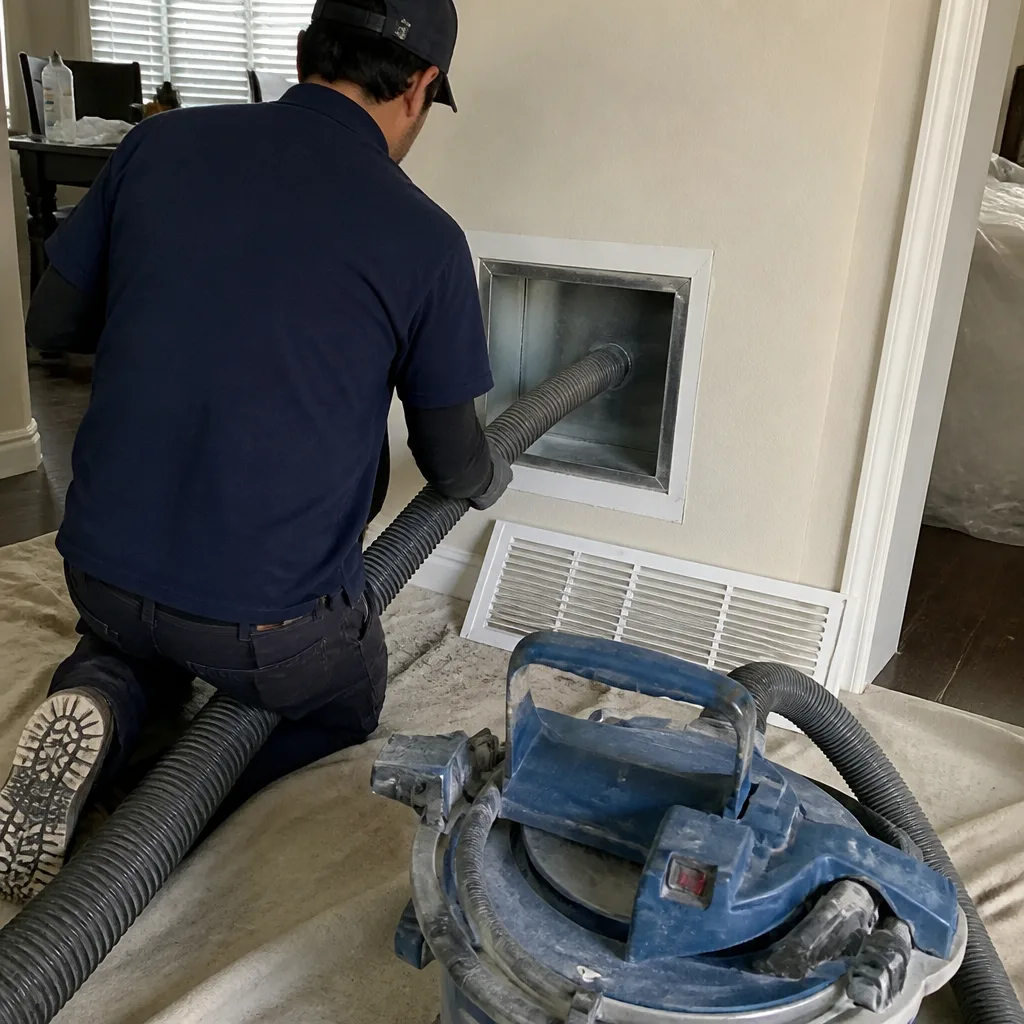 After
AfterSeasonal Air Duct Cleaning Care for Spring: Year-Round Homeowner’s Guide
The worst time to schedule Air Duct Cleaning in Spring, TX is January. Yet that’s when most homeowners book it, because it’s slow season and prices are low, not because it reflects what’s actually happening inside their system. After twelve years of photographing the inside of ductwork across the Houston metro, we’ve learned that Spring’s subtropical climate creates four distinct duct-stress periods per year, each producing a different type of debris or damage that demands a different inspection approach. A single annual cleaning recommendation is both too simple and often mistimed. This guide maps those four periods, gives you observable benchmarks for each, and shows you the two months when professional inspection is worth scheduling regardless of visible symptoms.
Quick Answer
Spring, TX homeowners should treat air duct care as a four-season maintenance cycle, not a single annual appointment-see our Air Duct Cleaning Maintenance Checklist for Spring Homeowners for the full schedule. The optimal professional cleaning window is late September through October, after peak humidity drops and before the first sustained heating cycle. Between professional visits, seasonal homeowner tasks include checking register airflow in spring, monitoring humidity readings at summer supply vents, listening for debris burn-off odors in October, and inspecting for construction dust infiltration after January renovations.
Table of Contents
- The Four Seasonal Duct-Stress Periods in Spring, TX
- Why Late September to October Is the Optimal Cleaning Window
- Spring Allergy Season: Pollen Infiltration Through Leaky Returns
- Summer Humidity Peak: Condensation and Microbial Risk
- Fall HVAC Transition: The First Heat Cycle Burns Off Accumulated Debris
- Post-Holiday Renovation Period: Drywall Dust and Construction Particulate
- Seasonal Homeowner Inspection Tasks That Don’t Require a Service Call
- Your 12-Month Air Duct Care Calendar for Spring, TX
- Common Mistakes to Avoid
- When to Call a Professional
- Frequently Asked Questions
- The Bottom Line
BeforeAfterThe Four Seasonal Duct-Stress Periods in Spring, TX
Spring sits at the northern edge of the Houston metro, where the Gulf of Mexico’s moisture meets the continental air mass that sweeps down from the plains. That collision creates four distinct periods of stress on residential ductwork, each with its own debris profile and failure mode. Understanding these periods is the foundation of any useful maintenance plan.
Period One: Spring Allergy Season (March-May)
Pine pollen in Spring, TX typically peaks in late March, with oak and grass pollens extending through May. The region’s high pollen counts, regularly exceeding 2,000 grains per cubic meter during peak weeks, create a sustained load on HVAC filtration. The critical failure point isn’t the filter itself, it’s the return side of the system. Leaky return plenums (the central chamber that collects air before it reaches the air handler) and poorly sealed return duct runs pull unfiltered attic or wall cavity air directly into the system. When we photograph duct interiors during April and May service calls in neighborhoods like Gleannloch Farms and Augusta Pines, we regularly find pollen accumulation at the first elbow of return ducts, where turbulent air drops particulate before it reaches the filter rack.
Period Two: Summer Humidity Peak (June-September)
Houston metro summer dew points regularly exceed 75°F, and attic temperatures in Spring can reach 140°F. The combination creates condensation on any duct surface that falls below the dew point, particularly flex duct runs (flexible insulated tubing) with compromised vapor barriers. In our photo records from July and August jobs, we’ve documented microbial staining on the interior of supply ducts where exterior condensation has saturated fiberglass insulation and wetted the duct liner. This is the period when ductwork is most at risk of hidden damage that won’t show as visible debris but will affect air quality and system efficiency.
Period Three: Fall HVAC Transition (October)
The first sustained heating cycle, typically triggered by the first cold front that drops overnight lows below 55°F for several consecutive days, burns off debris that has accumulated on heat exchanger surfaces and in supply ductwork during the cooling season. Homeowners in Spring often report a “burning dust” odor during this period. That odor is the volatile organic compounds released from heated particulate, and it’s an observable signal that the system is carrying a debris load. The October timing matters because this burn-off event distributes settled debris throughout the supply side of the system, creating a transient spike in airborne particulate that can persist for days.
Period Four: Post-Holiday Renovation (December-January)
Spring’s construction cycle peaks in late fall, with interior renovations completing in December and January. Drywall dust, which has a particle size distribution heavily weighted toward 1-5 microns, penetrates standard fiberglass filters and settles in duct runs. Unlike pollen, which tends to accumulate at turbulence points, drywall dust plates evenly on duct surfaces, creating a uniform coating that reduces airflow and provides a substrate for later microbial growth if humidity conditions permit. The January service calls we receive are often from homeowners who completed a kitchen or bathroom renovation in November and are now noticing reduced airflow or visible dust at registers.
Why Late September to October Is the Optimal Cleaning Window
The conventional wisdom of scheduling duct cleaning in January is backwards for Spring, TX. By late September, several conditions align that make professional service both more effective and more diagnostic.
First, the summer humidity peak has passed. Attic moisture loads drop significantly in late September, meaning that any condensation-related damage identified during service is stable, not active. A technician can photograph microbial staining and distinguish between active growth and historical residue with reasonable confidence. In July, a damp duct liner might show active colonization; in October, the same liner shows the extent of summer damage without the confounding variable of ongoing moisture.
Second, the system has accumulated a full summer’s debris load but has not yet undergone the fall burn-off event. The before-photos from late September jobs consistently show the clearest documentation of what the cooling season deposited: a granular mix of skin cells, textile fibers, and fine particulate that has settled during continuous fan operation. After the first heating cycle, this material is redistributed and the photographic record is less definitive.
Third, scheduling in late September through October positions the homeowner to observe the fall transition with a clean baseline. If a burning dust odor persists beyond the first two heating cycles, that signals a problem beyond normal debris accumulation, such as a contaminated evaporator coil or debris in the heat exchanger itself.
The photo records from our October jobs in Spring typically reveal:
- Return ducts: 1/8 to 3/8 inch accumulation of fine particulate at first elbows, with pollen fragments still identifiable under magnification in samples from March-May intake
- Supply ducts: uniform light coating of summer particulate, with heavier deposition at register terminations where airflow velocity drops
- Flex duct insulation: vapor barrier integrity visible without summer condensation obscuring defects
- Plenum surfaces: accumulation patterns that indicate filter bypass around poorly seated filter racks
This documentation becomes the baseline for comparing future service records. When we return for a follow-up inspection, the homeowner has objective evidence of system condition, not a technician’s verbal assessment.
Spring Allergy Season: Pollen Infiltration Through Leaky Returns
March through May in Spring, TX is defined by pollen, and the ductwork failure mode of this period is specific and addressable.
The return side of a residential HVAC system operates under negative pressure (suction). Any leak in the return plenum or ductwork between the register and the air handler pulls air from the surrounding cavity, attic, or wall space. In Spring’s older neighborhoods like Spring Oaks and the original Spring Valley Village sections, we’ve found return ductwork sealed with failing duct tape or unsealed flex duct connections that pull attic air continuously during system operation. That attic air in spring carries a heavy pollen load, particularly pine pollen with its large, visibly yellow grains.
The diagnostic task for homeowners during this period is straightforward:
- Remove the return register grille and inspect the duct opening with a flashlight. Look for gaps between the duct boot (the sheet metal fitting that connects the duct to the wall or floor) and the surrounding framing.
- With the system fan running, hold a thin tissue or smoke pencil near any visible gaps. Inward airflow indicates a leak that bypasses filtration entirely.
- Check the filter rack for bypass around the filter edges. A filter that is too small for its housing, or a housing with a missing or damaged gasket, allows unfiltered air to enter the air handler directly.
- Note any increase in dust accumulation at supply registers during peak pollen weeks. Pollen that enters through return leaks will distribute through the supply side and settle at termination points.
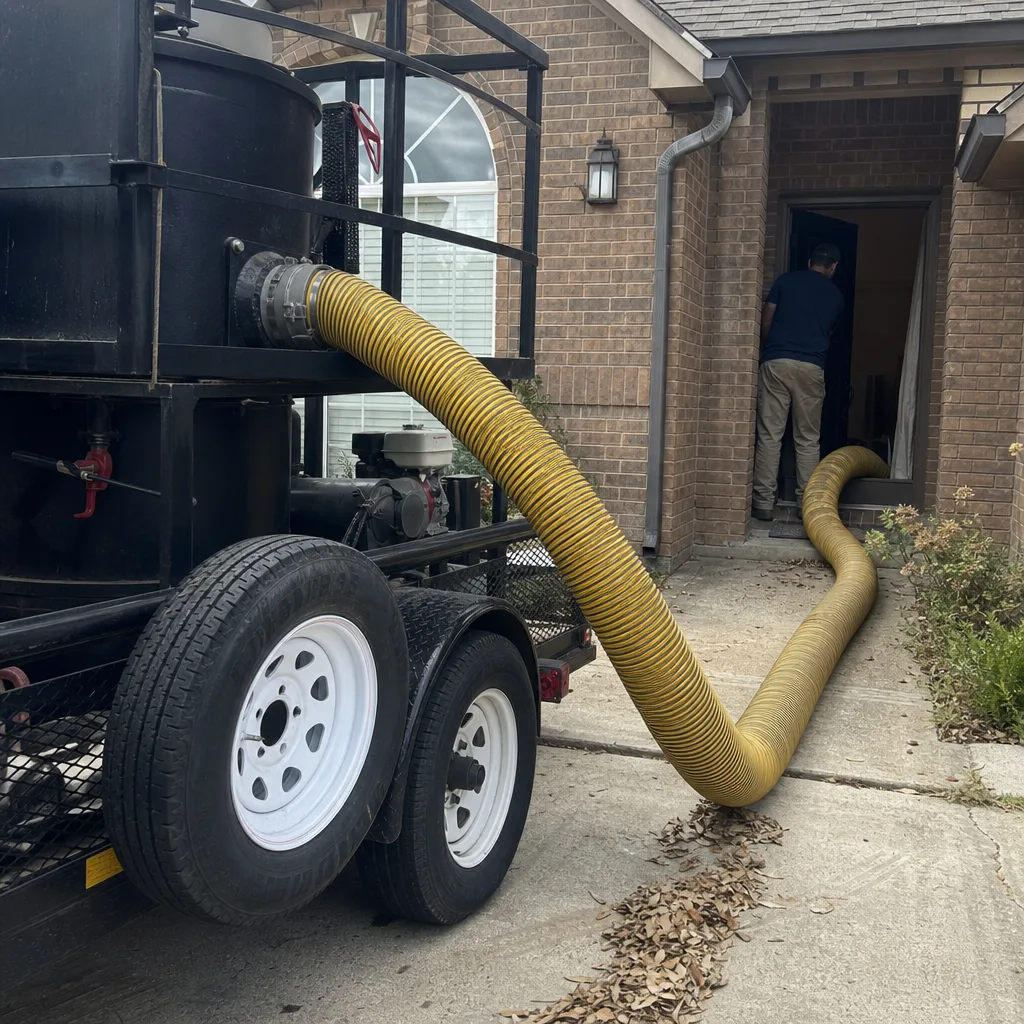
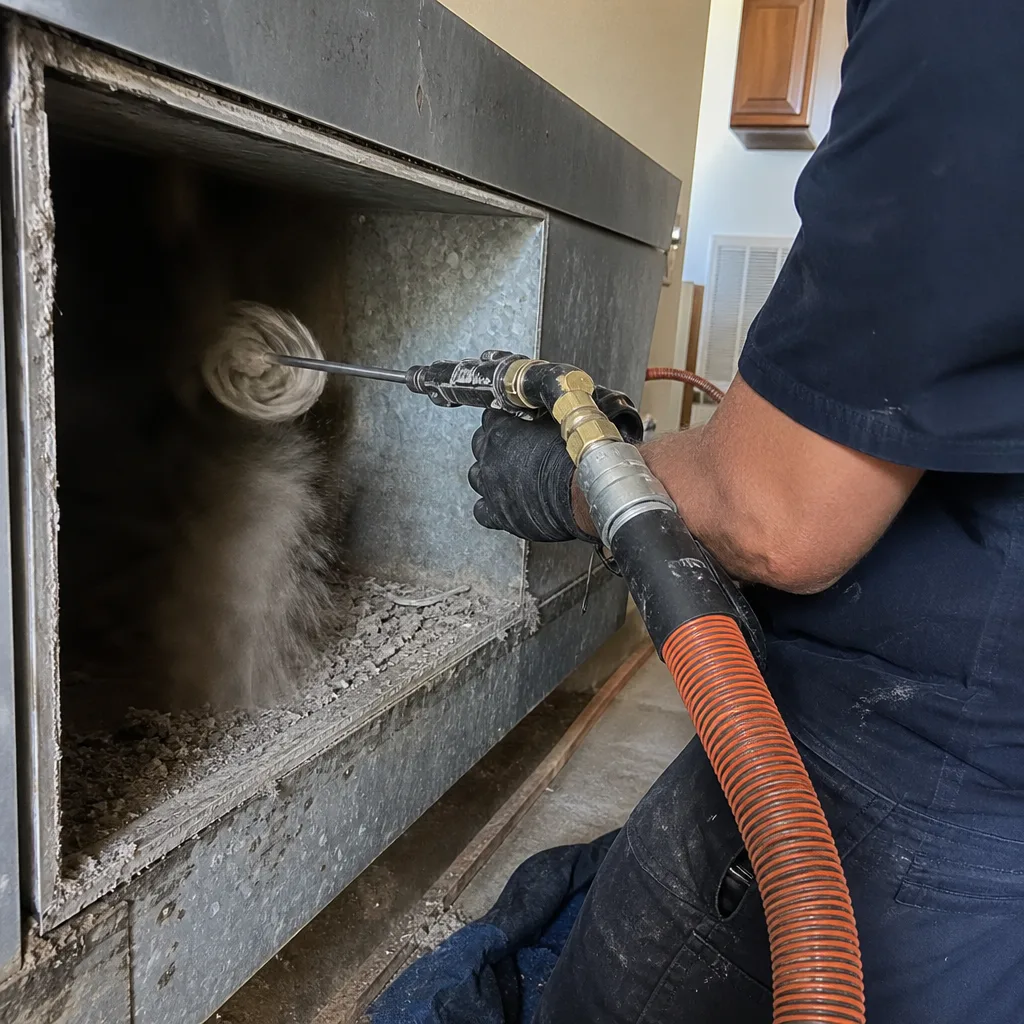
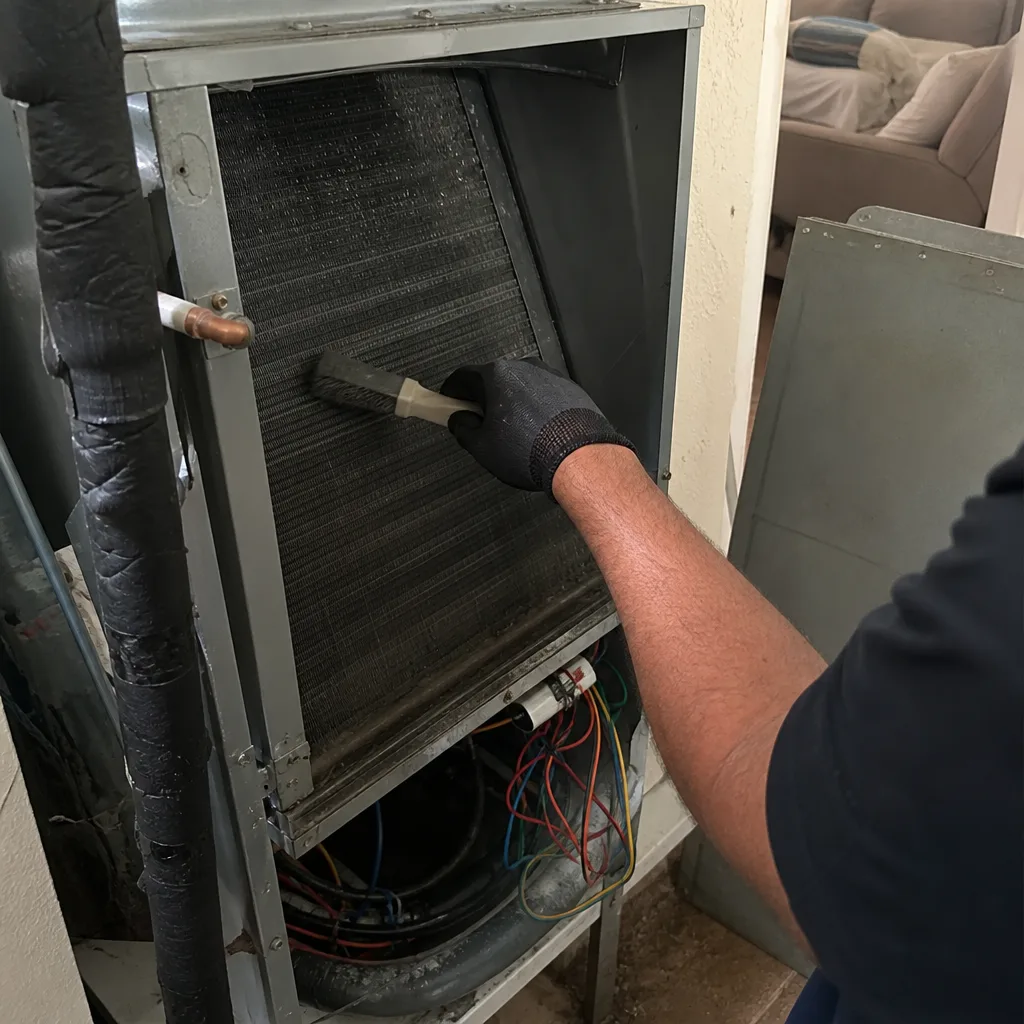
The professional response to these findings is return-side sealing, not simply cleaning. At Air Duct Cleaning in Spring, we use negative-pressure extraction (suction cleaning with a vacuum source stronger than the HVAC fan) to remove accumulated pollen, then seal accessible return leaks with mastic or metal-backed tape rated for duct applications. The photo record documents both the debris removed and the sealing work completed.
Homeowners in newer Spring developments like Harmony or the eastern Woodlands fringe should not assume tight construction eliminates this problem. We’ve documented significant return leakage in homes built after 2020 where speed of construction compromised duct sealing details.
Summer Humidity Peak: Condensation and Microbial Risk
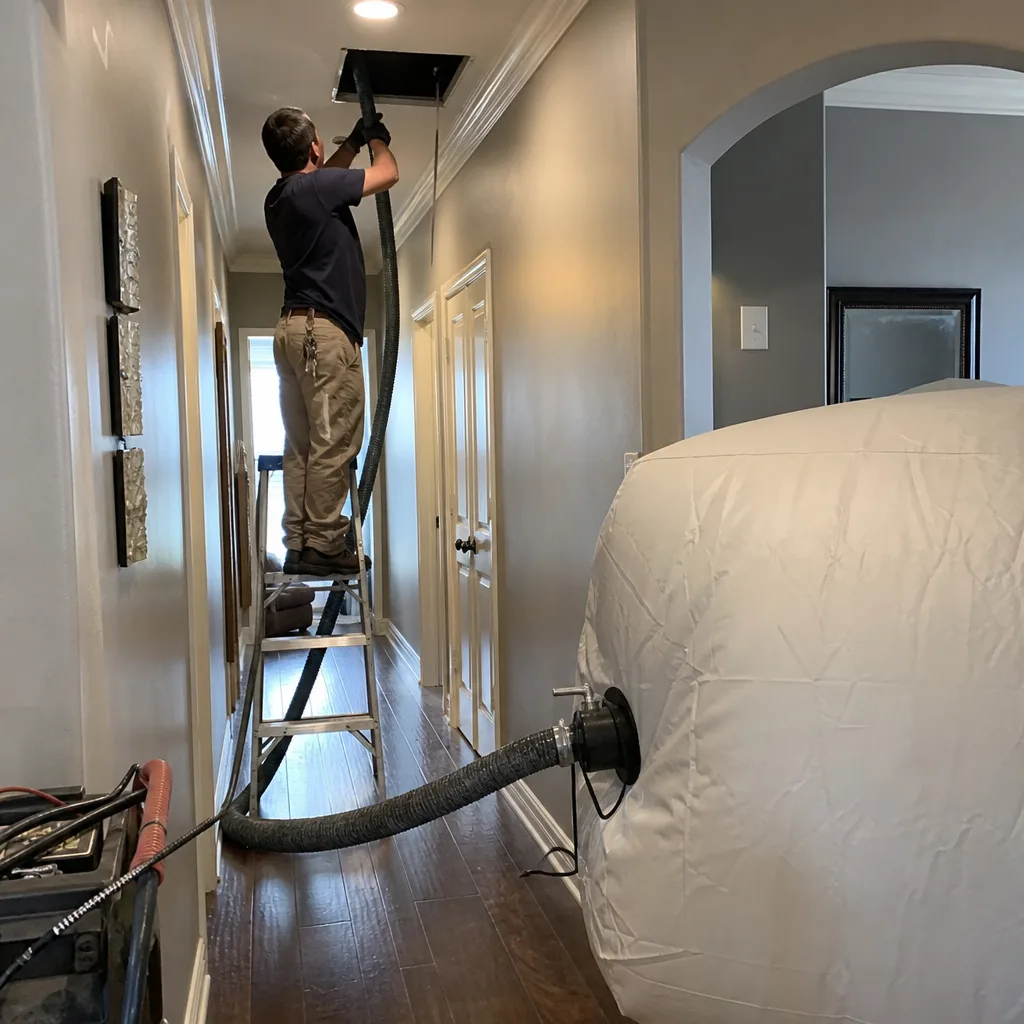
June through September is the period when Spring ductwork is most at risk of hidden, progressive damage that won’t announce itself with visible debris or odor.
The mechanism is simple: when cool air passes through a duct run in a hot, humid attic, the duct surface temperature can fall below the dew point of the surrounding air. Water condenses on the duct exterior, saturates the insulation, and eventually wets the duct liner or enters the duct interior through seams. The result is microbial growth on the duct interior that may not produce visible mold at registers but will affect air quality and system efficiency.
The homeowner diagnostic for this period requires a humidity meter, available for $15-30 at hardware stores:
- Insert the meter probe into a supply register while the system is running in cooling mode.
- Record the relative humidity (RH) of the supply air. It should read 45-55% RH in a properly functioning system with adequate duct insulation.
- A reading above 55% RH at the register strongly suggests that the supply duct is gaining moisture en route, either through duct leakage that pulls humid attic air into the airstream, or through condensation on under-insulated duct surfaces that re-evaporates into the passing air.
- Inspect flex duct runs in the attic during morning hours, when condensation is most likely to be active. Look for sweating on the vapor barrier surface, particularly at bends where airflow turbulence creates localized cooling.
A humidity reading above 55% RH is actionable information. It means the duct system is operating in a condition that supports microbial growth, even if no mold is visible. The appropriate response is professional inspection with a borescope camera to examine duct interiors, and assessment of insulation R-value and vapor barrier condition. In Spring’s climate, flex duct in ventilated attics should carry minimum R-6 insulation with an intact vapor barrier; we regularly find R-4.2 duct with degraded barriers in homes built during the 2005-2010 construction boom.
The equipment we deploy for summer-condition assessments includes Rotobrush systems with integrated camera inspection, allowing real-time documentation of duct interior conditions without disassembly. This documentation becomes part of the written job record, referenced under Haven Standard Clause 1: Written Price Before Any Work Starts.
Fall HVAC Transition: The First Heat Cycle Burns Off Accumulated Debris
October in Spring, TX is brief and unpredictable. A single cold front can drop temperatures from 85°F to 45°F overnight, triggering the first sustained heating operation of the season. That first heating cycle is a diagnostic event that homeowners should observe deliberately.
The “burning dust” odor that accompanies first heat is the volatilization of organic debris that has settled on heat exchanger surfaces during the cooling season. In a clean system with minimal debris accumulation, this odor dissipates within 30 minutes of continuous operation. In a system with significant debris load, the odor persists for hours or returns with each heating cycle for days.
The critical observation is duration, not presence. Some odor is normal. Persistent odor indicates:
- Substantial debris accumulation in the supply plenum or trunk ductwork
- Contamination of the evaporator coil, where summer condensation has created a reservoir of organic material that heats and volatilizes when the system switches to heating
- In rare cases, debris in the heat exchanger itself, which requires immediate professional attention due to combustion safety concerns
Homeowners should note the date of first heating operation and the duration of any odor. If odor persists beyond two heating cycles, schedule professional inspection. The timing is optimal because the system has just completed its full cooling-season debris accumulation, and the October service window allows cleaning before the continuous heating season begins.
At HVAC Cleaning in Spring, we document evaporator coil condition as part of our fall service protocol. The coil sits downstream of the filter and upstream of the supply ductwork; contamination here distributes debris to every supply register. Our photo records include coil condition, and our written scope specifies whether coil cleaning is included in the quoted price or requires separate access.
Post-Holiday Renovation Period: Drywall Dust and Construction Particulate
December through January sees the completion of interior renovation projects across Spring’s residential market. The debris profile of this period is distinct from seasonal pollen or humidity-related contamination, and it requires a specific response.
Drywall joint compound (mud) produces dust with a particle size distribution that peaks at 2-4 microns. This is small enough to penetrate standard fiberglass HVAC filters, which are tested for efficiency at 3-10 microns but with variable performance at the smaller end of that range. The dust plates evenly on duct surfaces, creating a uniform coating rather than the localized accumulation seen at turbulence points.
The homeowner who has completed renovation work should operate the HVAC system on continuous fan mode during active construction, with a MERV 11 or higher filter installed, and should plan for duct inspection after project completion. The observable benchmark is visible dust at supply registers within two weeks of construction completion, particularly on the upper floor where supply ducts serve as the final filtration point for airborne particulate.
Professional service during this period focuses on negative-pressure extraction of the uniform coating, with particular attention to register boots and supply terminations where dust concentration is highest. The photo record from January jobs in Spring frequently shows a characteristic pale gray coating that distinguishes drywall dust from the darker organic debris of summer accumulation.
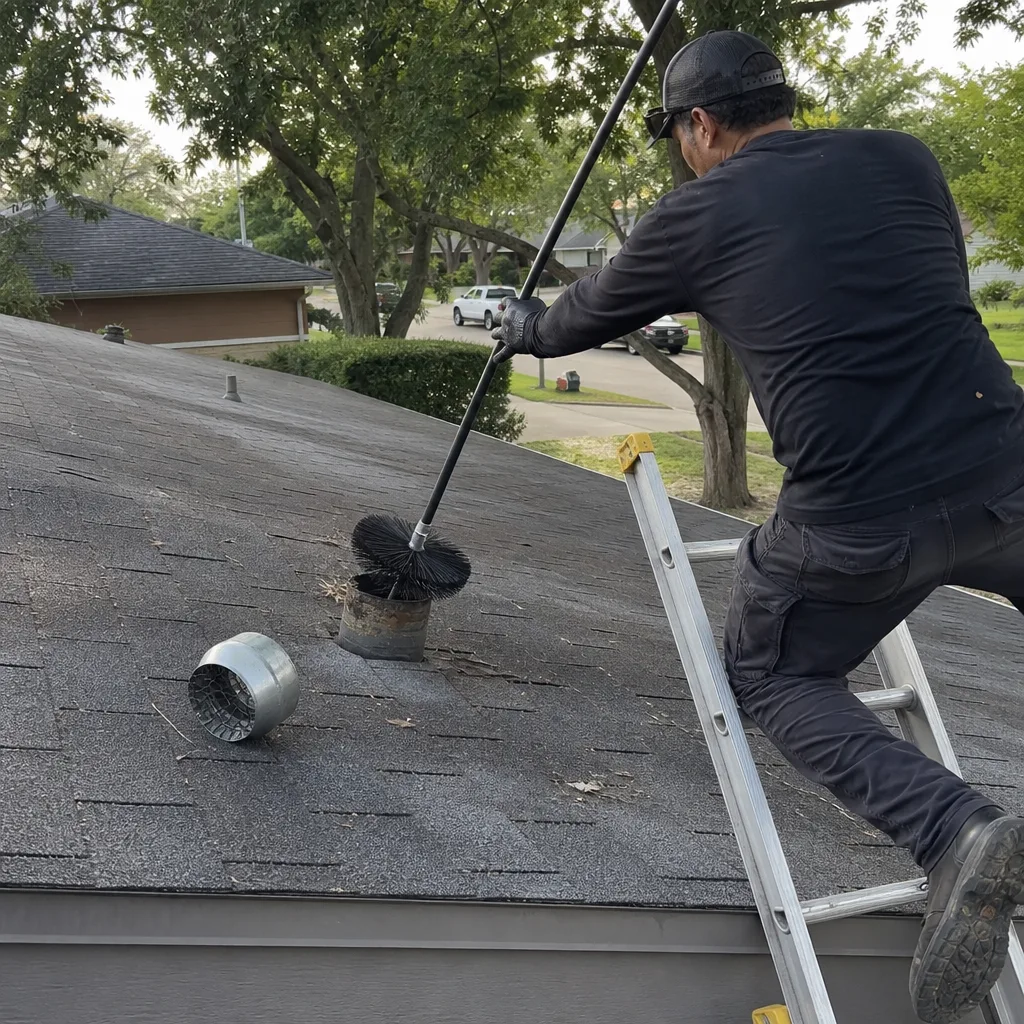
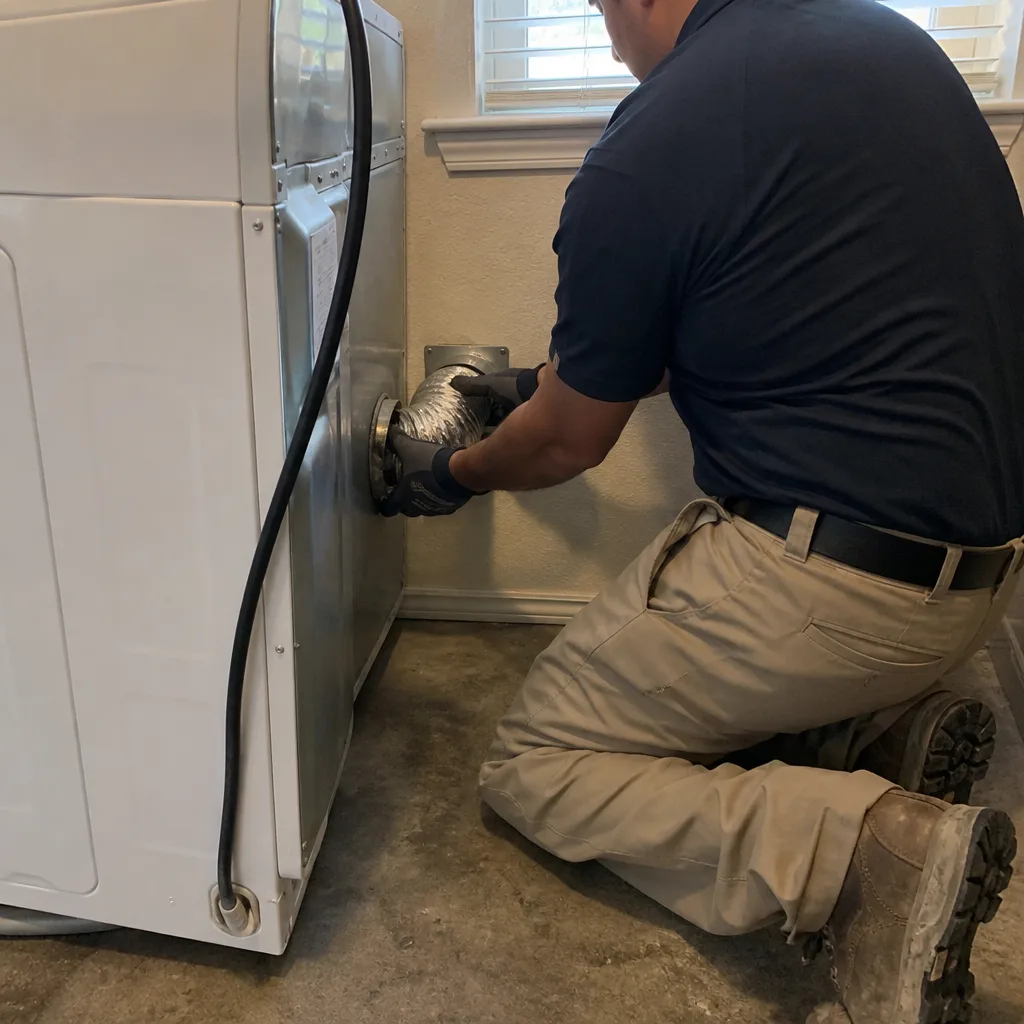
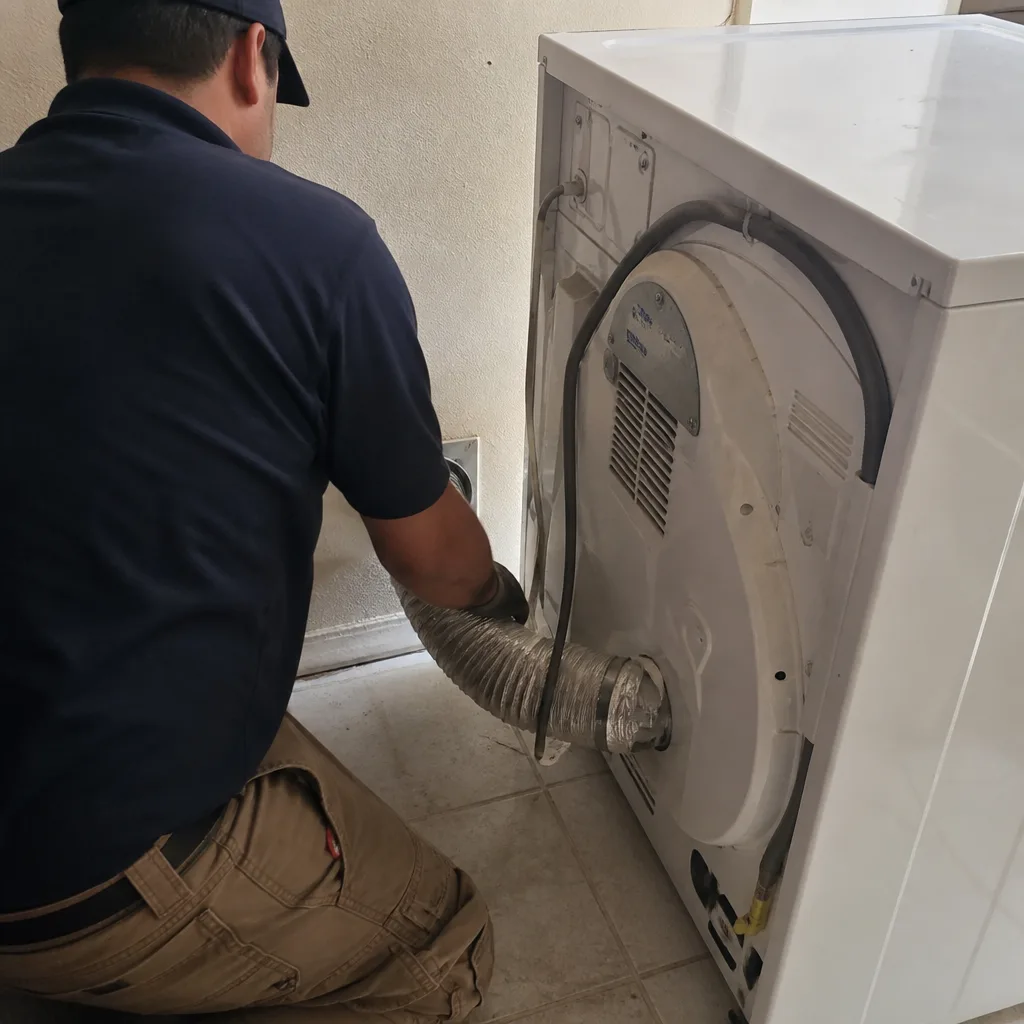
Dryer Vent Cleaning in Spring should also be considered during this period if renovation work included laundry room modifications. Dryer vent runs are frequently disturbed during renovation, and the combination of construction dust and lint accumulation creates a distinct fire risk that deserves separate inspection.
Seasonal Homeowner Inspection Tasks That Don’t Require a Service Call
Professional duct cleaning is a scheduled service, but homeowner observation between visits can identify developing problems before they require remediation. These tasks require no tools beyond a flashlight, a humidity meter, and deliberate attention.
March-May: Spring Pollen Period
- Check return register fit and filter rack seal monthly during peak pollen
- Listen for airflow changes at registers that might indicate filter bypass or return leakage
- Note any yellow staining on return register surfaces, which indicates pollen accumulation
June-September: Summer Humidity Period
- Measure supply register humidity monthly; record readings above 55% RH
- Inspect accessible flex duct in attic for vapor barrier damage or condensation
- Monitor for musty odor at startup, which can indicate active microbial growth
October: Fall Transition
- Document date of first heating operation and duration of burn-off odor
- Inspect supply registers for increased dust deposition following first heat cycle
- Schedule professional service if odor persists beyond two cycles
December-January: Post-Renovation Period
- Inspect registers for pale dust accumulation following any interior construction
- Verify dryer vent integrity if laundry systems were modified
- Consider filter upgrade to MERV 11 minimum during and after renovation
Your 12-Month Air Duct Care Calendar for Spring, TX
| Month | Homeowner Task | Professional Service Indicator |
|---|---|---|
| January | Inspect for renovation dust; check dryer vent if modified | Schedule only if visible dust or airflow reduction follows construction |
| February | Prepare for pollen season; verify filter size and rack seal | Not typically indicated |
| March | Begin monthly return register checks; monitor for bypass | Schedule if prior year showed significant pollen infiltration |
| April | Peak pollen vigilance; note any increase in register dust | Consider if spring allergies are unusually severe indoors |
| May | Final pollen check; prepare for humidity season | Not typically indicated |
| June | Begin monthly humidity readings at supply registers | Schedule if prior summer showed condensation or microbial issues |
| July | Monitor attic duct for condensation during peak heat | Schedule if humidity readings exceed 55% RH consistently |
| August | Continue humidity monitoring; note any musty odors | Schedule if microbial odor is present |
| September | Final summer humidity check; prepare for optimal service window | Begin scheduling professional inspection and cleaning |
| October | Document first heating cycle and burn-off odor duration | Optimal service window: late September through October |
| November | Post-service verification: compare photo record to prior year | Follow-up if odor persisted or photo record showed unexpected findings |
| December | Protect system during renovation work; upgrade filter if construction active | Schedule only for renovation-related dust or dryer vent disturbance |
The two months where professional inspection is worth scheduling regardless of visible symptoms are September and October. This timing captures the full summer debris load before fall redistribution, documents duct condition at the end of humidity exposure, and establishes a clean baseline for the heating season.
Common Mistakes to Avoid
- Booking January service because prices are lower. The slow-season discount reflects reduced demand, not optimal timing. January service misses the fall diagnostic window and addresses debris that has already been redistributed by heating cycles, making photo documentation less definitive.
- Ignoring humidity readings above 55% RH at supply registers. This is an early indicator of duct moisture problems that will progress to microbial growth. Waiting for visible mold means the remediation scope is larger and more expensive.
- Assuming new construction has tight ductwork. We’ve documented significant return leakage in Spring homes built after 2020. Speed of construction and subcontractor scheduling often compromise duct sealing details that aren’t visible in a finished home.
- Using the cheapest filter that fits the rack. A filter that is too small for its housing, or a housing with damaged gaskets, bypasses filtration entirely. The filter is only as effective as its seal.
- Scheduling cleaning without requesting photo documentation. Without before-and-after images, you have no evidence that work was performed or of the system’s baseline condition for future comparison. This is standard practice at CleanRun, but not industry-wide.
- Treating duct cleaning as a standalone service without inspecting connected components. A contaminated evaporator coil or compromised dryer vent will re-contaminate cleaned ductwork. The full system deserves assessment.
- Accepting per-vent pricing or phone quotes without written scope. This industry’s bait-and-switch reputation exists because low teaser prices expand once the technician arrives. A written price for the complete system, delivered before work starts, is the only protection.
When to Call a Professional
Schedule professional inspection when you observe persistent burn-off odor beyond two heating cycles, supply register humidity consistently above 55% RH, visible dust accumulation following renovation work, or any reduction in airflow at individual registers that filter replacement doesn’t resolve. These symptoms indicate conditions that homeowner observation can identify but not remediate.
CleanRun Air Duct Cleaning Spring offers free estimates in Spring. Every estimate includes a written price before any work starts, under Haven Standard Clause 1, and every completed job includes a Documented Photo Record of every duct run. Call (346) 423-3631 to schedule.
Frequently Asked Questions
Whole-system air duct cleaning for a typical Spring home ranges from $450 to $850, depending on system size, accessibility, and condition; see our Air Duct Cleaning Cost Breakdown: The Spring Homeowner’s Reference for 2026 for detailed pricing factors. This covers the complete supply and return ductwork, plenums, and registers, with before-and-after photography of every duct run included as standard. CleanRun delivers this as a written price before any work starts, not a phone estimate that changes on arrival. Call (346) 423-3631 for an exact quote for your system.
Low quotes typically reflect per-vent pricing that excludes trunk lines and plenums, or “whole-house” teaser prices that expand with add-ons once the technician is on site. The industry standard bait-and-switch involves a $79-$149 coupon that becomes a $600-$800 invoice after “discovering” contamination that requires additional service. A legitimate quote specifies the complete scope in writing before work begins, with no per-vent pricing. CleanRun’s Haven Standard Clause 1 requires written price delivery before any panel is removed.
Request before-and-after photographs of every duct run, with timestamps or sequential numbering that documents the complete system. CleanRun includes this as a standard deliverable on every job, a practice held since 2013. Without photographic evidence, you have only the technician’s word that work was performed throughout the system, not just at accessible registers.
For Spring, TX homes without specific risk factors (renovation, water damage, pest infestation), professional inspection every 24-36 months is adequate, with cleaning timed to the optimal September-October window. Homes with continuous fan operation, significant pollen infiltration, or post-renovation dust may need more frequent service. The 12-month calendar in this guide provides month-specific guidance for determining when service is indicated, and you can find more guides & resources on our blog.
Homeowners can and should perform the seasonal inspection tasks described in this guide: register removal for visual inspection, humidity measurement, filter replacement, and leak detection with simple tools. However, negative-pressure extraction of the complete duct system requires professional equipment, typically truck-mounted or portable HEPA-filtered vacuums with agitation tools that contact duct surfaces without damage. Attempting to clean ductwork with household vacuums or compressed air risks damaging flex duct connections and dispersing debris rather than removing it.
Cleaning removes accumulated pollen and particulate from duct interiors, but the primary allergy benefit comes from addressing the infiltration source. If your return ducts leak, pollen enters continuously during pollen season, and cleaning provides only temporary relief. The most effective approach combines professional cleaning with return-side sealing to stop infiltration at its source. In our Spring service area, we regularly find that return leakage contributes more to indoor pollen load than dirty supply ducts.
Professional-grade equipment includes HEPA-filtered negative-pressure extraction systems, rotary brush agitation tools with integrated vacuum, and borescope cameras for interior inspection. Brands we deploy and document on our job records include Rotobrush for residential duct agitation, Nikro for portable HEPA extraction, and Abatement Technologies for containment and air scrubbing. Equipment should be named and verifiable, not described with vague claims of “commercial-grade” or “industrial-strength” that cannot be independently confirmed.
The Bottom Line
Spring, TX’s climate demands a four-season approach to duct care, not a single annual appointment. The optimal professional service window is late September through October, when summer humidity has passed and fall heating cycles haven’t yet redistributed accumulated debris. Between professional visits, homeowner observation, humidity measurement, and register inspection can identify developing problems before they require extensive remediation. The key deliverables that separate legitimate service from coupon marketing are straightforward: a written price before work starts, photographic documentation of every duct run, and a written guarantee that survives the technician’s departure. These are the standards CleanRun has applied since 2013.
Written by Tomas Reyes, Owner at CleanRun Air Duct Cleaning Spring, serving Spring since 2013.