
Last updated September 23, 2026
Whole-system duct and dryer vent check with before-and-after photos - you see exactly what came out of your vents
That "$99 whole-house special" is a bait ad - the real number appears once they are in your hallway, or the "clean" is a shop-vac at the register. We photograph the inside of your ducts before and after instead.
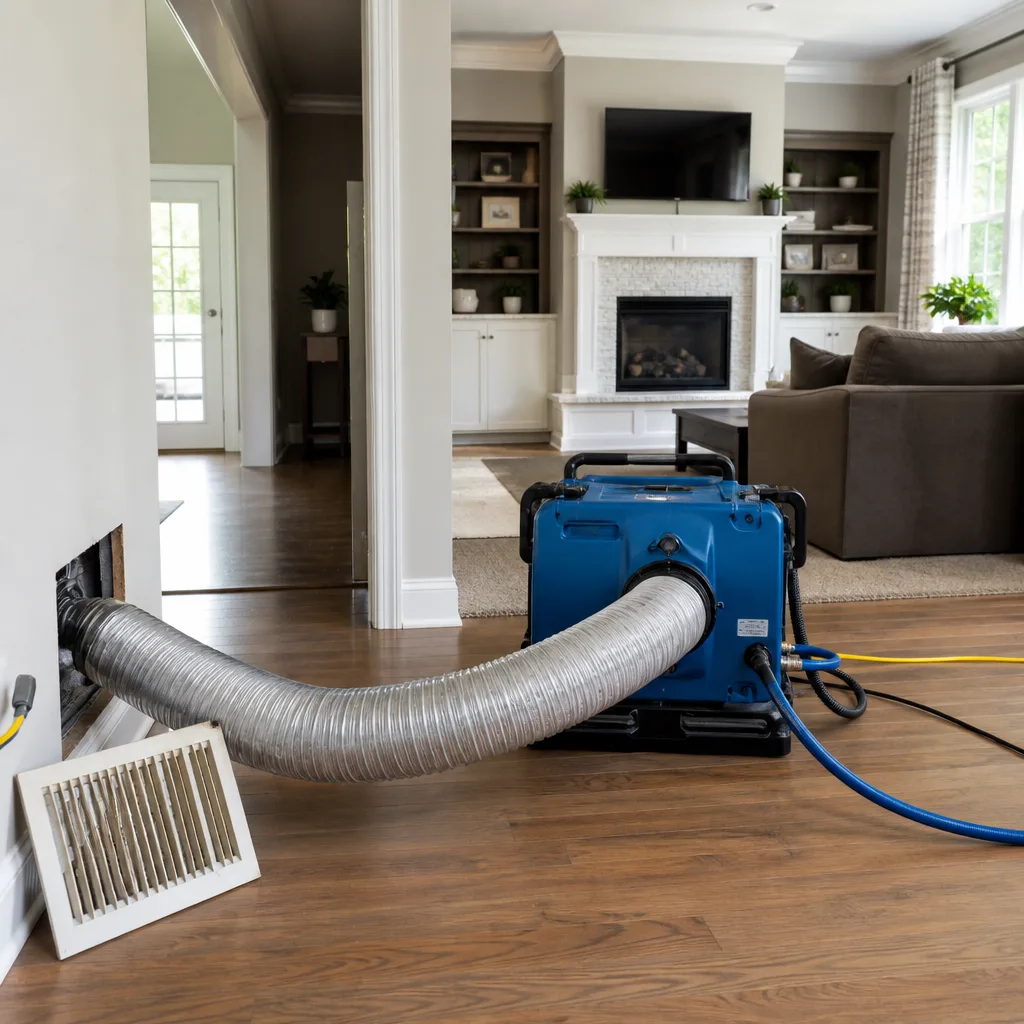
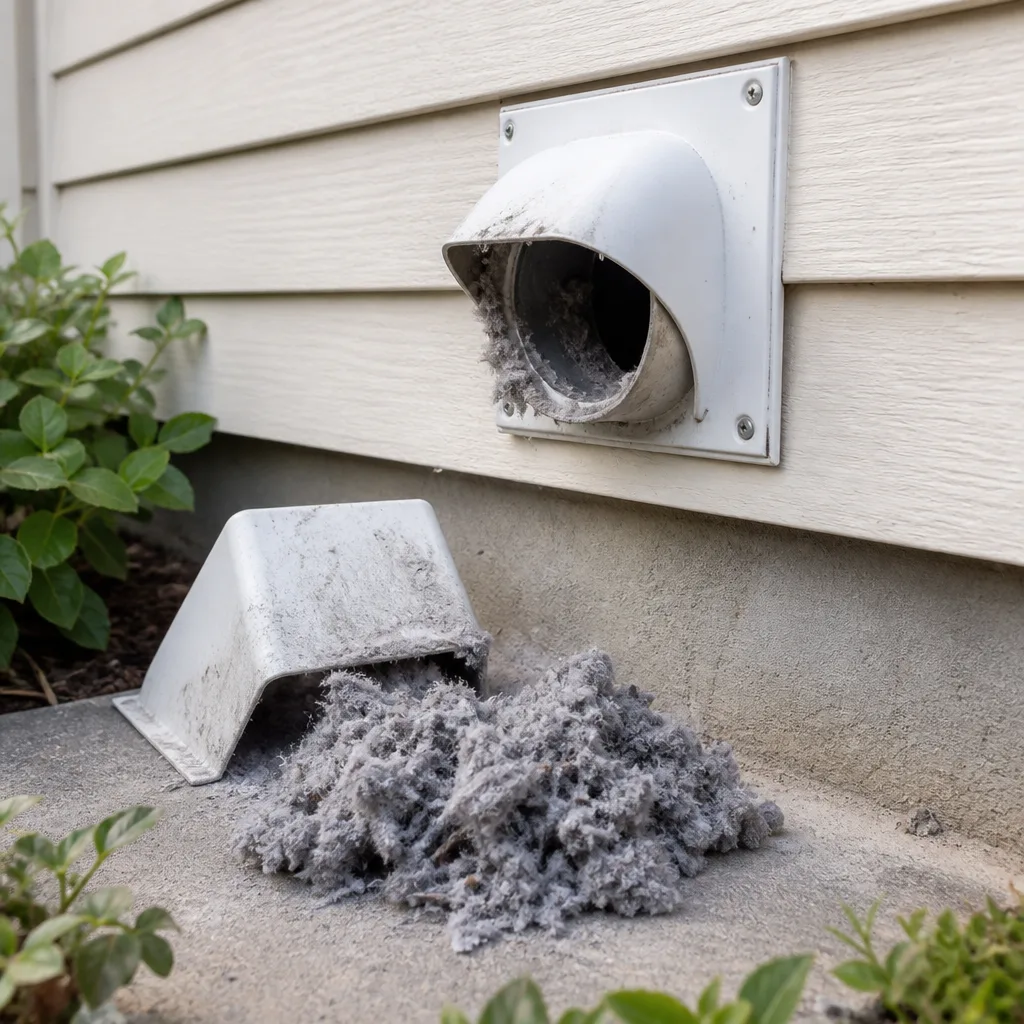
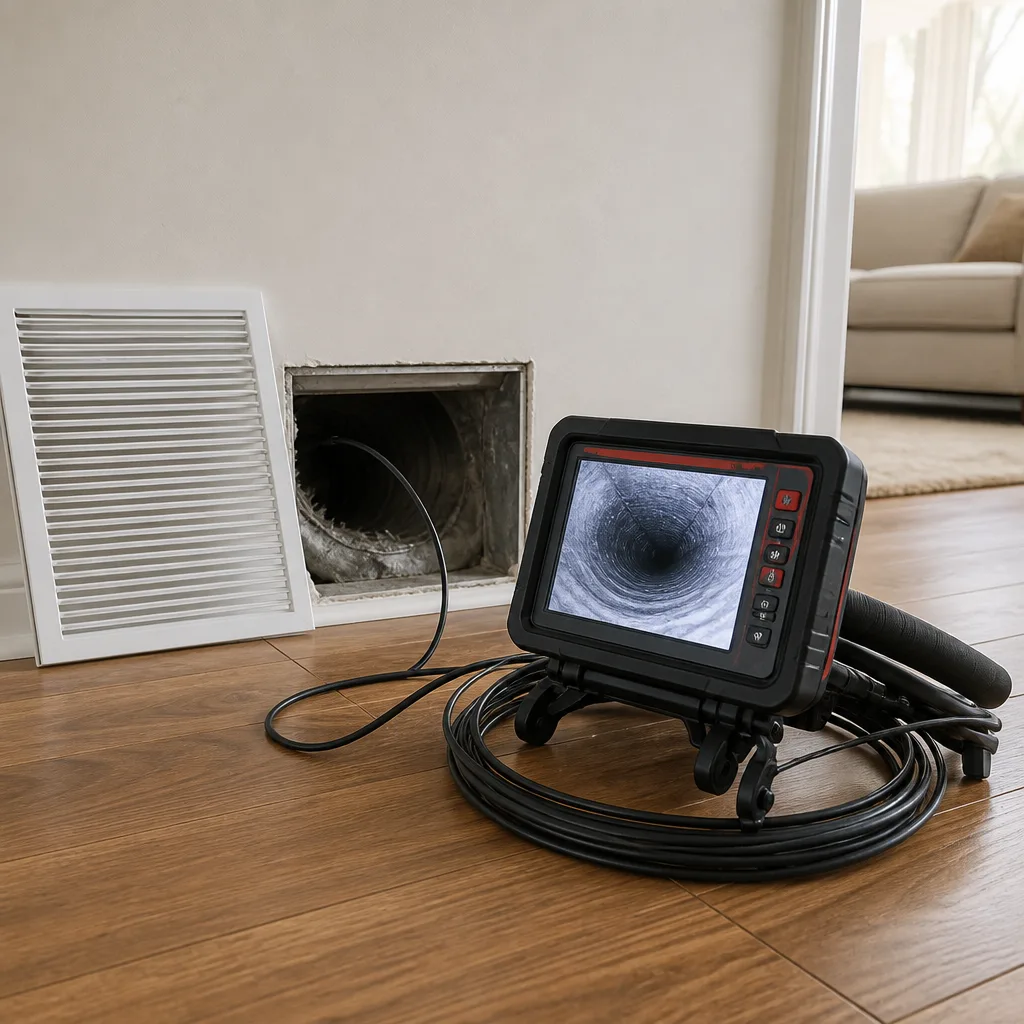
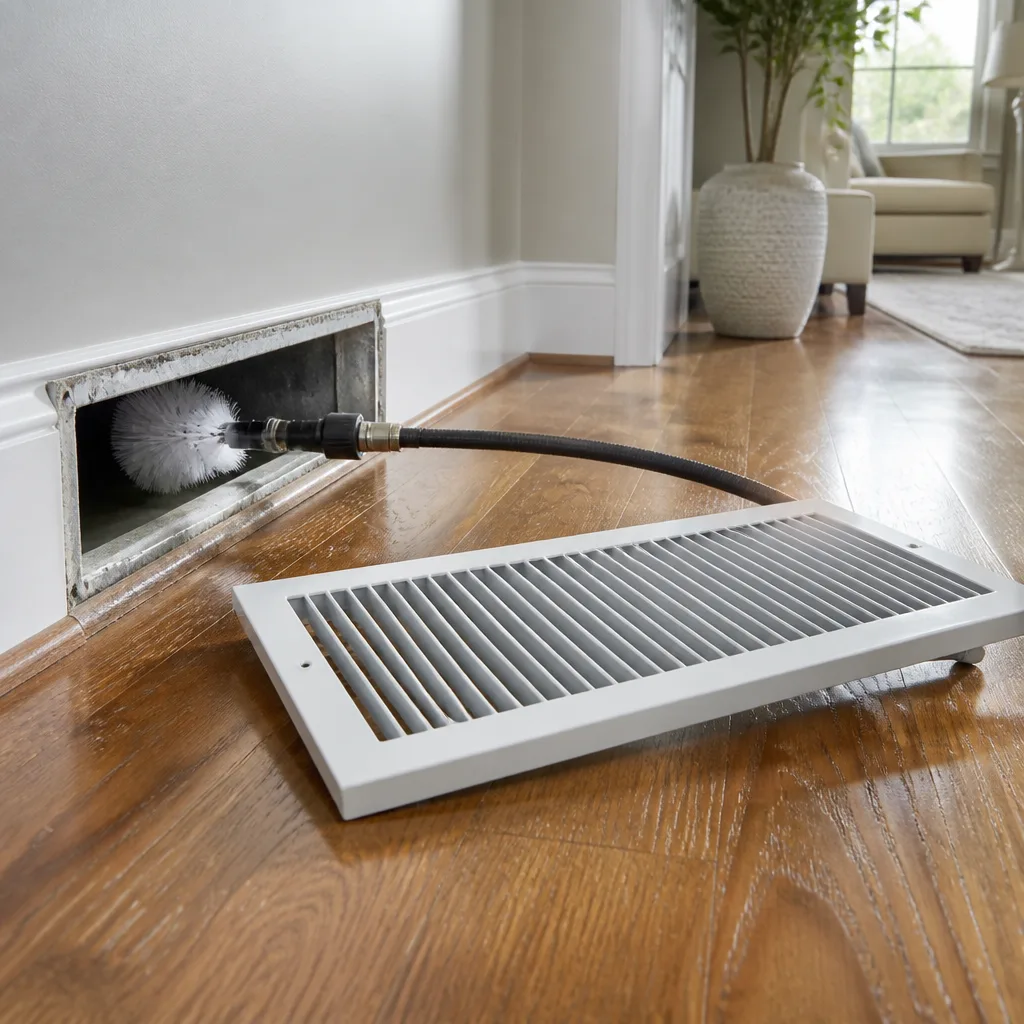
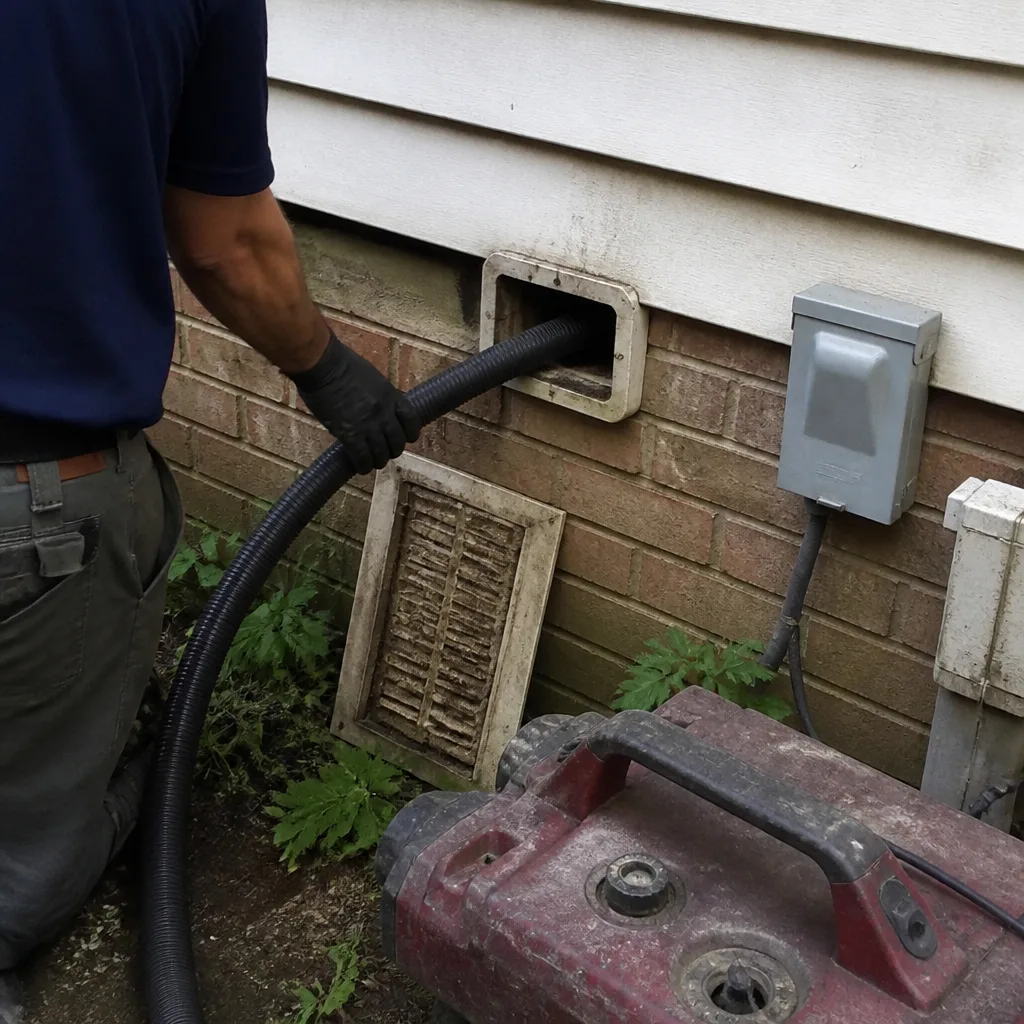 Before
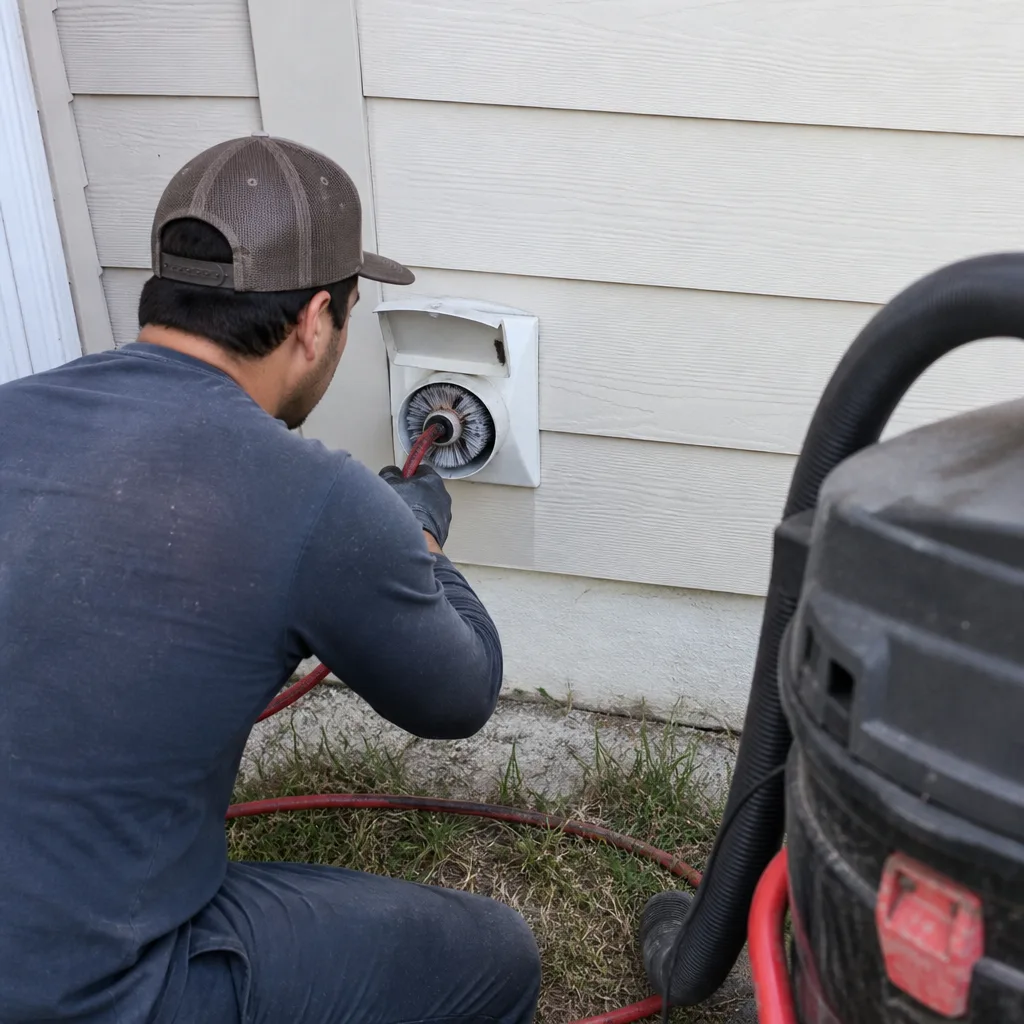 After
After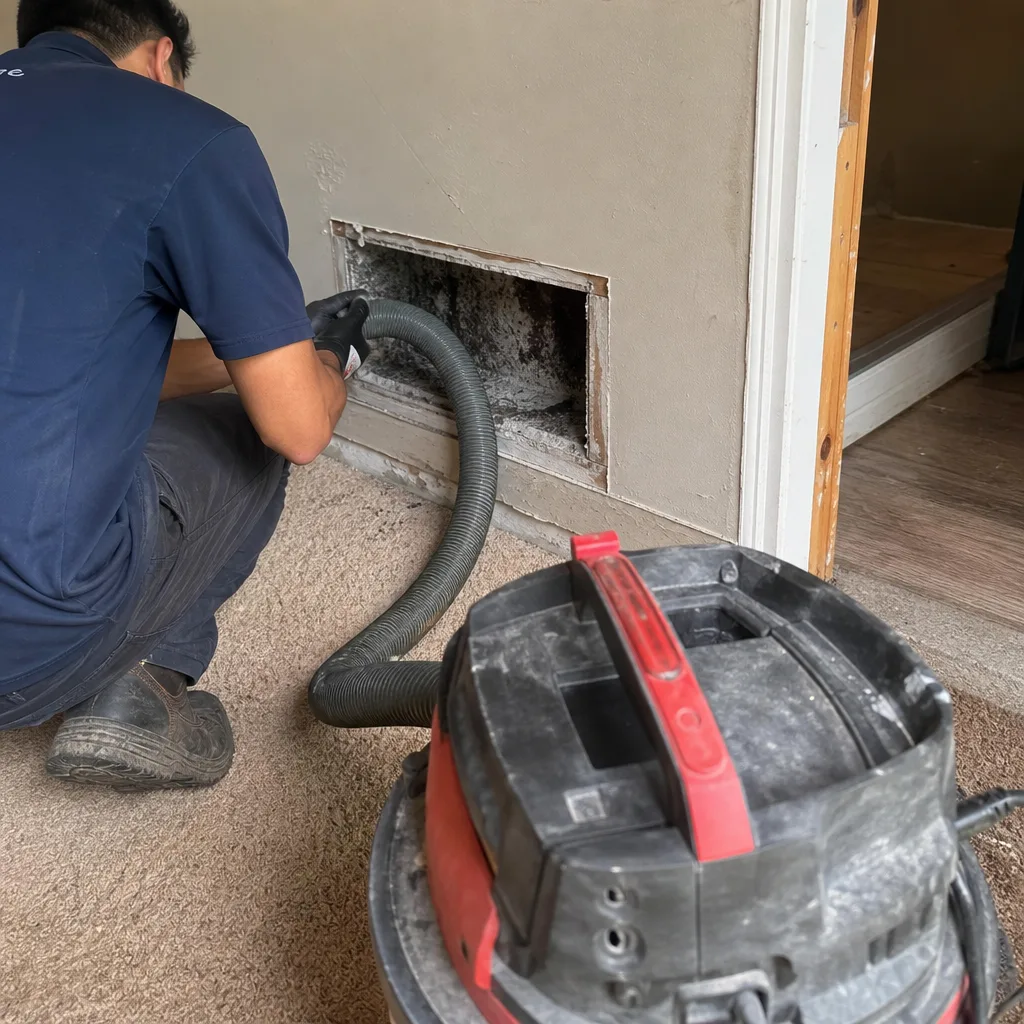 Before
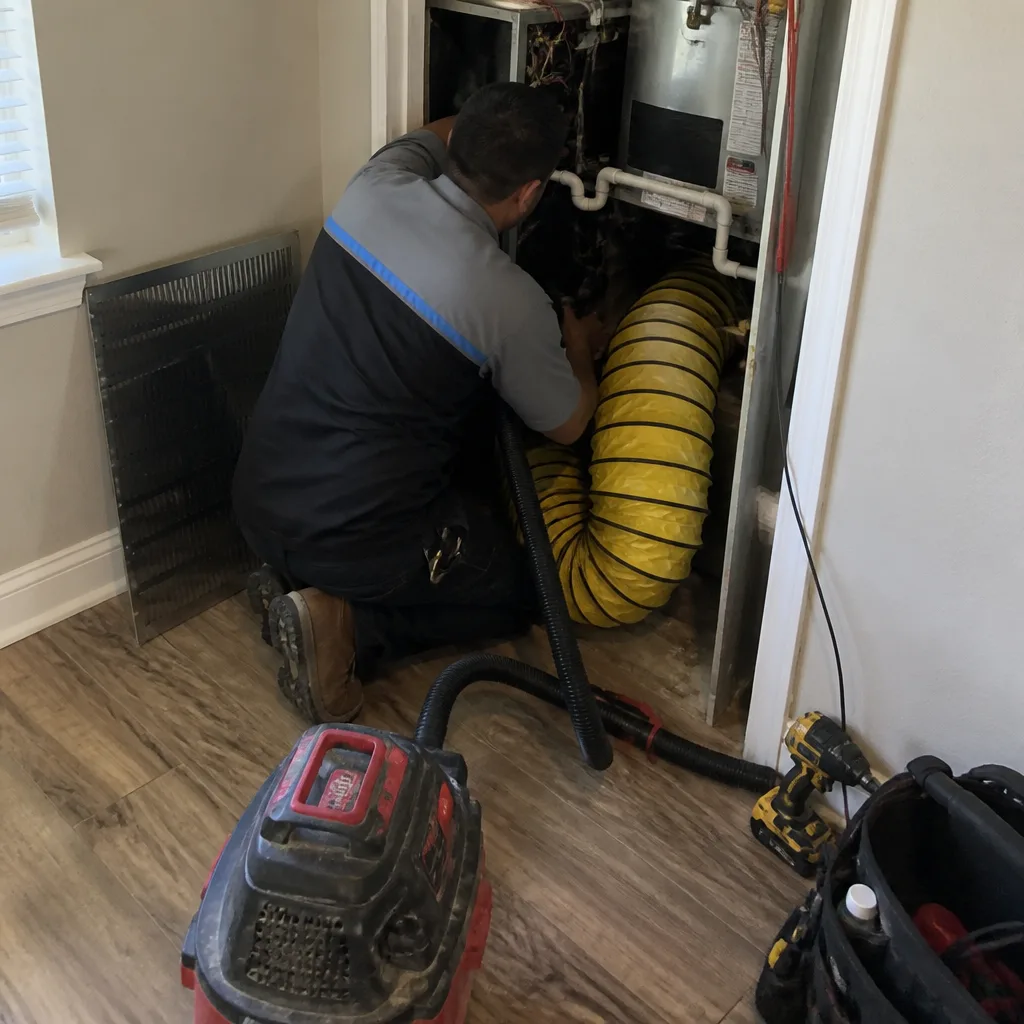 After
After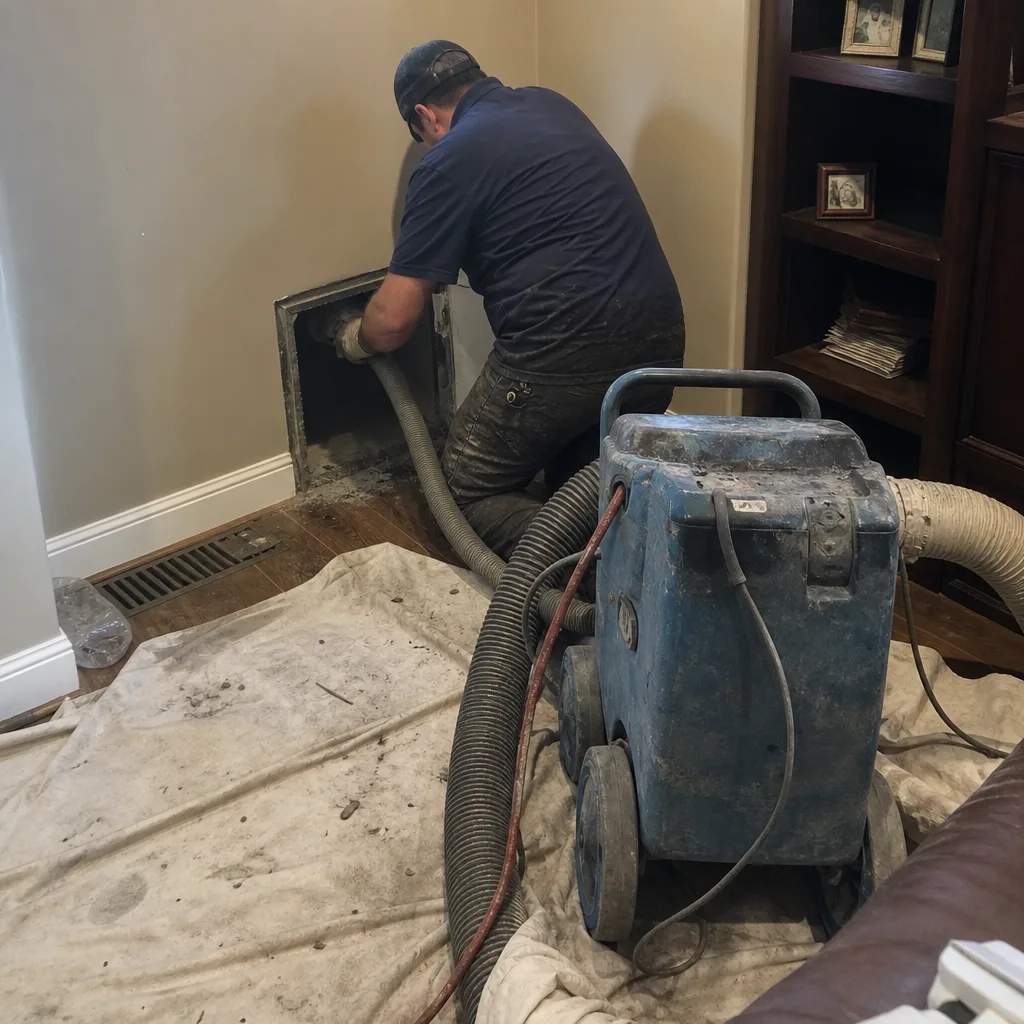 Before
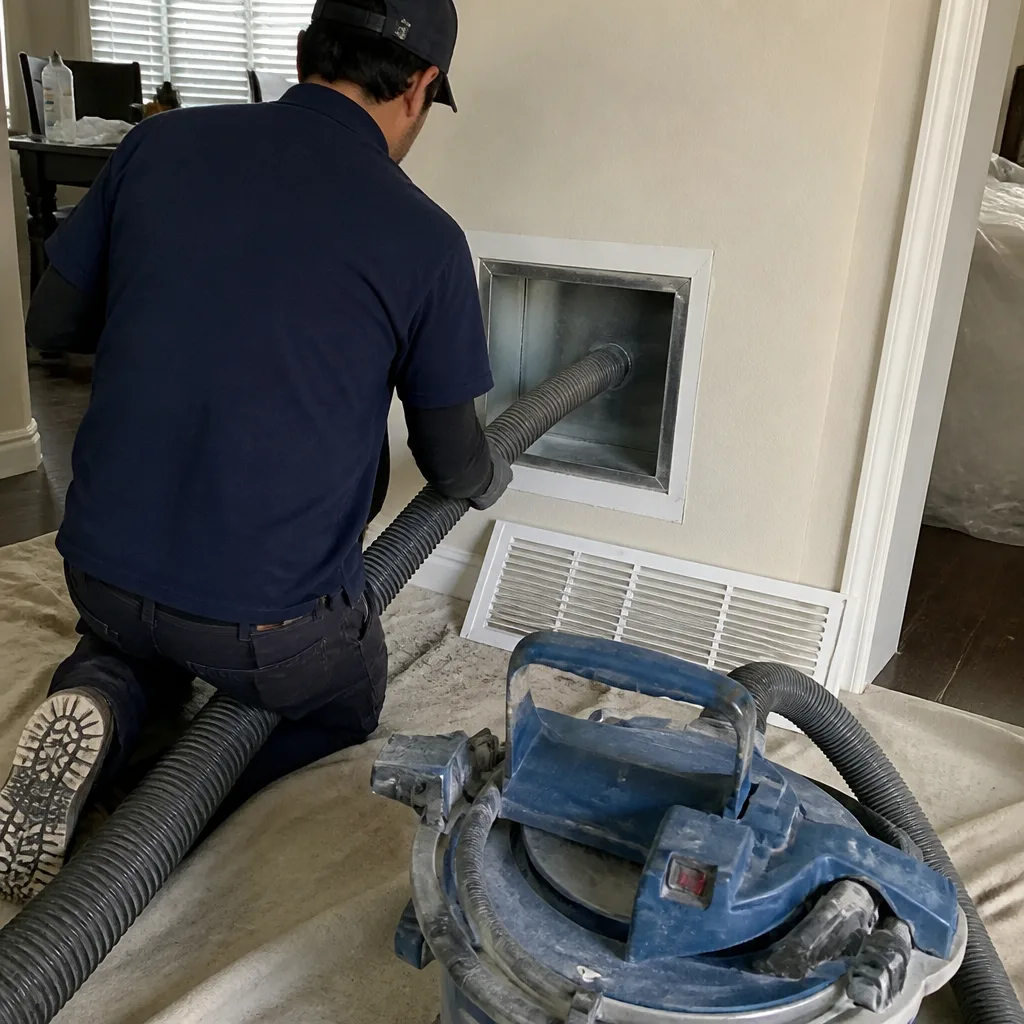 After
AfterAir Duct Cleaning Maintenance Checklist for Spring Homeowners
Replacing your air filter every 30 days does nothing for the debris already coating the inside of your trunk line. In Spring, where Gulf humidity pushes indoor relative humidity above 60% for weeks each spring, that debris becomes a substrate for microbial growth while your filter sits pristine in its housing. Most maintenance checklists collapse filter changes and duct maintenance into one item, which leaves homeowners inspecting the wrong system entirely. This guide gives you a room-by-room protocol based on what is actually inside your ductwork: what you can observe yourself, what requires a camera and negative-pressure extraction equipment, and how to document conditions so your next our Air Duct Cleaning services call starts with evidence instead of guesswork.
Quick Answer
A complete air duct cleaning maintenance checklist for Spring homeowners includes two separate tracks: homeowner inspections of registers, visible flex duct, filter housings, and condensate pans every 90 days, plus professional camera inspection and negative-pressure cleaning of interior duct runs every 3-5 years, or immediately after renovation, flooding above 60% relative humidity for 72+ hours, or confirmed rodent activity. For related reading, see our Air Duct Cleaning Warning Signs: A Spring Homeowner’s Reference Guide. The critical difference is that filters catch incoming particles; they do not remove existing buildup from the plenum or trunk lines.
Table of Contents
- Why Filter Changes Are Not Duct Maintenance
- Homeowner Inspection Track: What You Can Check Yourself
- Professional Inspection Track: What Requires Equipment
- Spring-Specific Timing and Triggers
- The Phone Camera Protocol: Documenting What You See
- How to Spot a Failed Duct Connection
- Building Your Documentation Record
- Common Mistakes to Avoid
- When to Call a Professional
- Frequently Asked Questions
- The Bottom Line
BeforeAfterWhy Filter Changes Are Not Duct Maintenance
Your HVAC filter is a barrier at the return grille or air handler. It catches particles entering the system. It does not clean what is already downstream: the supply trunk, the branch ducts, the boots, or the plenum - the large central chamber that distributes conditioned air to each duct run. In Spring homes built during the 2015-2020 construction boom, we regularly find filters rated MERV 11 or higher installed with ductwork that has never been internally inspected.
Here is what that looks like in practice. A homeowner in the Harmony neighborhood changes their filter on the first of each month. The filter is clean. But the camera shows a 2-inch debris ridge at the first elbow of the master bedroom duct run, where airflow drops below 400 feet per minute and particles settle. The filter did not cause this. The filter cannot fix it. The debris was there before the current filter was installed, and it will remain until it is physically extracted with negative-pressure equipment.
The maintenance checklist must treat these as parallel systems:
- Filter system: Replace or clean per manufacturer interval, typically 30-90 days depending on MERV rating and household conditions.
- Duct interior system: Inspect, document, and clean based on observable interior conditions, not calendar assumptions.
At CleanRun Air Duct Cleaning Spring, we have photographed this disconnect in over 52,000 homes since 2013. The photo record is included on every visit as a standard deliverable, not an upsell. Homeowners see the gap between filter condition and duct condition for themselves.
Homeowner Inspection Track: What You Can Check Yourself
This track covers components you can observe without tools beyond a flashlight, your phone camera, and a screwdriver to remove register covers. Perform these checks quarterly, and always after any event that could introduce contaminants: renovation, water intrusion, or pest activity.
1. Register Covers and Surrounding Surfaces
Remove each register cover. Look for:
- Debris accumulation on the back of the cover itself - a light film is normal; clumps or streaks indicate upstream buildup
- Discoloration of the surrounding ceiling or wall paint, which can indicate sustained airflow imbalance or moisture
- Loose or missing screws that allow the cover to rattle, creating gaps where unfiltered attic air pulls in
In Spring’s older subdivisions like Cypresswood and Timber Lane, we often find register covers painted shut by previous owners. Forced removal damages the surrounding drywall. If a cover will not lift free with gentle pressure, note it for professional attention rather than forcing it.
2. Visible Flex Duct Condition
In homes with attic ductwork, inspect any flex duct you can safely access. Look for:
- Sagging between support straps - flex duct should maintain a gentle slope, not form valleys where condensation pools
- Tears or compression at bends, common where installers routed around trusses in tight attic spaces
- Disconnected insulation jacket, exposing the inner liner to attic temperature extremes
Spring attic temperatures reach 140°F in July. A compromised flex duct liner in that environment degrades faster than in cooler climates. Note any damage with date and location; do not attempt repair yourself, as improper reconnection can reverse airflow or create cross-contamination between return and supply.
3. Filter Housing Integrity
Remove the filter. Inspect the housing tracks for:
- Debris bypass - accumulation on the downstream side of the filter slot means air is flowing around, not through, the filter
- Corrosion or moisture staining, which in Spring’s humidity indicates condensate management problems upstream
- Proper filter size - a 1-inch gap around a poorly fitted filter is functionally equivalent to no filter
4. Condensate Drain Pan and Line
Locate the evaporator coil drain pan, typically beneath the indoor air handler. Check for:
- Standing water or algae growth, which produces odors that distribute through the duct system
- Cracks in the pan, common in PVC pans after 8-10 years of thermal cycling
- Proper slope on the drain line - water should flow freely to the exterior or floor drain
Spring’s spring and fall shoulder seasons produce extended periods of 70-75°F outdoor temperature with 75%+ relative humidity. HVAC systems in these conditions run long cooling cycles without achieving deep dehumidification, producing more condensate than design specifications assume. Drain pan problems spike in April and October.
Professional Inspection Track: What Requires Equipment
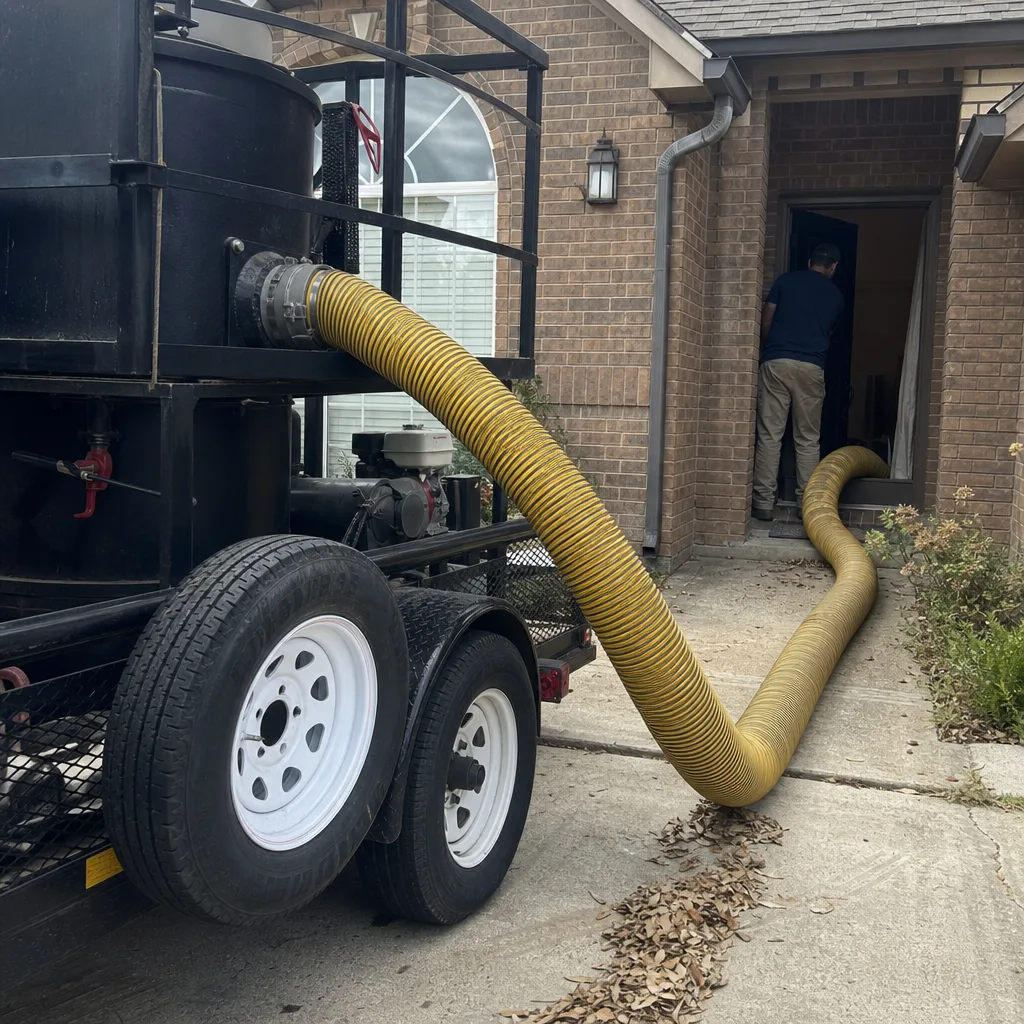
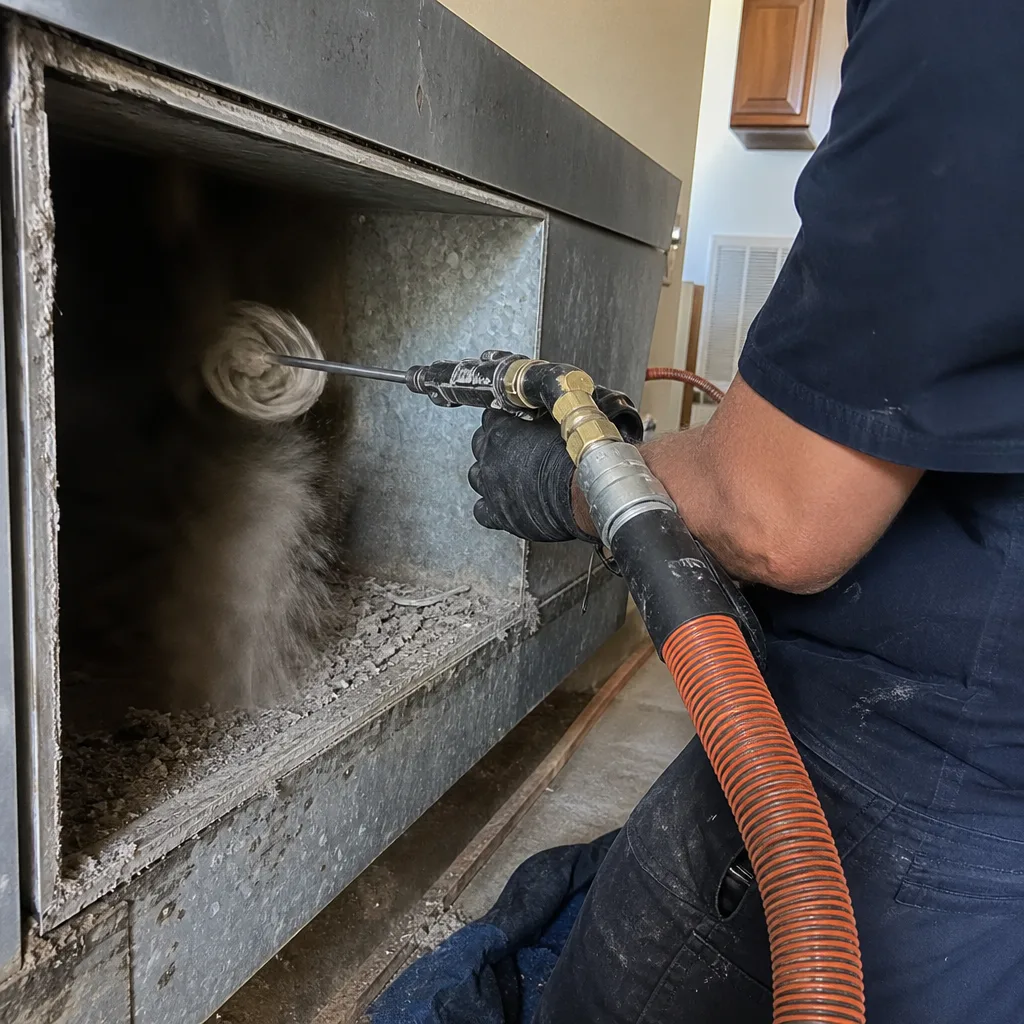
These conditions cannot be assessed from the register opening. They require borescope cameras, pressure measurement, and negative-pressure extraction equipment from manufacturers like Rotobrush, Nikro, and Abatement Technologies.
Interior Debris Loading
A technician inserts a camera 10-15 feet into each duct run, past the boot connection. The image should show smooth metal or intact liner. What indicates cleaning is needed:
- Debris depth exceeding 1/8 inch on horizontal duct floors
- Stringy or fibrous material, typically degraded filter media or insulation
- Uniform gray coating that wipes away to reveal darker substrate - this is accumulated fine particulate, not normal surface oxidation
In Spring homes with post-Harvey reconstruction, we regularly find drywall compound dust and insulation fragments from 2017-2018 repairs still lodged at duct elbows. This material does not break down; it compacts.
Plenum Condition
The plenum - the sheet metal box attached to your air handler - is the most overlooked component. Camera inspection here requires removing an access panel. Look for:
- Debris accumulation at the air handler connection, where airflow is most turbulent
- Corrosion from condensate splash-back
- Disconnected internal baffles that cause airflow to short-cycle between supply and return
Pressure Balance Testing
Professional equipment measures static pressure across the system. High return static pressure often indicates blockage; high supply static pressure can mean undersized ducts or excessive debris. Spring homes with original construction from the 1990s-2000s frequently have supply ducts sized for 3-ton systems now connected to 4-ton replacements, creating velocity problems that accelerate debris settling.
Sealing Integrity
Smoke pencils or theatrical fog reveal leaks at joints and seams. In Spring’s climate, attic leaks pull 140°F air into the system in summer and humid outdoor air in shoulder seasons. A 10% leak rate in the return ductwork can double the cooling load attributed to ventilation.
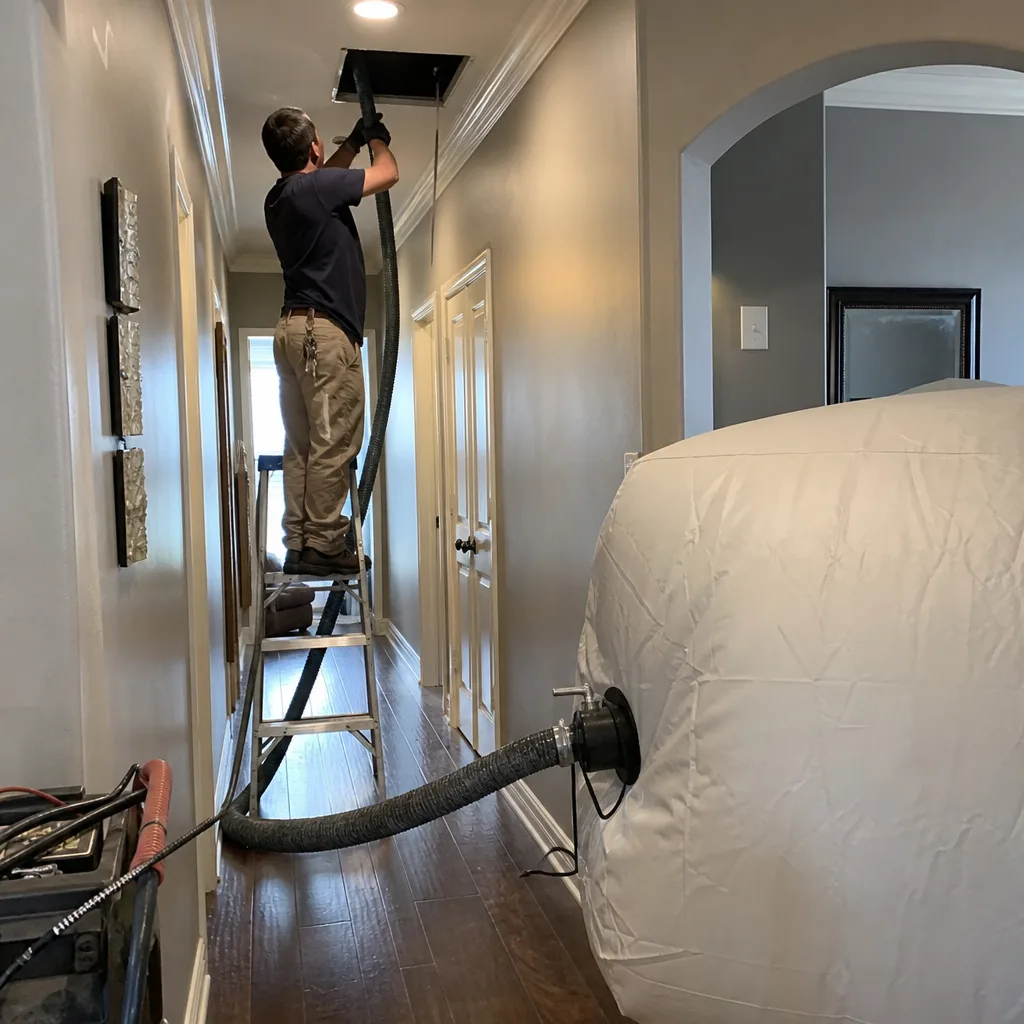
Air Duct Cleaning in Spring from CleanRun includes full camera documentation of each of these components, delivered as a photo record with the written scope of work.
Spring-Specific Timing and Triggers
Calendar-based cleaning every “3-5 years” is a starting point, not a rule. In Spring, Texas, four specific conditions override any calendar interval:
Post-Renovation
Any project involving drywall, flooring, or significant demolition produces particulate that the HVAC system actively distributes while running. Even with registers covered, negative pressure in return ducts pulls dust through gaps. Schedule professional inspection 2-4 weeks after renovation completion, once airborne dust has settled into the ductwork where cameras can document it.
High-Humidity Events Exceeding 60% RH for 72+ Hours
Spring sits in a Gulf Coast humidity corridor where tropical systems, spring frontal stalls, and post-hurricane conditions produce sustained indoor humidity above 60%. At this threshold, dust mite populations double every 72 hours, and fungal spores germinate on organic debris in ductwork. If your hygrometer reads above 60% for three consecutive days, inspect visible components immediately and schedule professional camera inspection within 30 days. Before scheduling, review Air Duct Cleaning Permits, Codes & Inspections in TX: What You Need to Know to understand regulatory requirements.
Confirmed Rodent Activity
Rodents in attics or wall cavities use ductwork as travel corridors. Even without direct entry, their dander and waste become airborne through leaks. In Spring’s developing areas like Benders Landing and Spring Trails, new construction disturbs habitat and drives rodents into established neighborhoods. Evidence includes:
- Scurrying sounds during system off-cycles, when ducts are quiet
- Unexplained debris at registers - seeds, insulation fragments, or droppings
- Urine odor that intensifies when the system first starts
Do not attempt to seal ducts from the interior yourself; improper materials can off-gas or obstruct airflow. Professional repair with mastic and mechanical fasteners is required.
Post-Flooding or Water Intrusion
Any water reaching ductwork, whether from roof leaks, foundation seepage, or plumbing failure, requires immediate inspection. Fibrous duct liner wicks water and does not dry effectively in Spring’s humidity. We have documented mold growth in flooded duct systems within 7 days of water exposure.
The Phone Camera Protocol: Documenting What You See
Your phone camera is a legitimate inspection tool. Used correctly, it creates evidence that makes your next service call more productive and protects you from unnecessary work. Here is the protocol we teach homeowners in Spring:
- Remove the register cover completely. Do not photograph through the grille - the pattern obscures detail. Set screws aside in a cup; they roll into floor vents easily.
- Clean the phone lens. Dust on the lens produces false artifacts that look like duct debris.
- Turn on flashlight and hold it parallel to the duct, not pointing straight in. Side-lighting reveals texture and depth; direct lighting flattens everything into a bright circle.
- Insert the phone 18 inches into the opening, minimum. The first 12 inches typically show only the boot - the transition piece from trunk to branch. Debris accumulates beyond this point where diameter changes reduce airflow velocity.
- Take three photos per register: straight in, angled left, angled right. This captures the duct floor, which is where debris settles, and both sidewalls.
- Photograph the register cover backside separately. Heavy accumulation here indicates significant upstream debris; clean cover with dirty duct suggests recent cleaning of only visible components.
What Your Photos Should Show
- Smooth metal surfaces with light dust film only
- Consistent duct diameter with no visible obstructions
- Intact flex duct liner with no tears or compression
What Your Photos Should Not Show
- Debris ridges or mounds, especially at elbows or joints
- Discoloration patterns that suggest water staining
- Insect casings, rodent droppings, or nesting material
- Disconnected or sagging duct sections visible from the opening
Date each photo file and store in a dedicated folder. This becomes your baseline for comparison at next inspection.
How to Spot a Failed Duct Connection
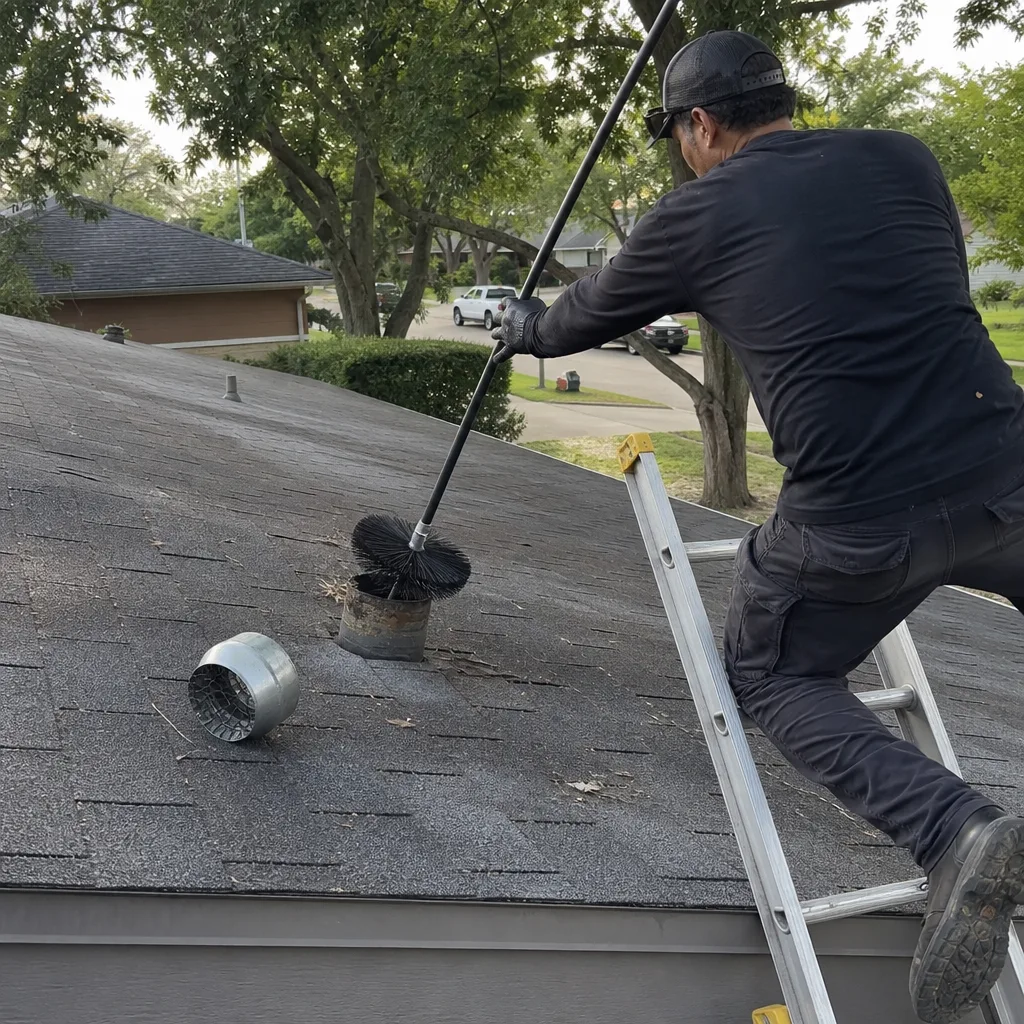
In Spring homes with flex duct installations from the 1990s through mid-2000s, we find pulled connections at trunk boots in approximately 30% of first-time inspections. This is not a minor leak. A disconnected 8-inch supply duct in a 140°F attic pressurizes the attic with conditioned air and depressurizes the house, pulling humid outdoor air through every crack.
From the register opening, look for these indicators:
- The “dark circle” sign: A properly connected boot shows light metal visible at the duct end. A pulled connection shows black flex liner hanging with a dark void behind it - the open trunk connection.
- Asymmetric airflow: Hold a tissue at the register. It should draw flat against the grille evenly. If one corner barely moves, the duct may be partially detached or crushed.
- Temperature anomaly: In cooling season, a disconnected supply duct blows attic-temperature air, often 30°F warmer than other registers. In heating season, it blows cold air.
Properly sealed connections use mastic - a thick, paste-like sealant - at all joints, with mechanical straps at flex duct transitions. Duct tape degrades in attic heat and is not a proper sealant despite its name. If you see silver tape with peeling edges or yellowed adhesive, the connection has been repaired incorrectly and needs professional resealing.
HVAC Cleaning in Spring from CleanRun includes pressure testing that identifies these leaks quantitatively, not just visually.
Building Your Documentation Record
A checklist without a record is a memory exercise. The documentation template below turns your inspections into an accountable history. We provide this format to every CleanRun customer; you can replicate it yourself.
| Field | Content |
|---|---|
| Property Address | Full address, including subdivision name |
| Date of Inspection | Exact date, not month approximation |
| Inspector | Homeowner name or technician name and company |
| Weather Conditions | Outdoor temperature and humidity - affects system load and condensation risk |
| Registers Inspected | Room-by-room list with pass/fail/needs attention |
| Photo File Location | Folder path or cloud storage link |
| Visible Duct Condition | Notes on accessible flex duct, filter housing, drain pan |
| Professional Service Date | Last camera inspection and cleaning |
| Technician Name | Individual who performed service, per Haven Standard Clause 3: Verified Crews |
| Equipment Used | Brand and model of cleaning and camera equipment |
| Warranty Start Date | For CleanRun jobs, the 365-Day Done Right Promise activation date |
| Next Scheduled Inspection | Calendar date, triggered by interval or event |
This record serves multiple purposes. It demonstrates maintenance history for home sale disclosures. It prevents duplicate service by showing exactly what was cleaned and when. And it holds service providers accountable - including us - by establishing a baseline for warranty claims.
At CleanRun, the photo record from every visit is delivered with the written scope and warranty documentation. Customers in Spring neighborhoods from Gleannloch Farms to Augusta Pines use these records to coordinate service across multiple properties or to verify that promised work was performed.
Common Mistakes to Avoid
- Treating filter replacement as duct cleaning. A clean filter with dirty ducts is like changing your car’s air filter without ever checking the oil. The systems are connected but serve different functions.
- Using register vacuums or shop vacuums as “duct cleaning.” These tools clean the first 12-18 inches of duct - the boot - and leave the trunk line and plenum untouched. The visible result satisfies homeowners while the actual problem remains.
- Ignoring flex duct in favor of hard pipe. Spring’s suburban construction relies heavily on flex duct for cost efficiency. It fails more frequently than hard pipe but receives less attention because it is harder to inspect without attic access.
- Scheduling cleaning based solely on odor. Odor indicates a problem, but its absence does not indicate health. We have photographed severe debris loading in ducts with no detectable odor, and minor contamination producing strong smells due to moisture interaction.
- Accepting “blow-and-go” service without photo documentation. If a technician cannot show you what was in your ducts before and after, you have purchased an unverified service. The Haven Standard requires photo record inclusion as a standard deliverable, not an option.
- Sealing ducts from the interior with consumer products. Mastic requires application at the joint exterior; interior sprays and tapes fail within months in Spring’s thermal and humidity conditions.
- Waiting for visible register debris before acting. By the time debris reaches the register, the upstream duct is heavily loaded. The register is the end of the line, not the beginning.
When to Call a Professional
Call for professional camera inspection and cleaning when your documentation shows any of the following: debris visible beyond 18 inches in multiple registers, pulled or disconnected duct connections, water staining or corrosion, confirmed pest activity, post-renovation or post-flooding conditions, or system pressure imbalances causing uneven heating and cooling.
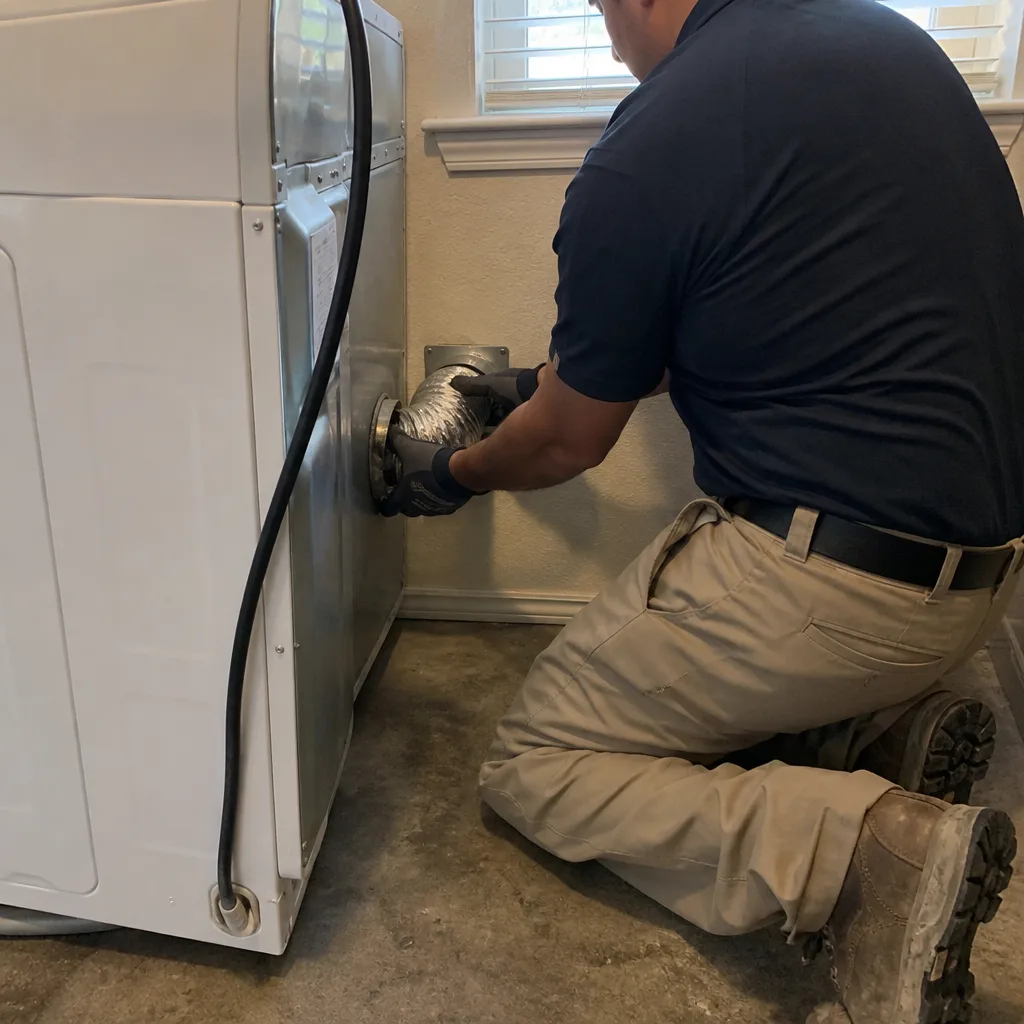
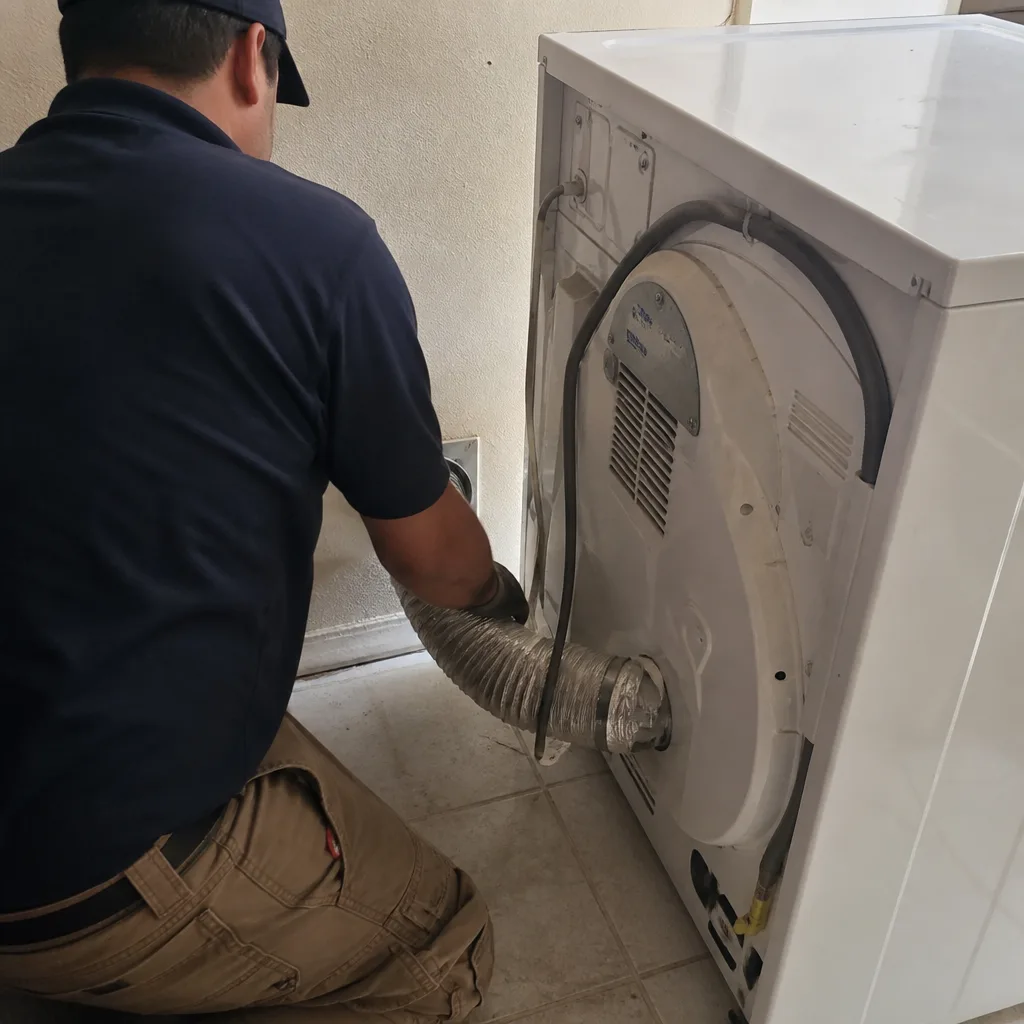
CleanRun Air Duct Cleaning Spring offers free estimates in Spring - call (346) 423-3631. Every estimate includes a written price before any work begins, per Haven Standard Clause 1. Our technicians use Rotobrush and Nikro equipment with full camera documentation, and every job is backed by the 365-Day Done Right Promise. Dryer Vent Cleaning in Spring can be scheduled concurrently for homes with laundry ducting due for inspection.
Frequently Asked Questions
Whole-system air duct cleaning in Spring typically ranges from $450 to $850 for a standard single-system home under 3,500 square feet, depending on duct accessibility, number of registers, and whether sanitizer application is included. Two-system homes or those with extensive flex duct in conditioned attics may reach $1,100. CleanRun provides a written price before any work begins - there is no per-vent pricing, no trip charge surprise, and no upsell after arrival. Call (346) 423-3631 for an exact quote; estimates are free.
Low quotes typically cover register vacuuming only, not full-system cleaning with negative-pressure extraction and camera documentation. The $79-$129 coupon model pays for a technician to spend 45 minutes with a shop vacuum at your registers, then depart. The trunk line, plenum, and interior branch ducts remain untouched. Ask any provider: will you photograph inside every duct run before and after? Will you provide a written scope specifying which components are included? If the answer is no, the price reflects the limited service, not a bargain.
Demand a photo record showing the interior of each duct run before and after cleaning, with date stamps. At CleanRun, this is standard on every job, included at no additional charge since our first job in 2013. The photo record is delivered with the written scope and warranty documentation. Without it, you have only the technician’s word, which is not documentation.
For typical Spring homes without special risk factors, professional camera inspection every 3-5 years is sufficient, with cleaning performed when debris loading exceeds 1/8 inch. However, Spring’s humidity, post-hurricane reconstruction debris in older homes, and rapid suburban development disturbing soil and vegetation all accelerate accumulation. Homes in newer developments like Spring Trails or with recent renovation should inspect at 2-year intervals until a baseline is established.
You can clean register covers and the first 12-18 inches of duct boot, which is worthwhile maintenance. You cannot effectively clean trunk lines, plenums, or branch ducts without negative-pressure extraction equipment that maintains 2,000+ CFM suction at the duct interior while preventing debris release into the home. Attempting to force a vacuum hose around duct elbows can damage flex duct connections or lodge debris deeper. For interior ductwork, professional service is the appropriate choice.
Ask four questions: Will you provide a written price before any work begins? Will you photograph inside every duct run before and after? What specific equipment brands and models will you use? What warranty backs the work, and is it in writing? CleanRun answers: yes, yes, Rotobrush/Nikro/Abatement Technologies equipment named by model, and the 365-Day Done Right Promise documented on every invoice. Any provider reluctant to answer these questions in writing is not selling transparent service.
The Bottom Line
Effective air duct maintenance separates what filters do from what duct cleaning does, inspects what you can see yourself while demanding documentation for what you cannot, and treats your duct system as a documented asset rather than an out-of-sight assumption. In Spring’s climate - humid, storm-exposed, and rapidly developing - the cost of undocumented neglect is microbial growth, pressure imbalance, and accelerated equipment wear that shows up first in your energy bills and later in repair invoices. The checklist in this guide gives you the protocol. The documentation template gives you the accountability. For more guides & resources, explore our blog. The decision to act on what you find is yours.
CleanRun Air Duct Cleaning Spring home services are available throughout Spring and surrounding communities, with written pricing, photo documentation, and the H.A.V.E.N. Standard on every job.
Written by Tomas Reyes, Owner at CleanRun Air Duct Cleaning Spring, serving Spring since 2013.