
Last updated September 23, 2026
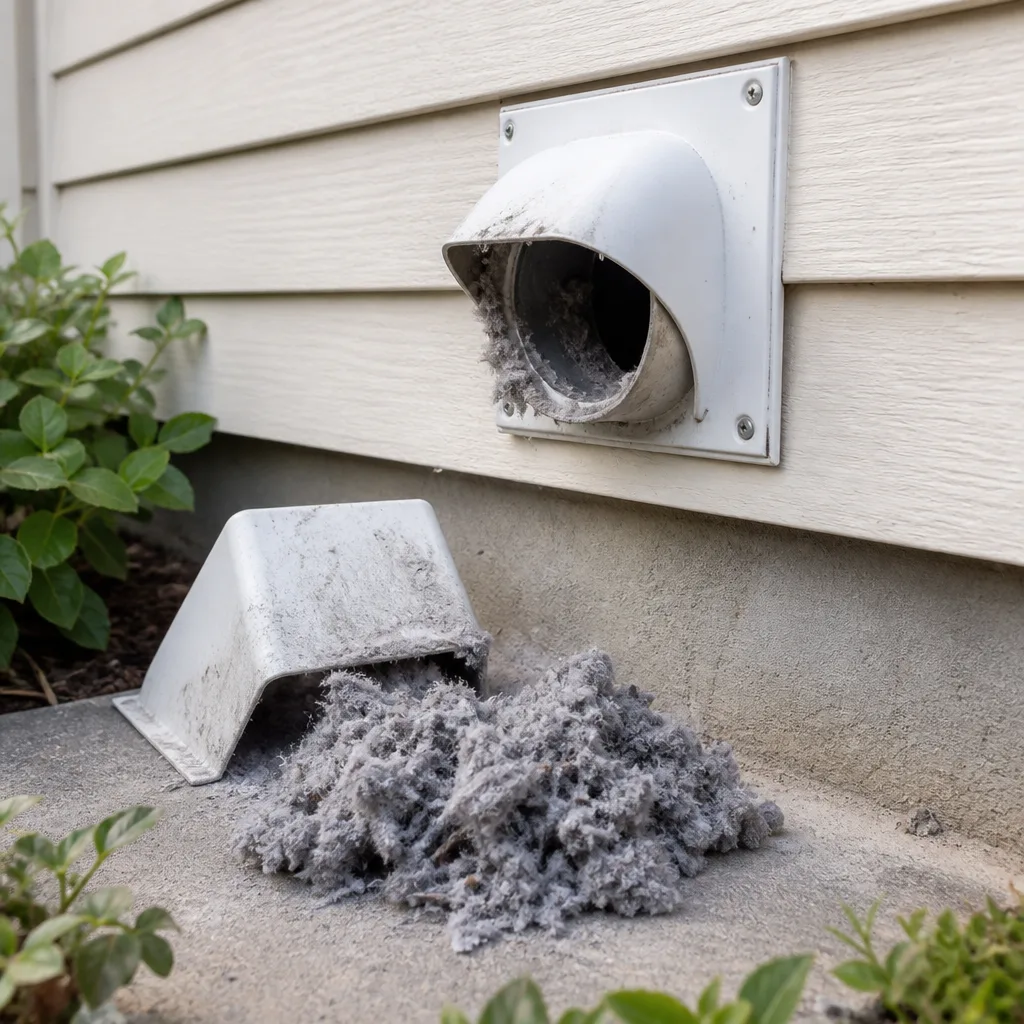
Whole-system duct and dryer vent check with before-and-after photos - you see exactly what came out of your vents
That "$99 whole-house special" is a bait ad - the real number appears once they are in your hallway, or the "clean" is a shop-vac at the register. We photograph the inside of your ducts before and after instead.
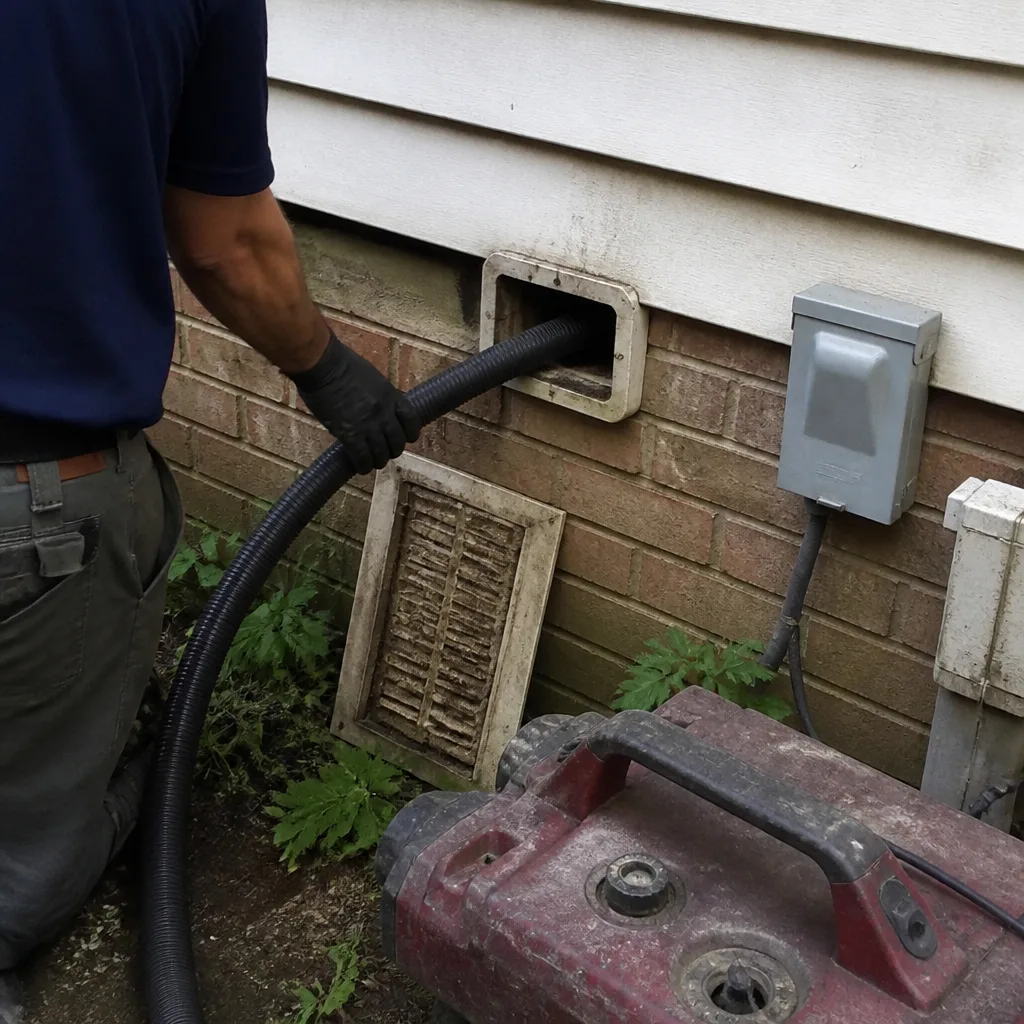 Before
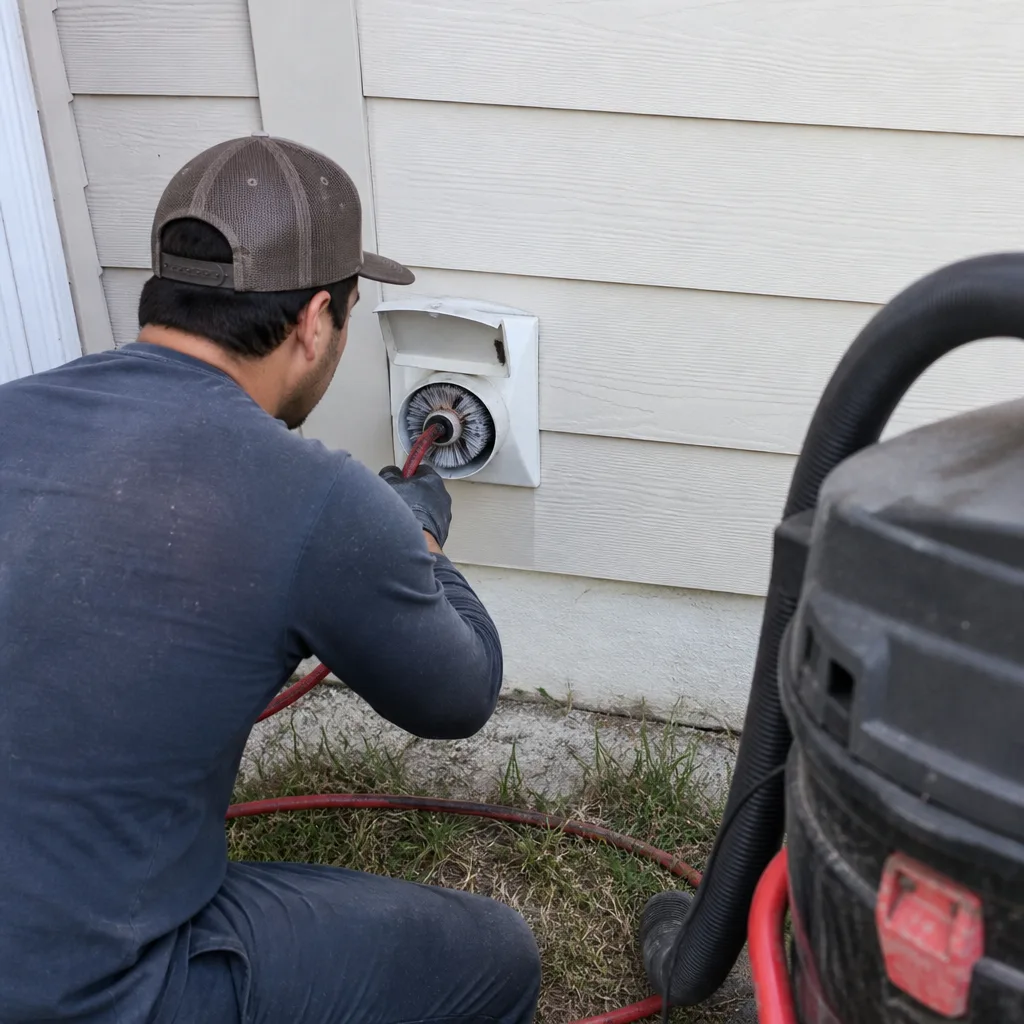 After
After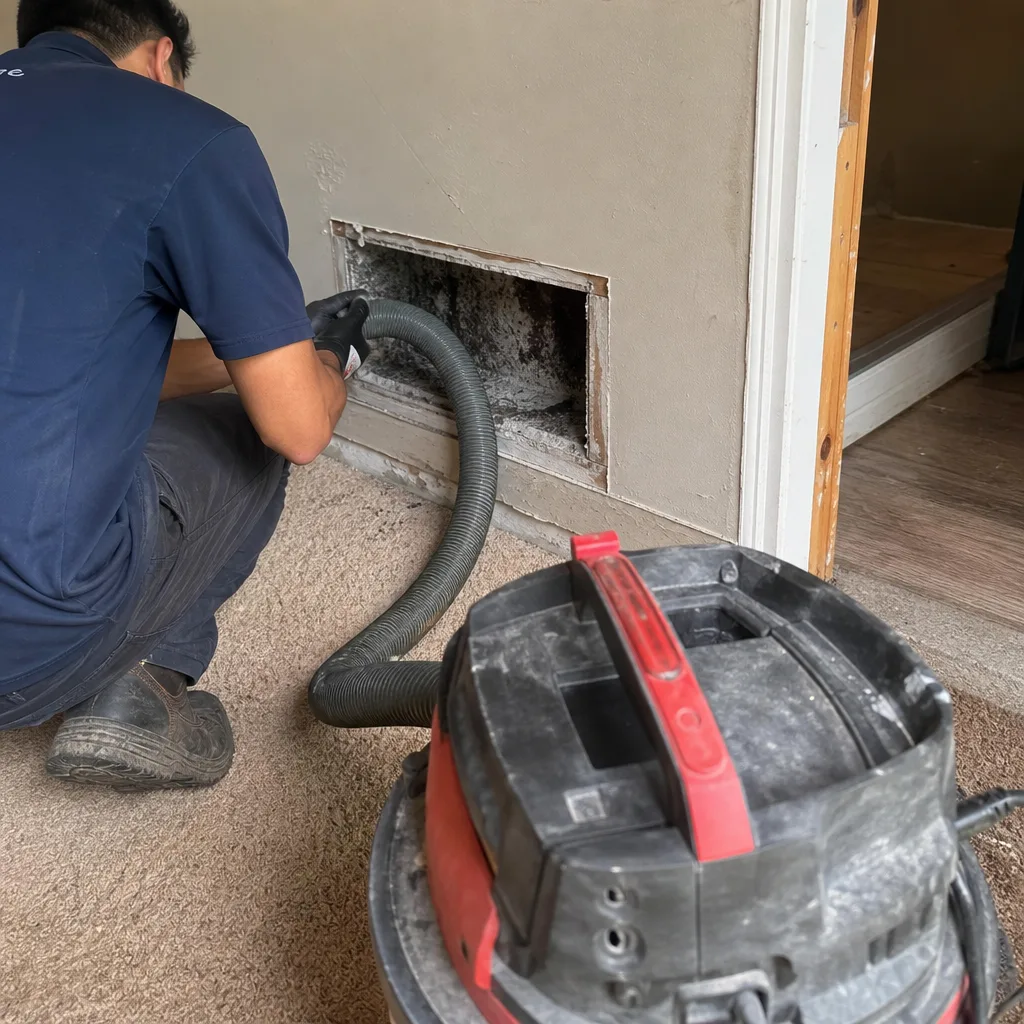 Before
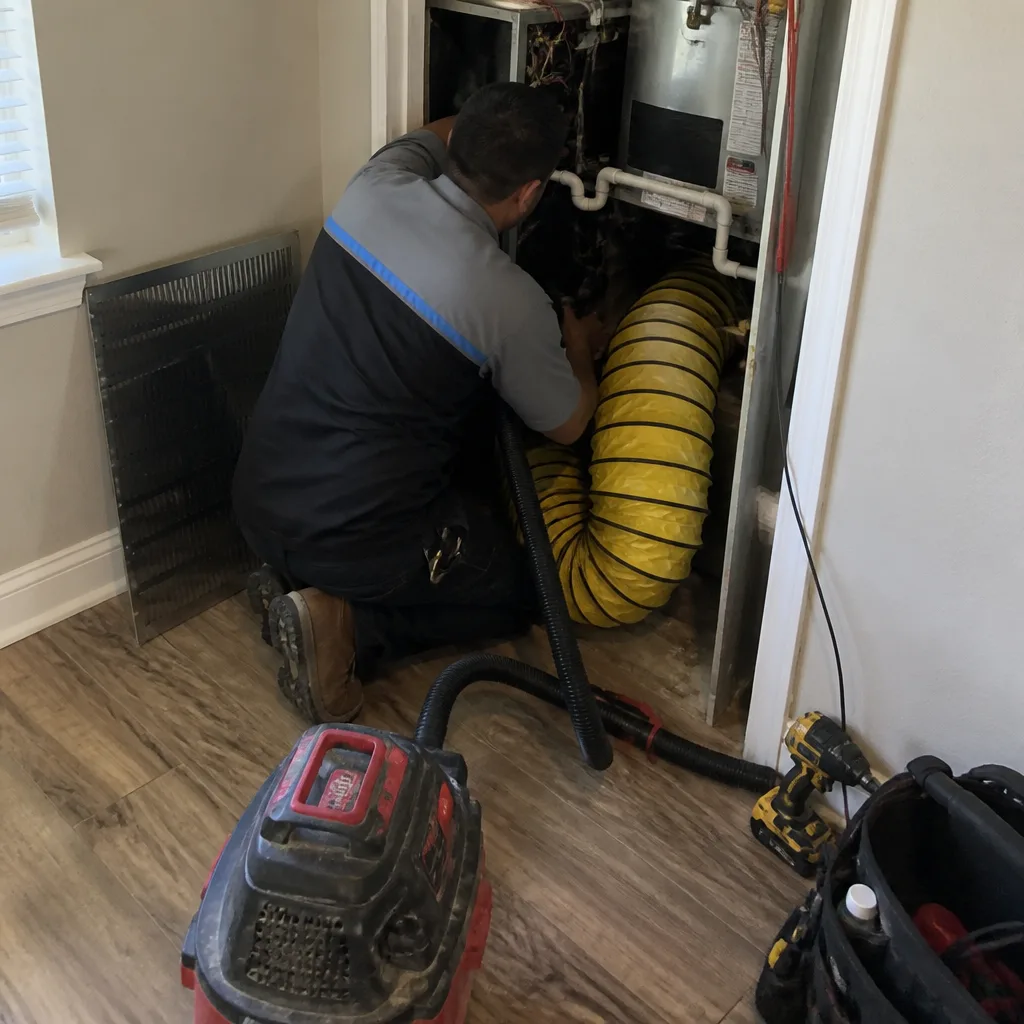 After
After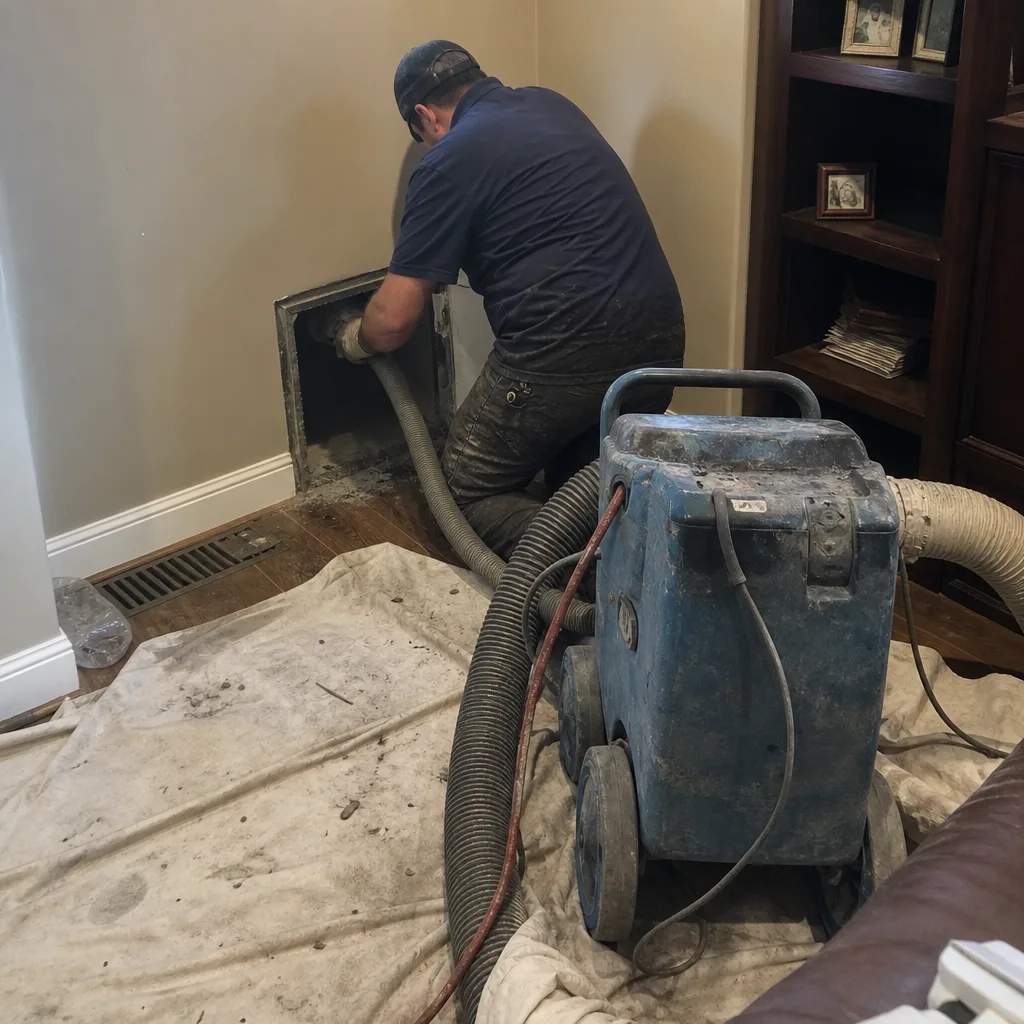 Before
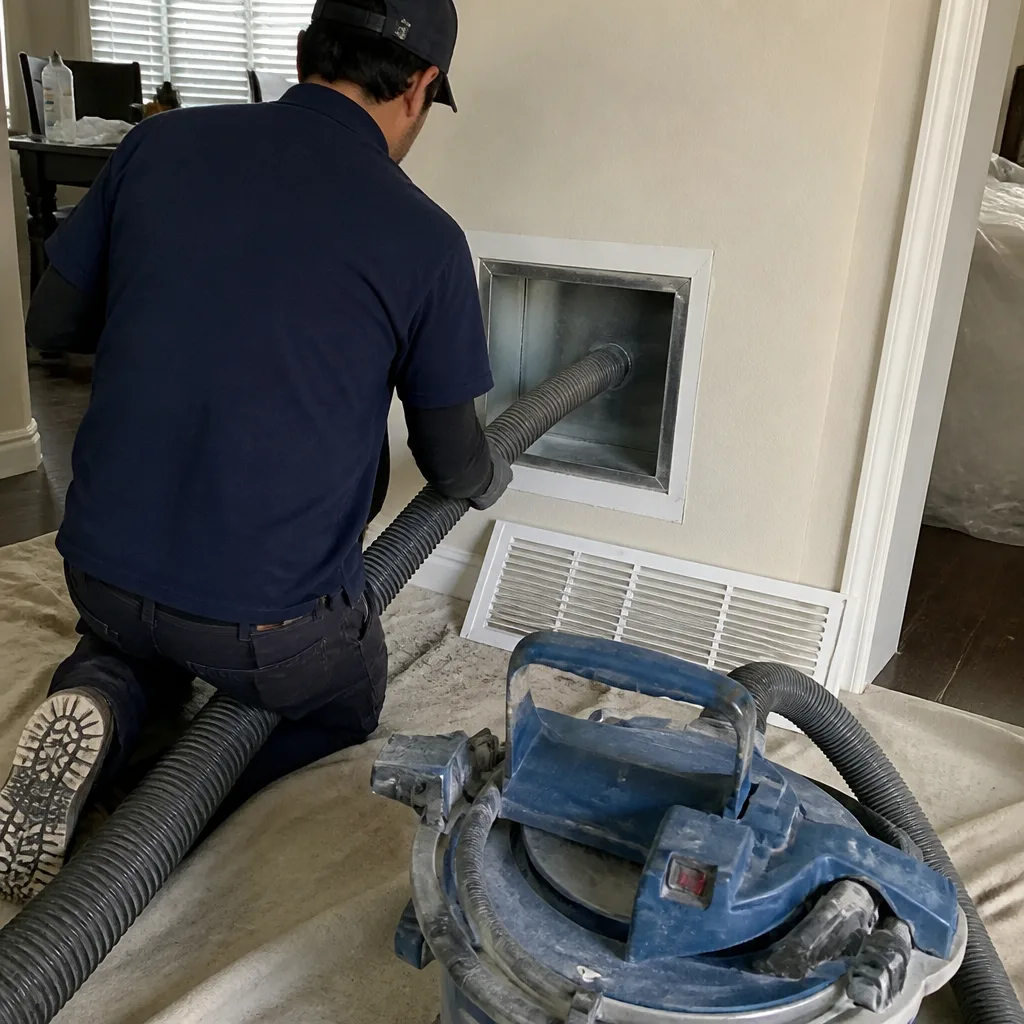 After
AfterDIY vs Professional Air Duct Cleaning: The Spring Homeowner’s Decision Guide
A homeowner in Spring with a $200 drill-mounted brush kit and a shop vac can clean the first three feet of any duct run. That is also about as far as most $79 professional visits actually reach. The real divide between DIY and professional air duct cleaning is not the cost gap most people imagine. It is equipment access, negative-pressure containment, and the ability to prove the work happened at all. In this guide, we will show you exactly what DIY equipment can and cannot do, what Spring’s climate and housing stock demand, and how to verify that any professional you hire actually completed the job they invoiced. For how to hire a air duct cleaning contractor in Spring, see our step-by-step guide.
Quick Answer
DIY air duct cleaning in Spring can handle surface debris near floor registers with a brush kit and shop vac, but it cannot maintain the continuous negative pressure required to capture debris rather than redistribute it, cannot reach horizontal trunk lines or attic-mounted air handlers, and produces no documentation of results. A properly documented professional cleaning using HEPA negative-air equipment and photo verification typically costs $400-$800 for a standard Spring home and includes written proof of completion.
Table of Contents
- What DIY Equipment Actually Does
- What Professional Equipment Does Differently
- Spring, TX Conditions That Favor Professional Work
- The Real Cost Comparison
- How to Verify a Professional Actually Did the Job
- Common Mistakes to Avoid
- When to Call a Professional
- Frequently Asked Questions
BeforeAfterWhat DIY Equipment Actually Does
Drill-mounted duct brushes, shop vacuums with extension wands, and compressed-air blowguns are the three tools most homeowners consider for DIY duct cleaning. Each has a specific, limited function, and understanding those limits prevents the most common mistake we see in Spring homes: disturbed debris that never leaves the system.
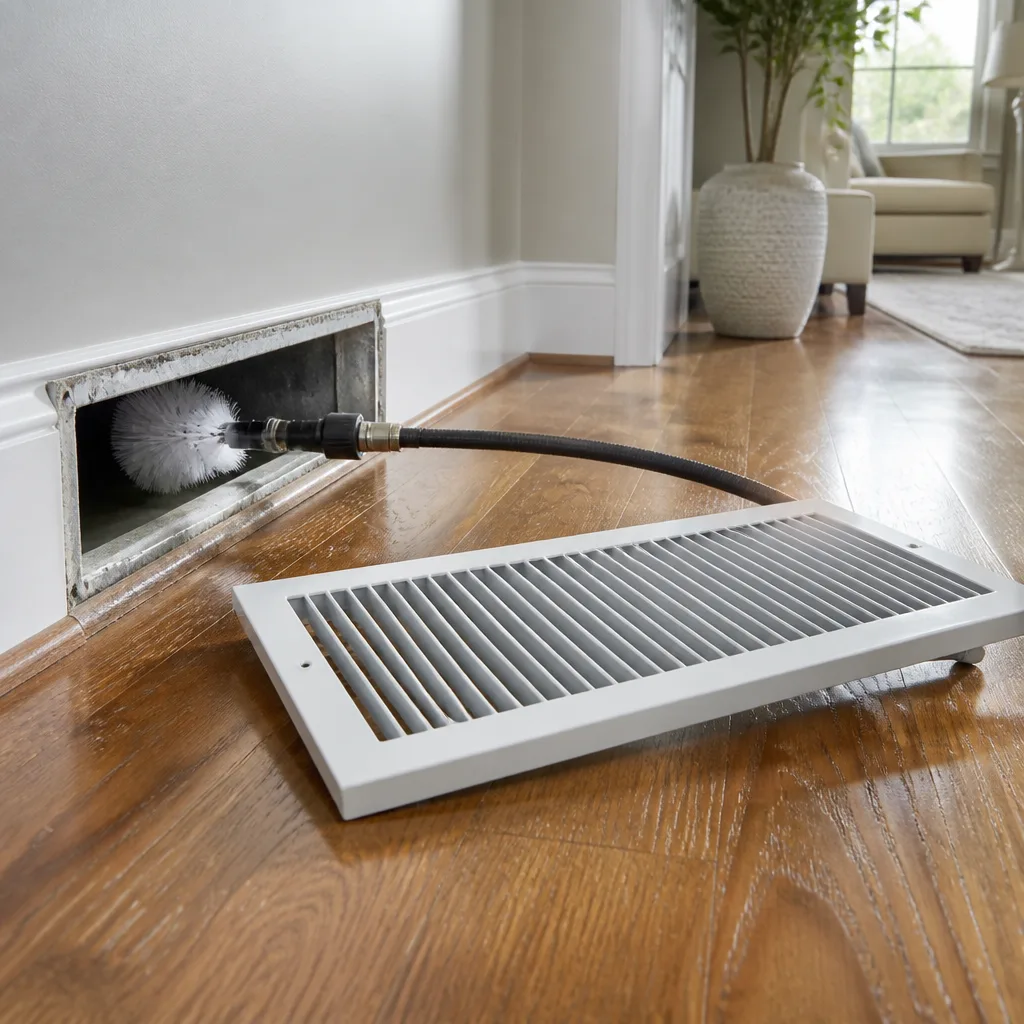
A drill-mounted brush, typically 8-12 inches of nylon bristles on a flexible shaft, agitates debris on the interior walls of a duct run. This works adequately on straight, accessible runs near floor-level registers in homes with sheet-metal ductwork. The brush can reach approximately 3-5 feet past the register boot before friction against duct walls stops progress. In our experience inspecting Spring homes after DIY attempts, this leaves 85-90% of the total duct surface untouched.
A shop vacuum with a 2.5-inch hose and extension wands can extract loose debris from the same accessible zone. Standard shop vacuums move approximately 100-150 cubic feet per minute (CFM) of air. For context, a residential duct run during normal HVAC operation moves 400-1,200 CFM. The shop vac’s suction is localized to the wand tip and dissipates rapidly with distance. It cannot create the system-wide airflow pattern needed to pull debris from trunk lines back toward the collection point.
Compressed-air blowguns, sometimes marketed as “duct cleaning guns,” operate on the opposite principle. They blast debris forward through the duct run. Without simultaneous negative pressure at the opposite end, this debris exits at the next register, the air handler, or settles deeper in the system. We have photographed the results in Spring’s Windrose and Gleannloch Farms subdivisions: registers three rooms away coated with fine particulate after a homeowner’s compressed-air attempt.
DIY equipment also cannot address:
- Horizontal trunk lines in attics or crawl spaces, which require access panel installation
- The plenum, the central distribution box above the air handler, where debris concentrates
- Evaporator coils and blower assemblies, which require specialized foaming agents and containment
- Flex duct with internal insulation, where aggressive brushing tears the liner
- Biological growth, which requires EPA-registered biocides and technician certification
The honest assessment: DIY equipment cleans what you can see and reach from a register opening. That is not nothing. For a homeowner in Spring who wants to reduce visible dust near heavily used floor registers before a gathering, a brush kit and vacuum have value. It is not, however, whole-system cleaning.
What Professional Equipment Does Differently
Professional air duct cleaning operates on a single non-negotiable principle: the entire system must be under continuous negative pressure while agitation occurs, so that disturbed debris travels toward the collection point rather than escaping into the living space. This requires equipment that DIY methods cannot replicate or rent effectively.
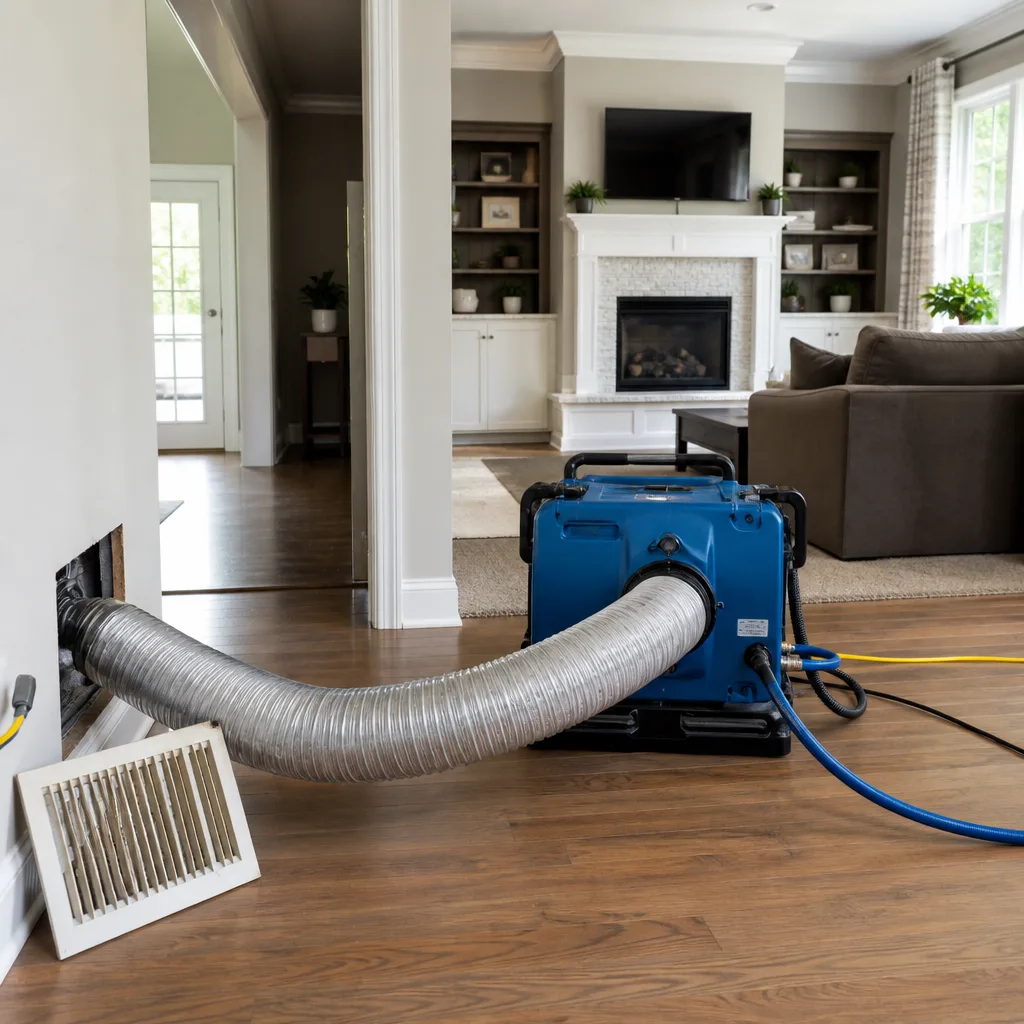
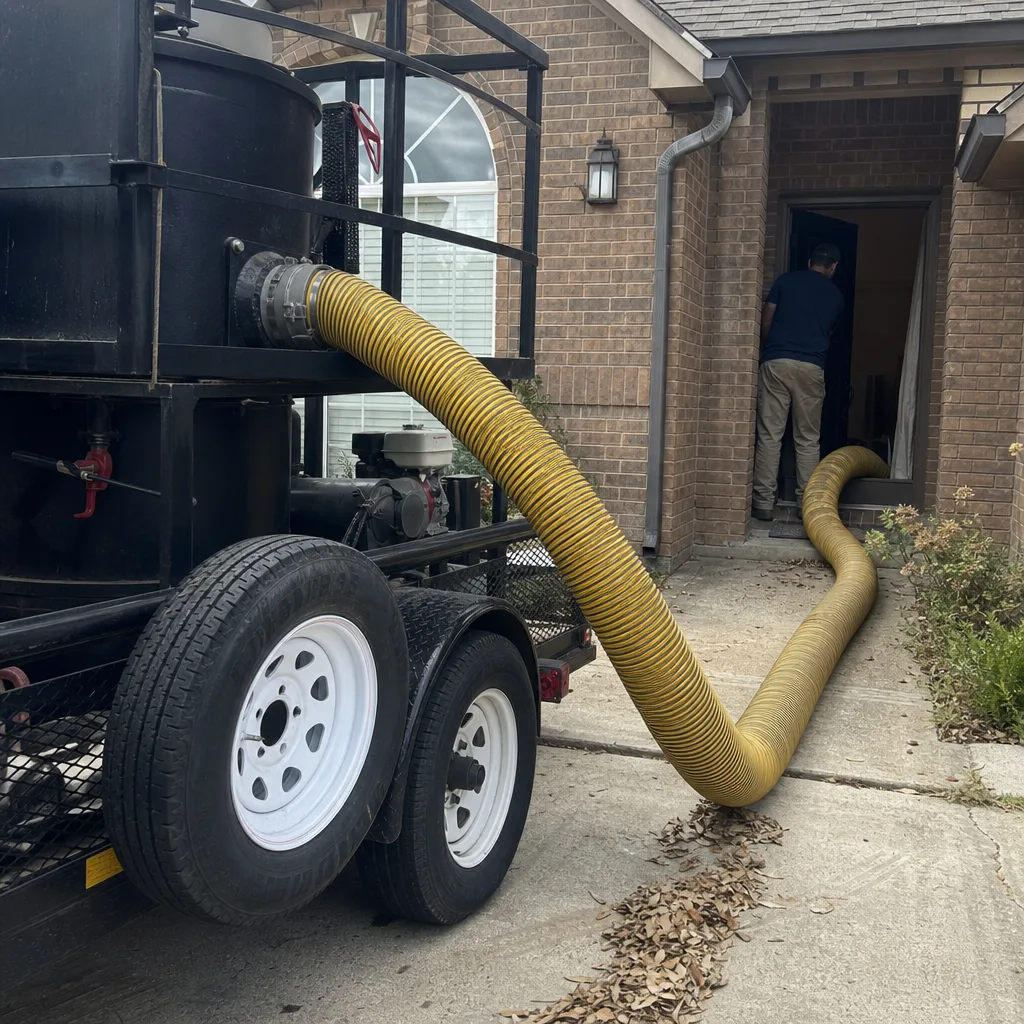
Negative air machines are the core tool. A truck-mounted or portable HEPA-filtered collection unit operates at a minimum of 500 CFM sustained throughout the job. At CleanRun, we use Nikro and Abatement Technologies portable units on jobs where truck access is limited, and these maintain 2,000-3,500 CFM depending on system configuration. The machine connects to the ductwork via an 8-inch or 10-inch access port, typically cut into the plenum or main trunk line. This creates suction throughout the entire system, not just at one register.
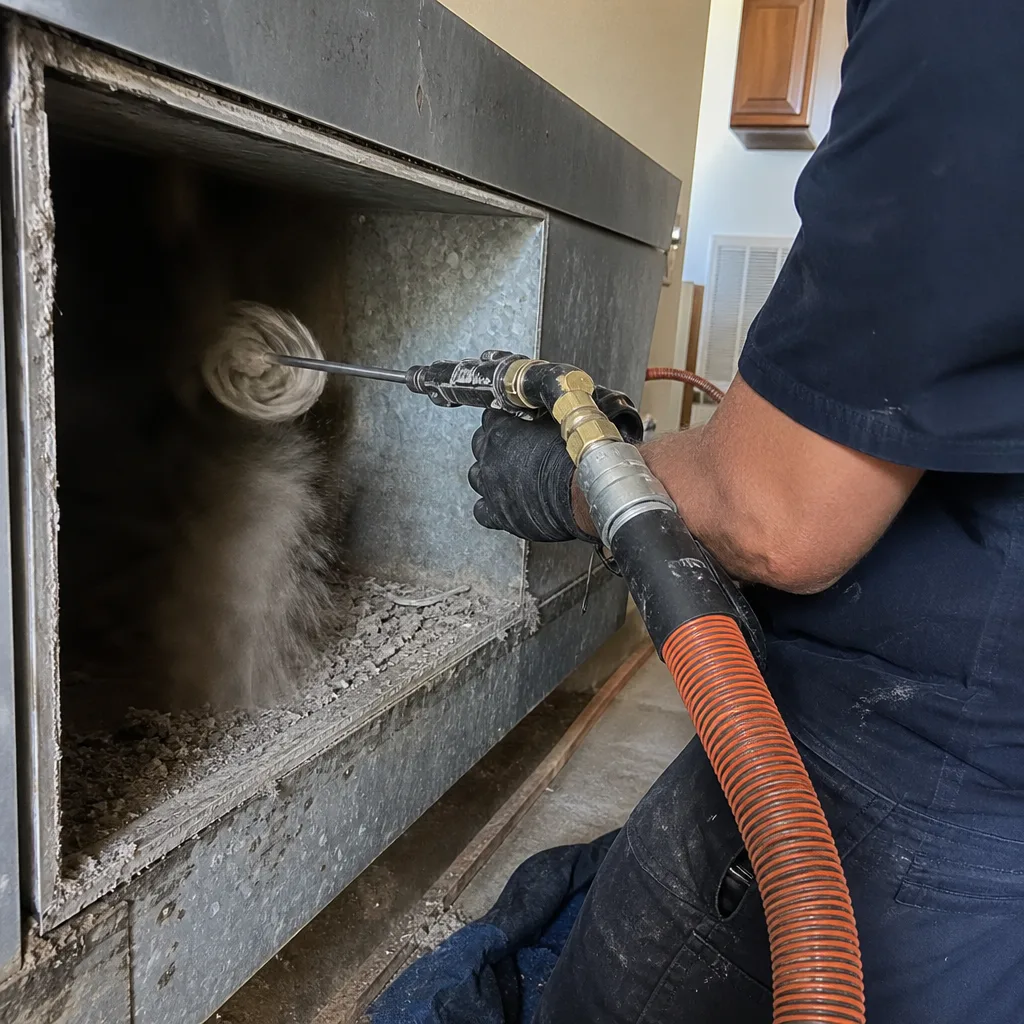
Agitation tools used under negative pressure include pneumatic whips, rotary brushes sized to duct diameter, and skipper balls that travel pneumatically through the run. These tools are inserted at each register opening while the negative air machine runs continuously at the collection point. The debris they dislodge is immediately drawn into the HEPA filtration stream.
HEPA filtration means the collection unit exhausts air that has passed through filters capturing 99.97% of particles 0.3 microns and larger. A shop vacuum’s standard filter captures larger debris but exhausts fine particulate back into the home. In Spring’s pollen-heavy spring seasons, this distinction matters: without HEPA containment, a cleaning can temporarily worsen indoor air quality.
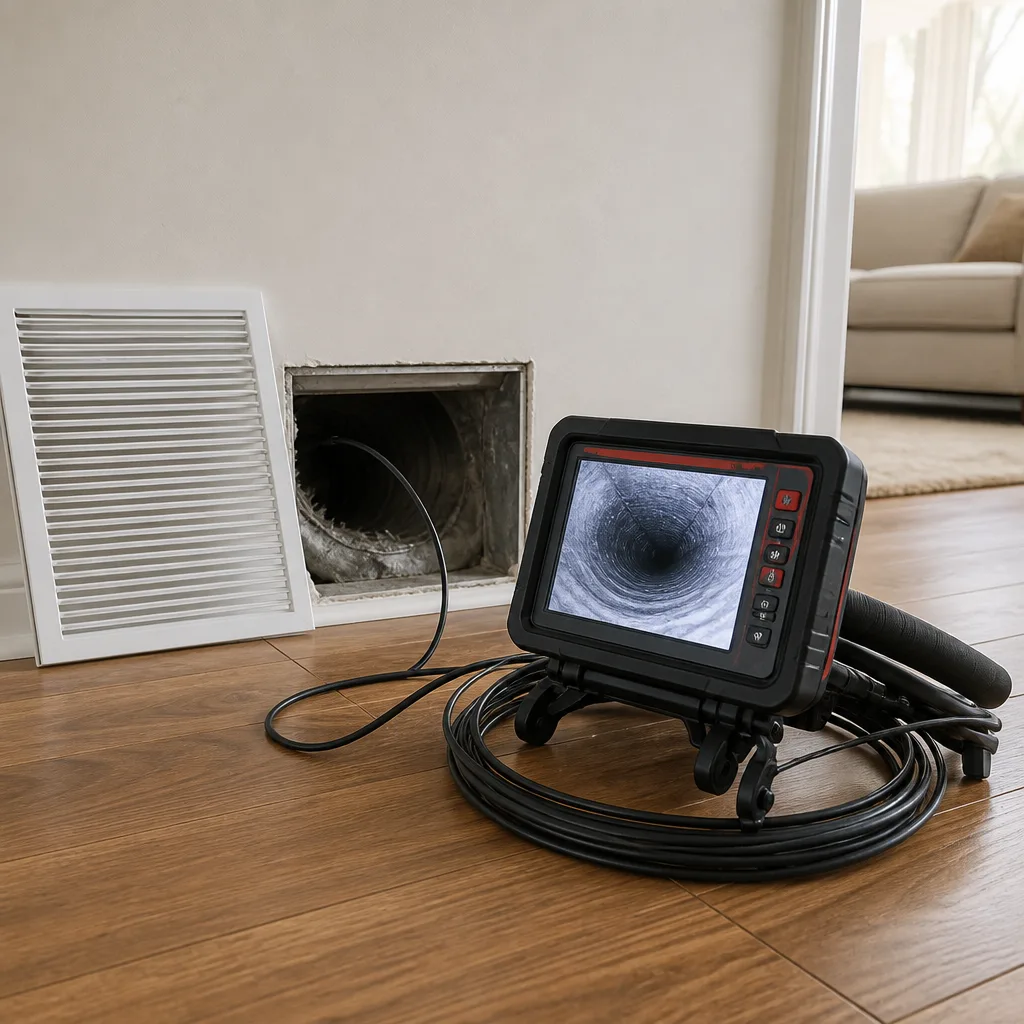
Camera systems allow navigation and documentation inside duct runs that are not visually accessible. We use push cameras to locate blockages, assess flex duct condition, and verify cleaning results at the farthest points from the air handler. This documentation capability is equipment-dependent and labor-intensive; it does not happen without the camera system and the technician trained to interpret what it shows.
Professional-grade equipment also includes:
- Access panel covers that seal properly after installation, maintaining system pressure integrity
- Biocide applicators with controlled droplet size for sanitizing without oversaturation
- Coil cleaning systems that apply foaming cleaner and rinse under controlled pressure
- Duct sealing materials for repairing access points and minor leaks discovered during cleaning
The equipment roster matters because it determines what the job can actually accomplish. At CleanRun, we use Rotobrush, Nikro, Abatement Technologies, Honeywell, Aprilaire, and Guardsman equipment on jobs. These are trade-recognized brands with published specifications customers can verify independently. A technician with a shop vac and a brush kit cannot replicate the function of this equipment, regardless of effort or time spent.
Spring, TX Conditions That Favor Professional Work
Spring’s housing stock, climate, and construction practices create specific conditions that push most duct cleaning toward professional equipment and protocols. Understanding these local factors helps homeowners assess whether their particular situation falls within DIY feasibility. For a complete seasonal overview, see our Seasonal Air Duct Cleaning Care for Spring: Year-Round Homeowner’s Guide.
Attic-mounted air handlers in summer heat. Many Spring homes built 2015-2025, particularly in neighborhoods like Harmony and Spring Trails, place the air handler in the attic. From June through September, attic temperatures in Spring regularly exceed 130°F. Working in these spaces requires heat-safety protocols, proper hydration scheduling, and equipment that functions at temperature extremes. More critically, attic air handlers sit above the living space; improper access panel sealing or dropped debris during DIY work contaminates the home below. Professional crews working under Haven Standard Clause 3: Verified Crews use containment sheeting and negative-pressure backup to prevent this.
Long flex duct runs in slab homes. Spring’s clay-heavy soils and historical termite pressure have made slab-on-grade construction common, particularly in older neighborhoods like Olde Towne Spring and Cypress Trails. HVAC ductwork in these homes often runs through the attic as flexible duct, with runs exceeding 40 feet to reach distant rooms. Flex duct’s internal insulation traps debris and resists brushing; its corrugated interior surface requires gentle agitation under camera guidance. Aggressive DIY brushing tears the liner, creating fiberglass contamination and airflow restriction. We have replaced flex duct in Spring homes where DIY attempts caused damage exceeding the cost of professional cleaning.
High pollen load and biological growth risk. Spring’s combination of humidity, pollen, and extended cooling seasons creates conditions where biological growth occurs in ductwork, particularly at the evaporator coil and in poorly insulated trunk lines. The EPA does not recommend biocide application as routine practice, but when visible growth is present, it requires EPA-registered products applied by certified technicians with proper containment. DIY biocide application without negative-pressure containment risks distributing spores throughout the home and exposing occupants to chemical overspray.
Post-Harvey moisture history. Homes in Spring that experienced flooding or elevated humidity during Hurricane Harvey and subsequent weather events may have ductwork with residual moisture damage or hidden growth. Camera inspection by a trained technician can identify these conditions; DIY cleaning without this assessment risks disturbing compromised duct lining or spreading contamination.
Local code and permit considerations. While routine duct cleaning does not require permits in Harris and Montgomery counties, duct modifications including access panel installation in fire-rated assemblies or changes to return air pathways may. Professional technicians understand these boundaries; DIY work that crosses into modification territory without proper permitting can complicate future home sales or insurance claims.
The Real Cost Comparison
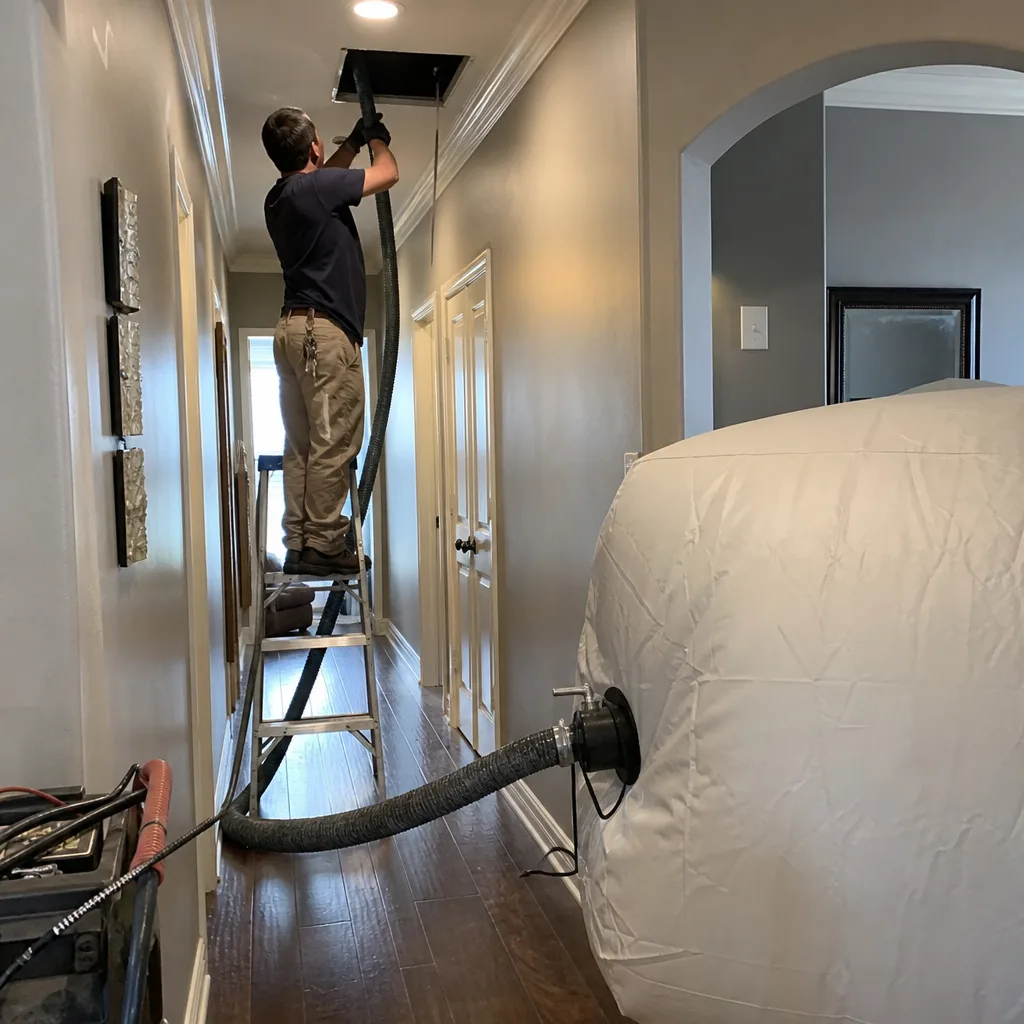
The advertised price gap between DIY and professional duct cleaning is misleading. A proper accounting of DIY costs, including the equipment needed to approach professional results, narrows the gap significantly. More importantly, it reveals what each approach actually delivers.
DIY Cost Breakdown
| Item | Cost Range |
|---|---|
| Drill-mounted brush kit (consumer grade) | $150-$200 |
| Negative air machine rental (1 day, if available) | $150-$200/day |
| HEPA-filtered shop vacuum (purchase or upgrade) | $200-$400 |
| Access panel covers (sheet metal, sealant) | $50-$75 |
| Camera inspection tool (basic push camera) | $150-$300 |
| Biocide (if applicable, EPA-registered) | $40-$80 |
| Personal protective equipment | $30-$50 |
| Total for equipped DIY approach | $770-$1,305 |
| Minimal DIY (brush kit + shop vac only) | $350-$450 |
The minimal DIY approach leaves out negative pressure, camera verification, and proper containment. It produces clean register openings and little else. The equipped DIY approach approaches professional capability but requires equipment most homeowners will use once, store indefinitely, and struggle to operate correctly without training.
Professional pricing in the Spring market, based on our written estimates and competitor analysis:
| Service Level | Price Range | What It Includes |
|---|---|---|
| Low-cost coupon service | $79-$199 | Register vacuuming, limited reach, no documentation, upsell-driven |
| Mid-tier professional | $300-$500 | System-wide negative pressure, basic agitation, limited or no photos |
| Documented professional (CleanRun standard) | $400-$800 | Negative-pressure HEPA extraction, full-system agitation, before/after photo record of every run, written scope and price upfront |
The critical comparison is between equipped DIY ($770-$1,305) and documented professional ($400-$800). The professional route costs less, takes 3-4 hours instead of a full day, and includes documentation that the work occurred. The DIY route leaves the homeowner with stored equipment, no proof of results, and significant physical labor in attic or crawl space conditions.
The $79-$199 coupon services deserve separate scrutiny. In our inspections of Spring homes after these visits, we routinely find that only register surfaces were cleaned, trunk lines remain untouched, and no documentation exists. The homeowner who compares their $200 DIY kit to a $99 “professional” service is comparing two approaches that achieve nearly identical limited results. The meaningful comparison is between equipped DIY and documented professional work.
How to Verify a Professional Actually Did the Job
The most important question for Spring homeowners is not whether to DIY or hire a professional. It is how to verify that any professional they hire completed the work they claimed. The duct cleaning industry’s reputation for bait-and-switch pricing and invisible results exists because most customers have no way to confirm what happened inside their walls.
We built CleanRun’s documentation standards specifically to answer this problem. Every job since 2013 has included a Documented Photo Record of every duct run, delivered to the customer as a standard deliverable. But homeowners hiring any company can and should request verification using the following protocol.
Verification Protocol for Any Professional Duct Cleaning
- Request before-and-after photos from the interior of the main trunk line at the farthest point from the air handler. This is the hardest location to reach and the least likely to be cleaned in a superficial job. A technician who cleaned the entire system will have photos from this location. A technician who cleaned only register openings will not.
- Request the filter weight or debris volume captured. Professional negative-air machines use HEPA filters that are weighed before and after the job, or collection bags that show debris volume. This provides quantitative evidence of material removed. A company that cannot produce this metric either did not use proper collection equipment or did not document its work.
- Request written technician notes with timestamps. These should include access points created, tools used in each duct run, any anomalies found (damage, moisture, biological growth), and the technician’s signature. Notes created after the job from memory are less reliable than contemporaneous records.
Any professional job that cannot produce these three items was not documented and may not have been completed. This is not an accusation; it is a standard of evidence. At CleanRun, Haven Standard Clause 1 requires written pricing before work starts, and our documentation package includes all three verification elements as standard deliverables.
Additional verification steps homeowners can take:
- Inspect the access panels after the crew leaves. Properly installed panels are sealed with mastic or foil tape, not duct tape, which degrades in temperature extremes.
- Check that the system’s air filter was replaced or noted as acceptable. A cleaning that leaves a clogged filter is incomplete.
- Run the system and check for unusual odors or dust discharge at registers, which indicates disturbed debris that was not fully extracted.
- Request the equipment list used on your job. Professional companies can name their negative-air machines, agitation tools, and filtration systems. Vague references to “commercial equipment” without brand or specification are a warning sign.
The verification protocol protects homeowners from the most common industry problem: paying for whole-system cleaning and receiving register vacuuming. It also protects honest professionals by creating a clear standard that distinguishes documented work from undocumented claims.
Common Mistakes to Avoid
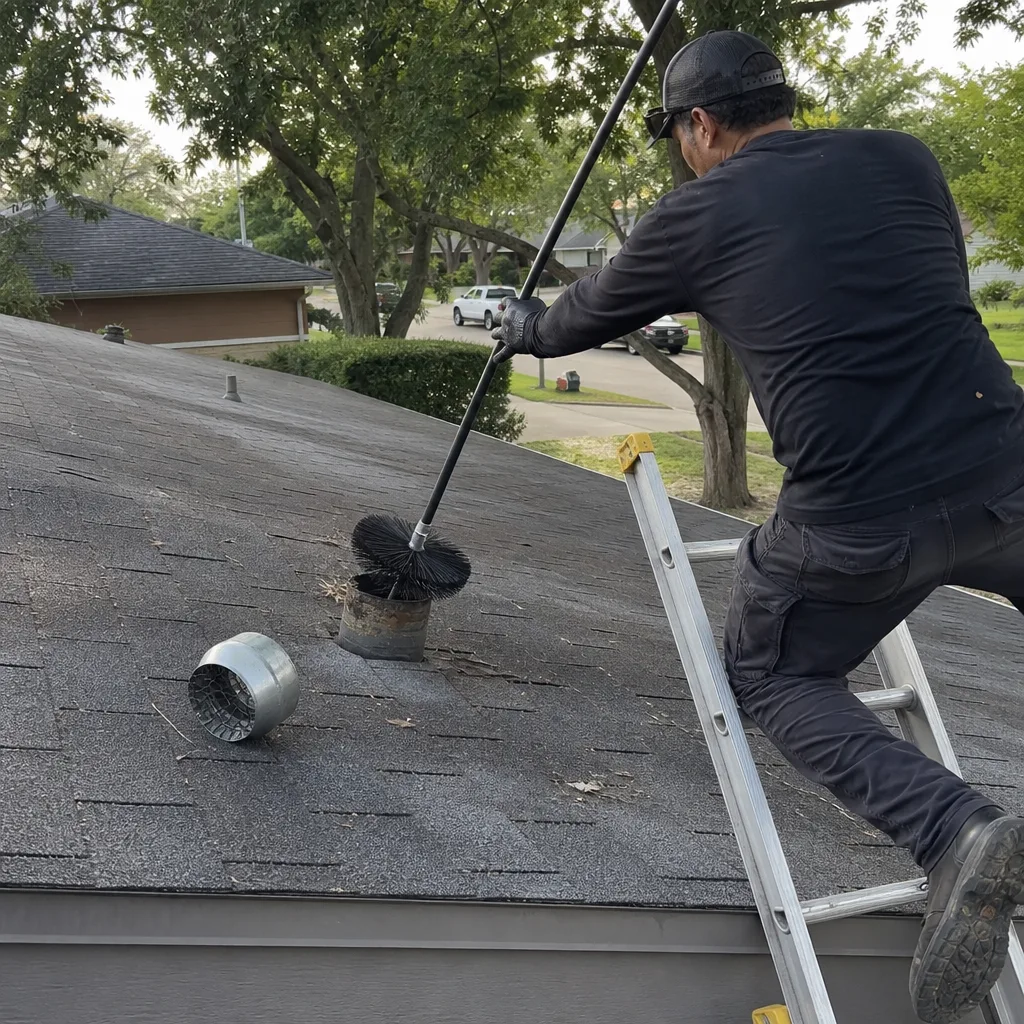
- Assuming a $79 coupon covers the whole system. In Spring’s competitive market, these prices cover register surface cleaning and a sales pitch for additional services. The actual whole-system price typically emerges after the technician is in your home.
- Using compressed air without negative pressure. The blast-and-hope approach redistributes debris through the system and into living spaces. We have documented cases in Spring’s Augusta Pines where homeowners triggered respiratory symptoms with this method.
- Brushing flex duct aggressively. The internal insulation liner in flex duct tears under aggressive brushing, releasing fiberglass particles and creating airflow restrictions. Camera-guided gentle agitation is required.
- Ignoring the evaporator coil. The coil sits above the furnace or air handler and collects debris that bypasses the filter. Cleaning ducts without addressing the coil leaves the primary contamination source intact.
- Skipping access panel sealing. Improperly sealed access points leak conditioned air, reduce system efficiency, and can pull attic or crawl space contaminants into the ductwork. Professional sealing with proper materials is essential.
- Attempting DIY in attic air handlers during summer heat. Spring attic temperatures create genuine heat-safety risks. Professional crews rotate personnel and maintain hydration protocols; homeowners working alone lack this backup.
- Accepting verbal promises without written documentation. The scope of work, the price, and the guarantee should all be in writing before work begins. Haven Standard Clause 1 exists because verbal agreements leave homeowners without recourse.
When to Call a Professional
Call a professional when the system includes attic-mounted equipment, flex duct runs exceeding 20 feet, suspected biological growth, or any post-flood moisture history. Call when you need documentation for a home sale, insurance claim, or health concern. Call when the job requires working in spaces with heat, height, or electrical hazards that exceed comfortable DIY parameters.
CleanRun Air Duct Cleaning services offers free estimates in Spring. We will inspect your system, provide a written price before any work starts, and explain what our documentation package will include. Call (346) 423-3631 to schedule. Every estimate includes the option of a Free Second Opinion on any written competitor quote; we will put our number next to theirs in writing so you can compare actual scope and deliverables.
Frequently Asked Questions
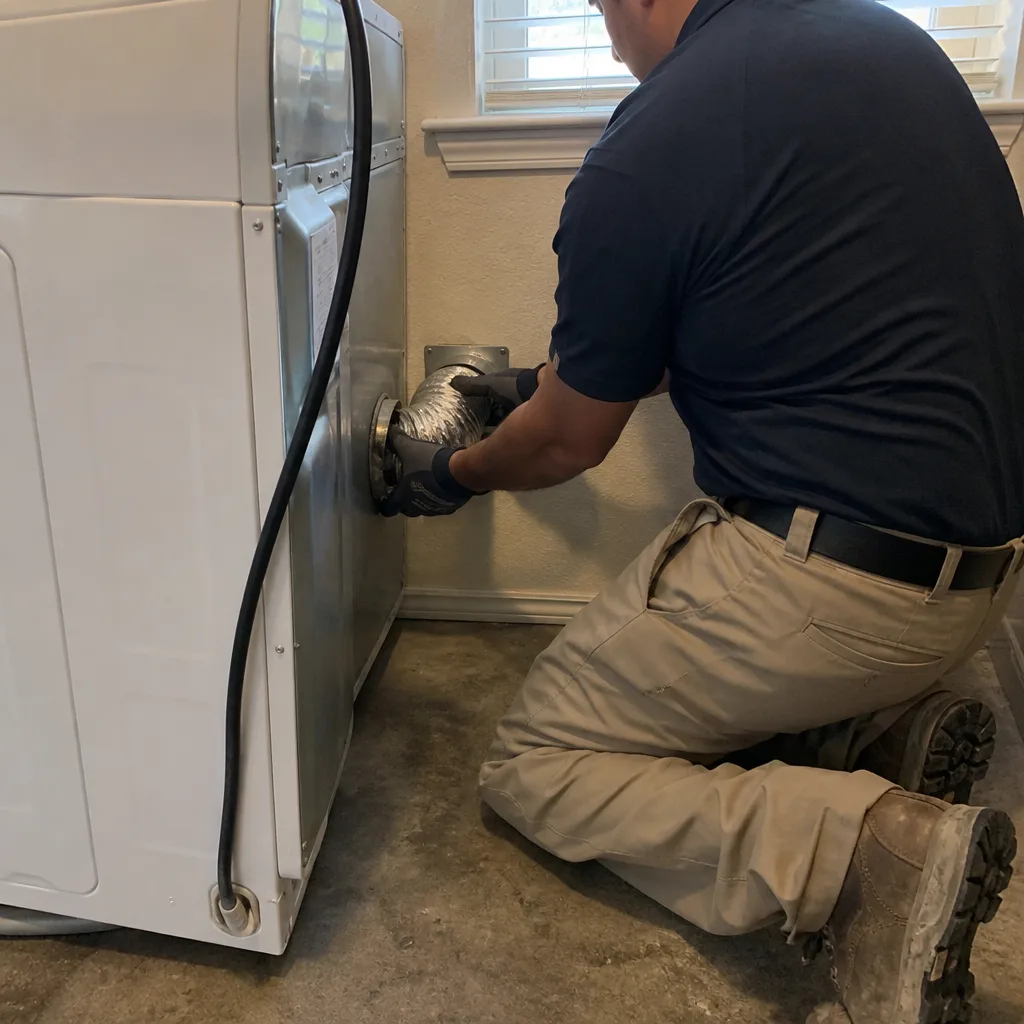
Professional air duct cleaning for a standard Spring home typically costs $400-$800 for whole-system service with documented results. Low-cost coupon services advertised at $79-$199 generally clean only register surfaces and upsell additional services once inside the home. At CleanRun, we provide a written price before any work starts under Haven Standard Clause 1, with no per-vent add-ons or hidden charges. Call (346) 423-3631 for an exact quote; estimates are free.
A shop vac can remove loose debris from the first few feet of ductwork accessible from floor registers, but it cannot create the continuous negative pressure required to capture debris from trunk lines, nor can it reach horizontal runs or the plenum above the air handler. Without simultaneous negative pressure, agitated debris redistributes through the system rather than being extracted. For whole-system cleaning, professional HEPA negative-air equipment is required.
The price gap reflects scope differences that most homeowners cannot see until after the job. Low quotes typically cover register vacuuming and limited reach, with the technician selling additional services on-site. Proper whole-system cleaning requires negative-air equipment, camera navigation, access panel installation and sealing, and documentation, all of which carry real costs. Request the three-item verification protocol - trunk line photos, debris volume, and written technician notes - and the scope difference becomes visible before you hire.
Request three specific deliverables: before-and-after photos from the farthest point in the trunk line from the air handler; the filter weight or debris volume captured; and contemporaneous written technician notes with timestamps. Any professional job that cannot produce these items was not documented and may not have been completed. At CleanRun, these three elements are standard deliverables on every job, backed by our 365-Day Done Right Promise.
Most Spring homes benefit from professional duct cleaning every 3-5 years, with shorter intervals for homes with pets, recent renovations, or occupants with respiratory sensitivities. Spring’s extended pollen season and high humidity increase debris accumulation and biological growth risk compared to drier climates. Homes in newer developments with ongoing construction dust may need more frequent service. A camera inspection can determine actual condition rather than relying on calendar scheduling.
DIY cleaning has limited value for maintaining register appearances and reducing surface dust near heavily used openings. It is not equivalent to whole-system cleaning and should not be presented as such. For homeowners in Spring who want genuine debris removal, improved airflow, and documented results, professional service with HEPA negative-air extraction is the appropriate choice. The equipped DIY approach costs more than documented professional service and produces no verification of results.
The Bottom Line
The DIY versus professional question for Spring homeowners comes down to documentation capability and equipment access, not the cost gap that coupon advertising suggests. A proper DIY attempt with negative-air rental, brush kit, and camera runs $770-$1,305 with no proof of results. A documented professional cleaning at $400-$800 includes HEPA extraction, full-system reach, and verifiable before-and-after records. The $79 professional visit, like the $200 DIY kit, cleans approximately three feet from each register and leaves the rest untouched. The meaningful choice is between undocumented partial cleaning and documented whole-system service. For homeowners who need proof that the work happened, the decision is straightforward.
CleanRun Air Duct Cleaning Spring home | Air Duct Cleaning in Spring | Dryer Vent Cleaning in Spring | HVAC Cleaning in Spring
Written by Tomas Reyes, Owner at CleanRun Air Duct Cleaning Spring, serving Spring since 2013. Explore more guides & resources on our blog.