
Last updated September 23, 2026
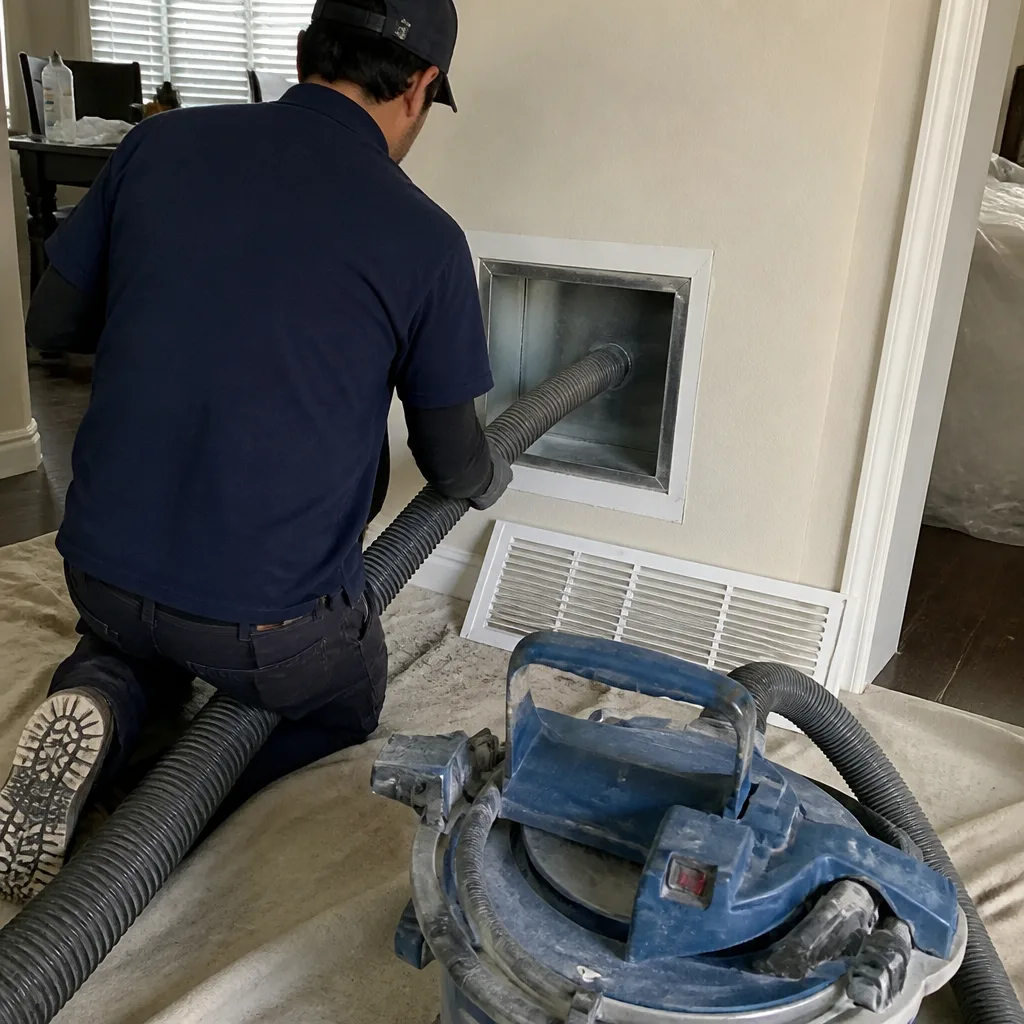
Whole-system duct and dryer vent check with before-and-after photos - you see exactly what came out of your vents
That "$99 whole-house special" is a bait ad - the real number appears once they are in your hallway, or the "clean" is a shop-vac at the register. We photograph the inside of your ducts before and after instead.
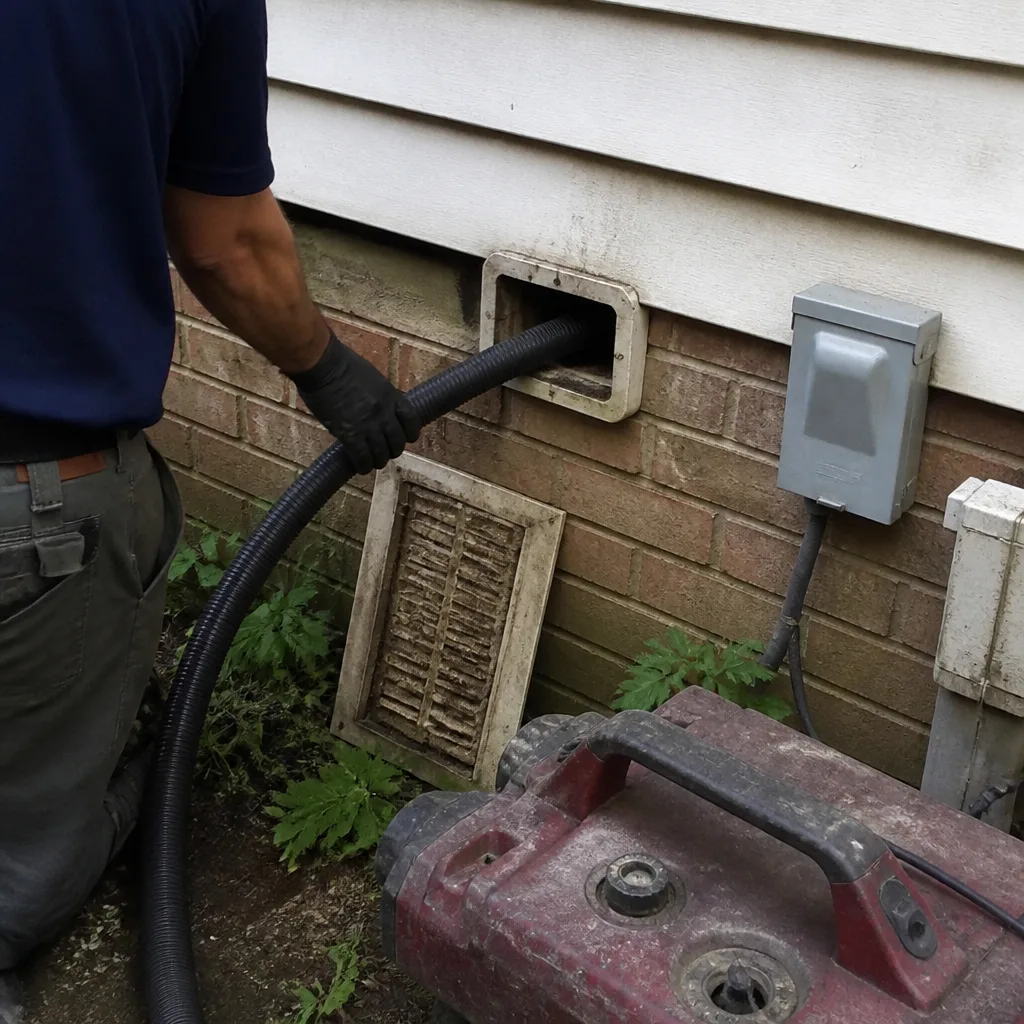 Before
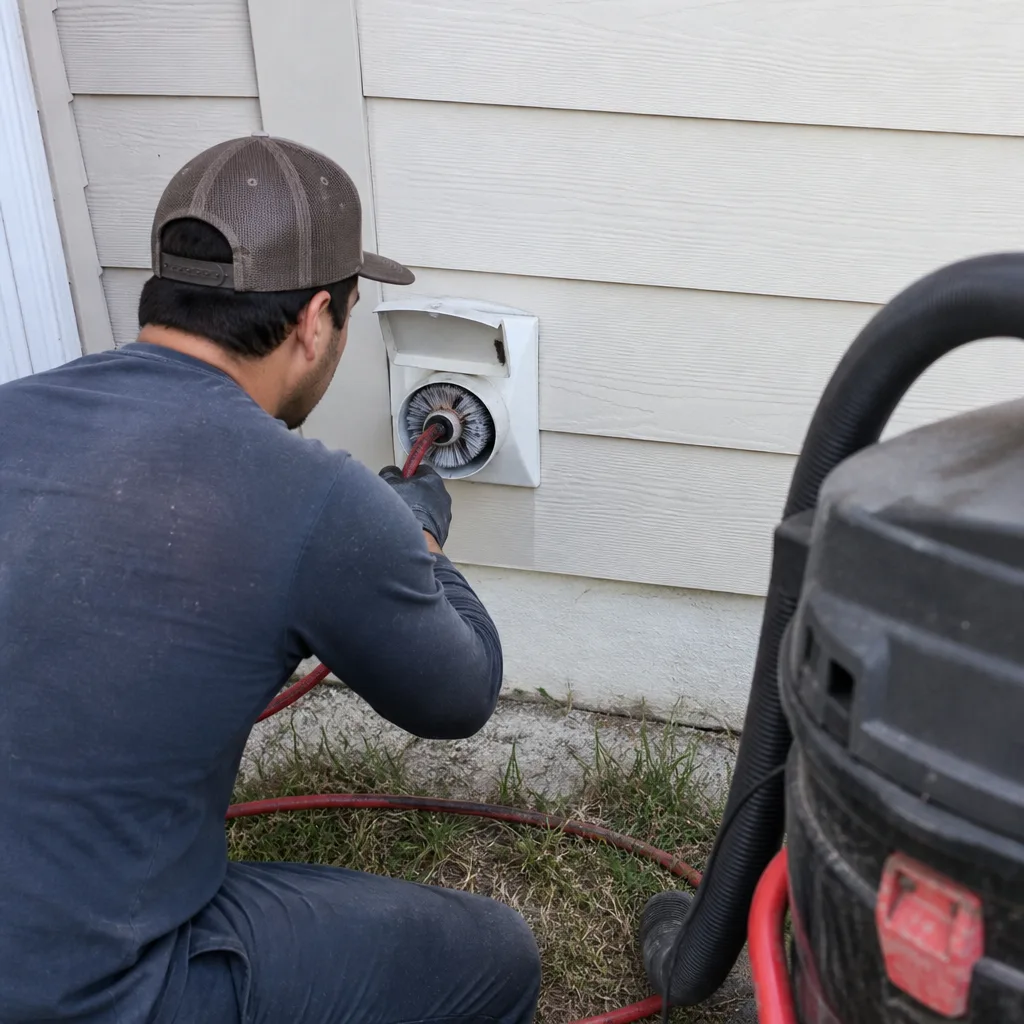 After
After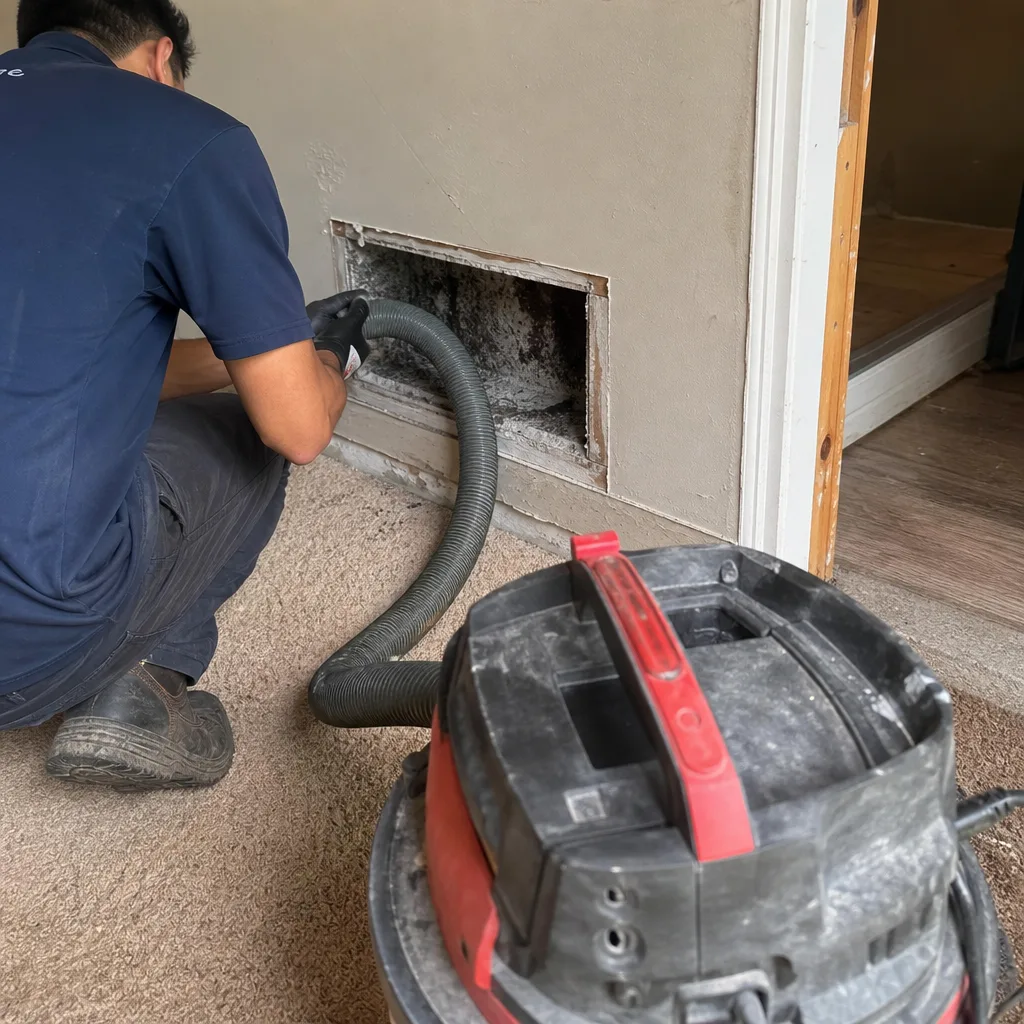 Before
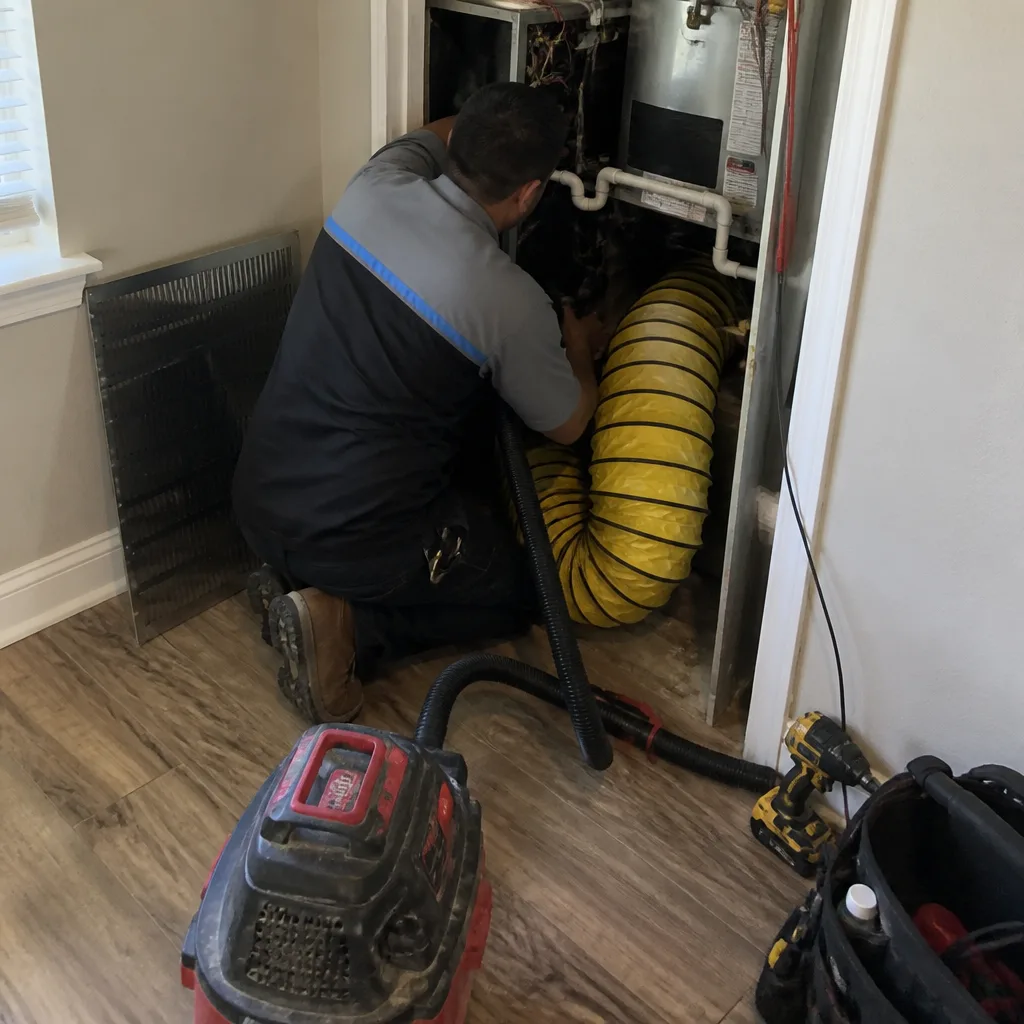 After
After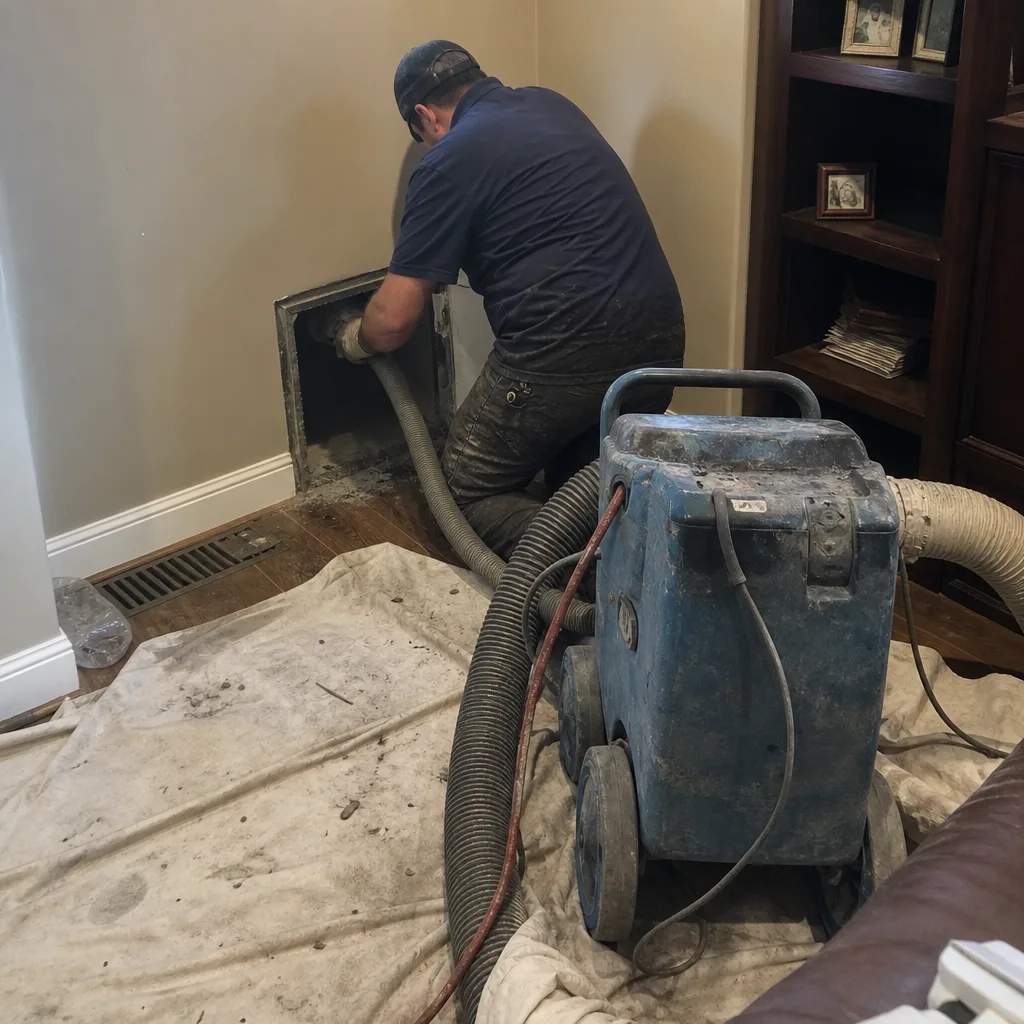 Before
 After
AfterHow to Hire a Air Duct Cleaning Contractor in Spring: A Step-by-Step Guide
Texas does not require a state license to clean air ducts. The contractor who rings your doorbell in Spring could have purchased their equipment last week, printed business cards this morning, and still hand you a perfectly legal invoice. We’ve been working in Spring homes since 2013, and we’ve seen the aftermath: crews with shop vacs and drill brushes who left the plenum, the main distribution box connected to your HVAC unit, completely untouched. This Air Duct Cleaning guide gives you a specific, sequential screening process that filters out equipment-light operators before they quote you a price. Follow these steps and you’ll know exactly what you’re paying for, what equipment should arrive at your door, and what documentation you should hold in your hand before anyone touches your system.
Quick Answer
To hire an air duct cleaning contractor in Spring, verify NADCA membership and written adherence to the ACR standard, demand a written estimate that specifies system square footage and duct run count before booking, confirm they use negative-pressure extraction with HEPA filtration rather than portable shop vacuums, and require a documented photo record of every duct run as a standard deliverable. Avoid any contractor who quotes per-vent pricing, refuses to provide a written scope before arrival, or markets only through door-to-door solicitation in Spring neighborhoods like Gleannloch Farms or Harmony.
Table of Contents
- Why the Spring Market Is Different: No State License Barrier
- Step 1: Verify NADCA Membership and the ACR Standard in Writing
- Step 2: Use This Phone Script to Test Their Equipment
- Step 3: Demand These 5 Elements on Every Written Estimate
- Step 4: Spot the Red Flags Specific to Spring
- Step 5: Verify the Workmanship Warranty Is Real
- What Professional Duct Cleaning Actually Looks Like
- What Air Duct Cleaning Costs in Spring
- Common Mistakes to Avoid
- When to Call a Professional
- Frequently Asked Questions
- The Bottom Line
BeforeAfterWhy the Spring Market Is Different: No State License Barrier
Most homeowners assume air duct cleaning contractors face the same regulatory scrutiny as electricians or plumbers. They don’t. In Texas, duct cleaning sits in a regulatory gap: no state license, no continuing education requirement, no equipment inspection, no bonding threshold. A technician can legally operate with a portable shop vacuum from a home improvement store and a set of extension wands.
This matters particularly in Spring because of our housing stock and climate. The explosive growth from 2015 to 2025 filled neighborhoods like Harmony, Benders Landing, and Spring Trails with homes that have complex zoned systems, longer duct runs, and flexible ductwork vulnerable to damage from aggressive cleaning. Our humidity, which regularly pushes 75% from April through October, also means biological growth in ductwork isn’t theoretical; it’s a documented condition we’ve photographed in hundreds of Spring homes. An unqualified operator can tear flexible duct, dislodge sealed connections, or introduce moisture that compounds the problem.
The burden of quality control falls entirely on you, the homeowner. The steps below are designed to make that burden manageable and systematic.
Step 1: Verify NADCA Membership and the ACR Standard in Writing
NADCA, the National Air Duct Cleaners Association, is the closest thing this industry has to a credentialing body. Membership is voluntary and costs money, which immediately separates committed operators from fly-by-night outfits. But membership alone isn’t enough. What matters is whether the contractor follows NADCA’s ACR standard, the Assessment, Cleaning, and Restoration of HVAC Systems protocol.
The ACR standard is specific. It requires:
- Mechanical agitation to dislodge debris from duct walls, not just vacuum suction at the register, the visible grille where air enters your room
- Containment of dislodged debris through negative-pressure extraction, which pulls contaminants into a sealed collection unit rather than redistributing them
- Protection of the HVAC system during cleaning, including sealing of electronic components and motors
- Post-cleaning verification that the system operates within manufacturer specifications
Here’s what to do. When you call, ask: “Are you a NADCA member, and can you confirm in writing that you follow the ACR standard on every job?” If they hesitate, deflect, or say they “follow NADCA guidelines” without committing to the full standard, that’s a signal. The phrase “guidelines” often means selective adoption. You want the specific standard, named explicitly.
At CleanRun Air Duct Cleaning Spring home, we provide written confirmation of ACR standard adherence with every estimate. It’s not a verbal promise; it’s a document you can reference if the work doesn’t match the specification.
Step 2: Use This Phone Script to Test Their Equipment
The equipment question separates professionals from pretenders. You don’t need to become a technician to ask the right questions. You need to know which answers reveal inadequate tooling.
Ask these three questions in sequence. Write down the answers and compare:
- “Do you use negative air pressure with a HEPA-filtered collection unit, or a portable shop vacuum?” The correct answer is negative air pressure with HEPA filtration. Negative air pressure means the vacuum source creates suction throughout the duct system, pulling dislodged debris into a contained collection unit. A portable shop vacuum, even a high-end model, cannot generate sufficient airflow to clean an entire duct run. It cleans the first few feet near the register and leaves the rest untouched. HEPA filtration, which captures 99.97% of particles 0.3 microns or larger, prevents the vacuum from exhausting fine debris back into your home.
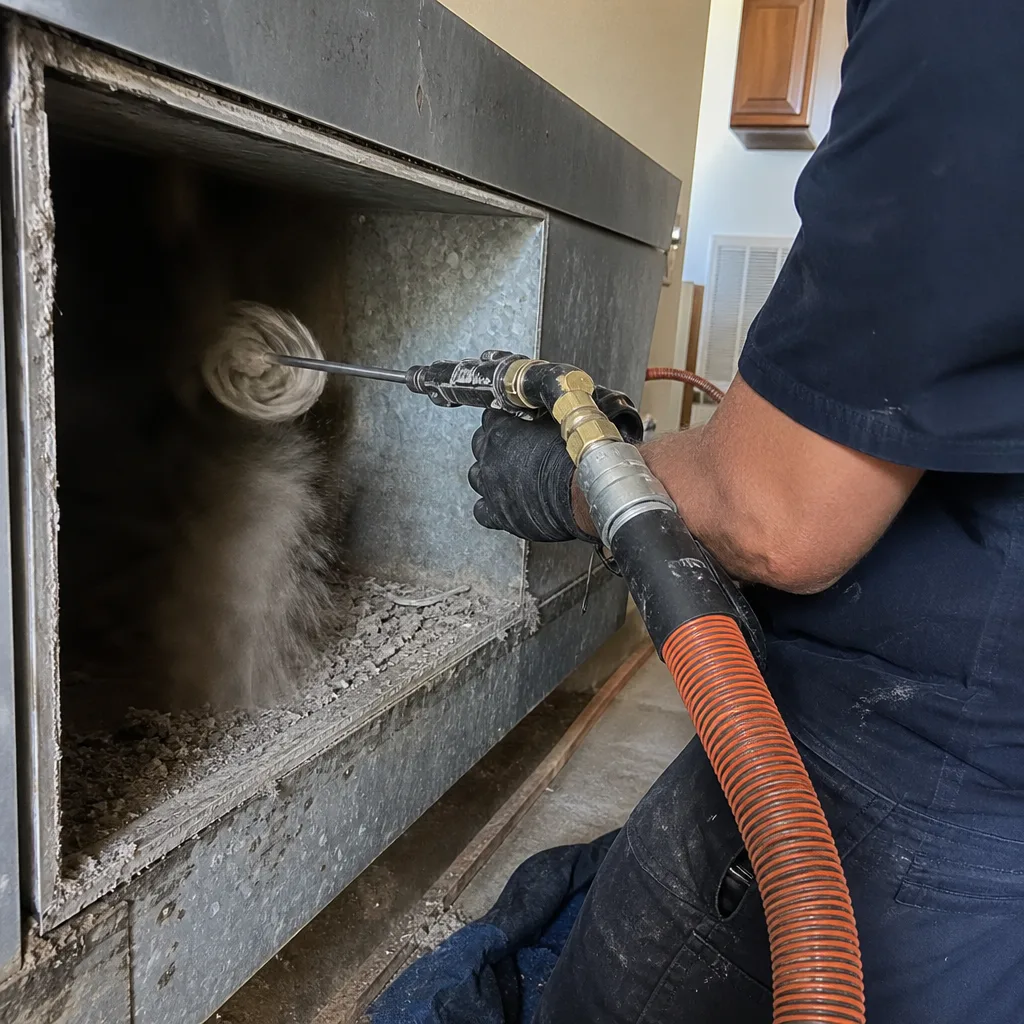
- “What mechanical agitation equipment do you use?” Look for named brands you can verify: Rotobrush systems with powered brush heads, Nikro pneumatic whips, or comparable equipment from Abatement Technologies. If they describe “brushes on extension poles” without naming equipment, they’re likely using manual tools that cannot effectively clean the full circumference of a duct. At CleanRun, our equipment roster includes Rotobrush, Nikro, Abatement Technologies, Honeywell, Aprilaire, and Guardsman units, and we name the specific equipment we’ll use on your system in the written scope.
- “Do you photograph the inside of every duct run before and after cleaning?” This isn’t a luxury add-on. It’s the only way you, as a non-technician, can verify the work was performed. A contractor who won’t document their work has something to hide. Our Documented Photo Record on Every Visit, included as a standard deliverable since our first job in 2013, shows the condition of every duct run before we start and after we finish. You receive these photos as part of your job record.
If a contractor cannot answer these questions clearly, or if they become defensive about their equipment, end the call. The screening process has already done its job.
Step 3: Demand These 5 Elements on Every Written Estimate
Haven Standard Clause 1 at CleanRun requires a written price before any work starts. No exceptions. But what should that written document actually contain? An estimate that simply says “whole house duct cleaning: $299” gives you almost no protection. Here’s what belongs in writing before you sign anything:
1. System square footage and number of duct runs
The estimate must specify the conditioned square footage of your home and the count of individual duct runs, the separate supply lines that deliver air to each room. A 2,000-square-foot home with 12 duct runs requires different labor and equipment time than a 2,000-square-foot home with 18 runs. Vague language like “up to X vents” is designed to allow upselling on arrival.
2. Air handler access method
The air handler, the indoor unit containing your blower and evaporator coil, must be accessed and protected during cleaning. The estimate should specify whether this requires cutting an access panel, removing a blower assembly, or working through existing service openings. If cutting is required, the estimate should note whether sealing and reinstallation of the panel is included.
3. Sanitizer disclosure: chemical name and SDS availability
If sanitizing is included or offered, the estimate must name the specific chemical product, not generic terms like “EPA-approved sanitizer.” You have the right to request the Safety Data Sheet, the manufacturer’s standardized hazard and handling document, before application. At CleanRun, we disclose all sanitizing agents by product name and provide SDS sheets on request under Haven Standard Clause 2: Transparent Chemistry.
4. Total price with no per-vent ambiguity
The price must be a single total for the complete system, not a base rate with per-vent add-ons. Per-vent pricing is the industry’s most common bait-and-switch mechanism: a low advertised rate that doubles or triples once the technician counts your registers. Our written estimates specify one flat price per system, agreed before work starts, with no variables that change on arrival.
5. Equipment specification and crew identification
The estimate should name the primary equipment to be used and confirm that technicians are background-checked and uniformed. At CleanRun, this falls under Haven Standard Clause 3: Verified Crews. Technicians are identified by name before arrival, and their license numbers are available on request.
Never accept an estimate delivered only after the crew has arrived and begun work. The pressure to approve inflated charges while strangers stand in your living room is the entire business model of some operators in the Spring market.
Step 4: Spot the Red Flags Specific to Spring
Certain marketing and sales patterns recur in the Spring area with troubling regularity. We’ve documented these through customer reports and our own observations across 52,000+ homes served since 2013. Treat any of the following as automatic disqualification:
- Door-to-door or flyer-only marketing in Spring neighborhoods. Legitimate contractors in Spring build reputation through documented work, not unsolicited visits to Gleannloch Farms or the Windrose community. The door-to-door model depends on immediate pressure and prevents the research process this guide describes.
- Reluctance to provide a written scope before arrival. If a contractor says they “need to see it first” before putting anything in writing, they’re structuring the transaction to create pressure at your door. A professional can estimate system scope from square footage, duct run count, and a brief phone description.
- Quotes delivered only after the crew is already in your home. This is the classic bait-and-switch. The technician “discovers” additional vents, “unexpected” contamination, or “required” sanitizing that doubles the price. The written estimate, received and reviewed before booking, eliminates this possibility.
- $79-$149 coupon pricing. These rates cannot cover professional equipment, HEPA filtration, proper disposal, and fair wages. The operator loses money on the initial visit and recovers through aggressive upselling or by performing minimal work. We’ve opened systems after these visits and found the main trunk line, the large central duct distributing air to all runs, completely untouched.
- No physical address or local reference verification. Some operators use Spring-area phone numbers while dispatching from Houston or even out of state. Ask for a local address and verify it exists. CleanRun operates from a verified Spring location and has served this market continuously since 2013.
- Vague or absent warranty language. A verbal “satisfaction guarantee” with no written definition of terms, no process for claims, and no designated contact is not a warranty. It’s a marketing phrase. See Step 5 for how to verify warranty substance.
Step 5: Verify the Workmanship Warranty Is Real
A 365-day warranty sounds reassuring until you try to use it. The difference between a real guarantee and marketing fiction lies in the written document. Here’s what to look for:
It must be in writing, provided before work starts. Verbal assurances evaporate when problems arise. The warranty document should be a separate deliverable or a clearly defined section of your written estimate, not a sentence on a website.
It must define “defective work” with specificity. Acceptable language: “defective work includes visible debris remaining in any duct run photographed during service, disconnected or damaged ductwork resulting from cleaning, and failure to restore system airflow within 10% of pre-service measurement.” Unacceptable language: “if you’re not happy, we’ll make it right” with no measurable standard.
It must include a contact process that doesn’t route through a call center. You should have a direct number, a named contact, or a defined response timeframe. At CleanRun, the 365-Day Done Right Promise specifies that claims are handled by the same crew supervisor who managed the original job, with response within 48 hours. The promise is backed in writing on every job, not just stated in marketing copy.
It must not exclude the most common failure modes. Some warranties exclude “normal dust accumulation” or “conditions beyond our control,” which allows the contractor to blame any recurrence on your environment rather than their work. A meaningful warranty covers the workmanship itself: whether the ducts were actually cleaned, whether connections remain sealed, whether the system operates as documented.
Ask to see the warranty document before booking. A contractor who cannot produce it has already told you everything you need to know.
What Professional Duct Cleaning Actually Looks Like
Understanding the process helps you evaluate what arrives at your door. A professional duct cleaning in Spring, where humidity and pollen loads stress HVAC systems year-round, follows this sequence, as detailed in our Seasonal Air Duct Cleaning Care for Spring: Year-Round Homeowner’s Guide:
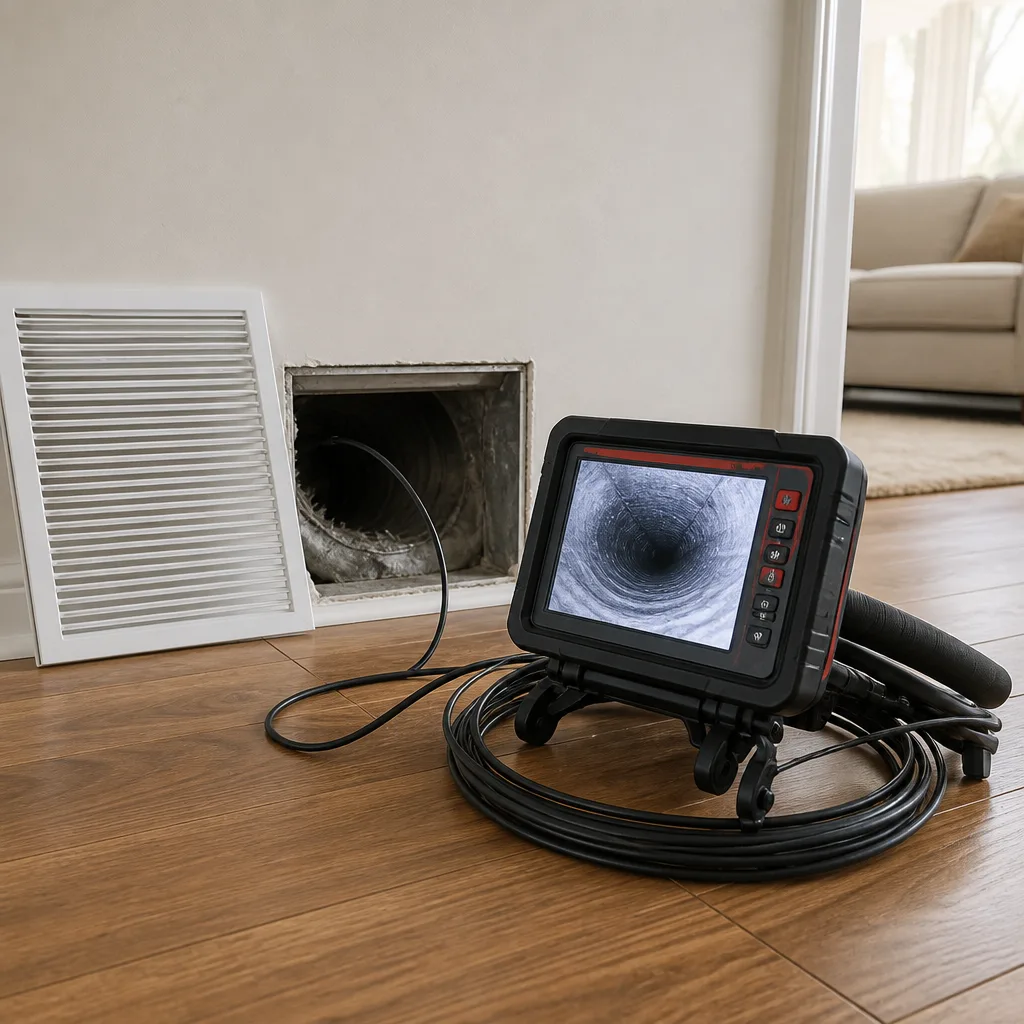
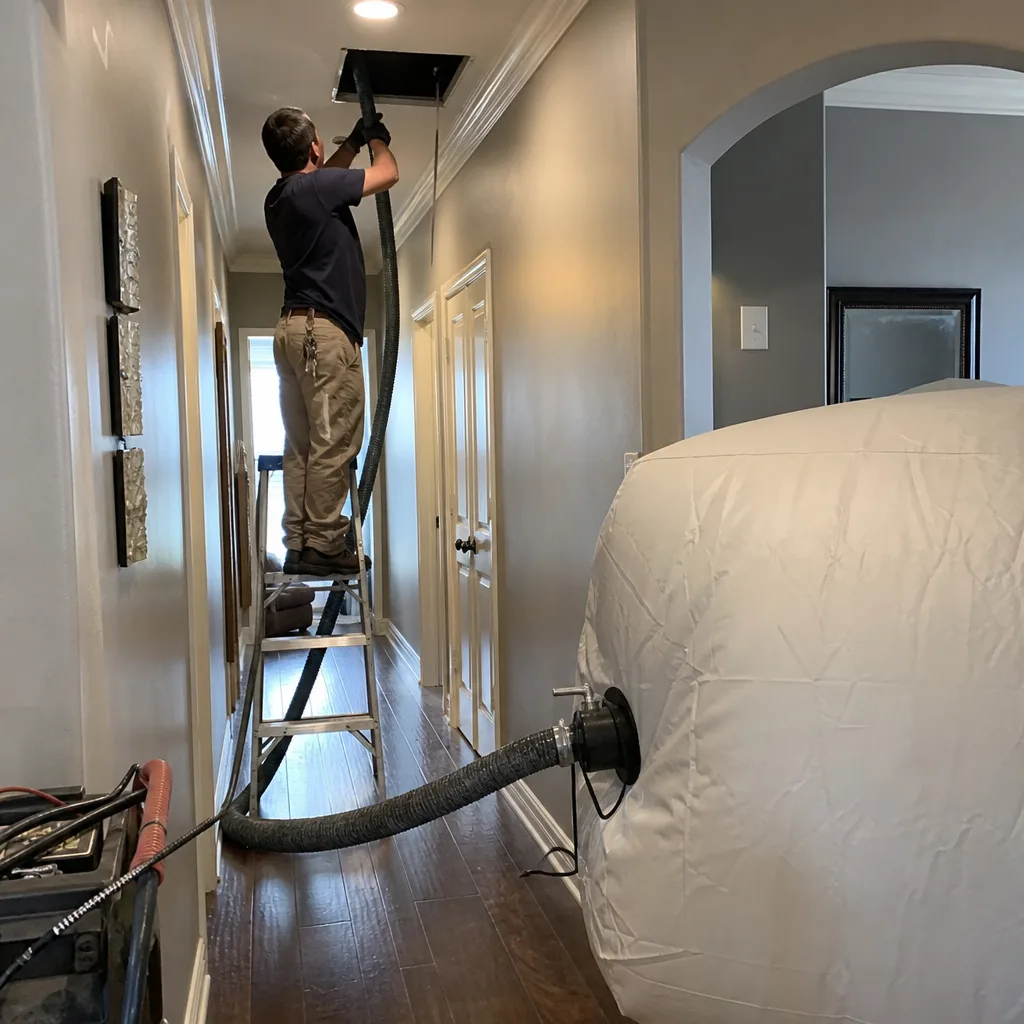
- Pre-inspection and photo documentation. The technician accesses each register and uses a borescope camera, a flexible camera on a long cable, to photograph the interior of every duct run. These baseline images become your before record.
- System protection and access. The air handler is opened, the blower is protected or removed as specified, and access points are cut in the main trunk line if needed. All cuts are sealed and insulated upon completion.
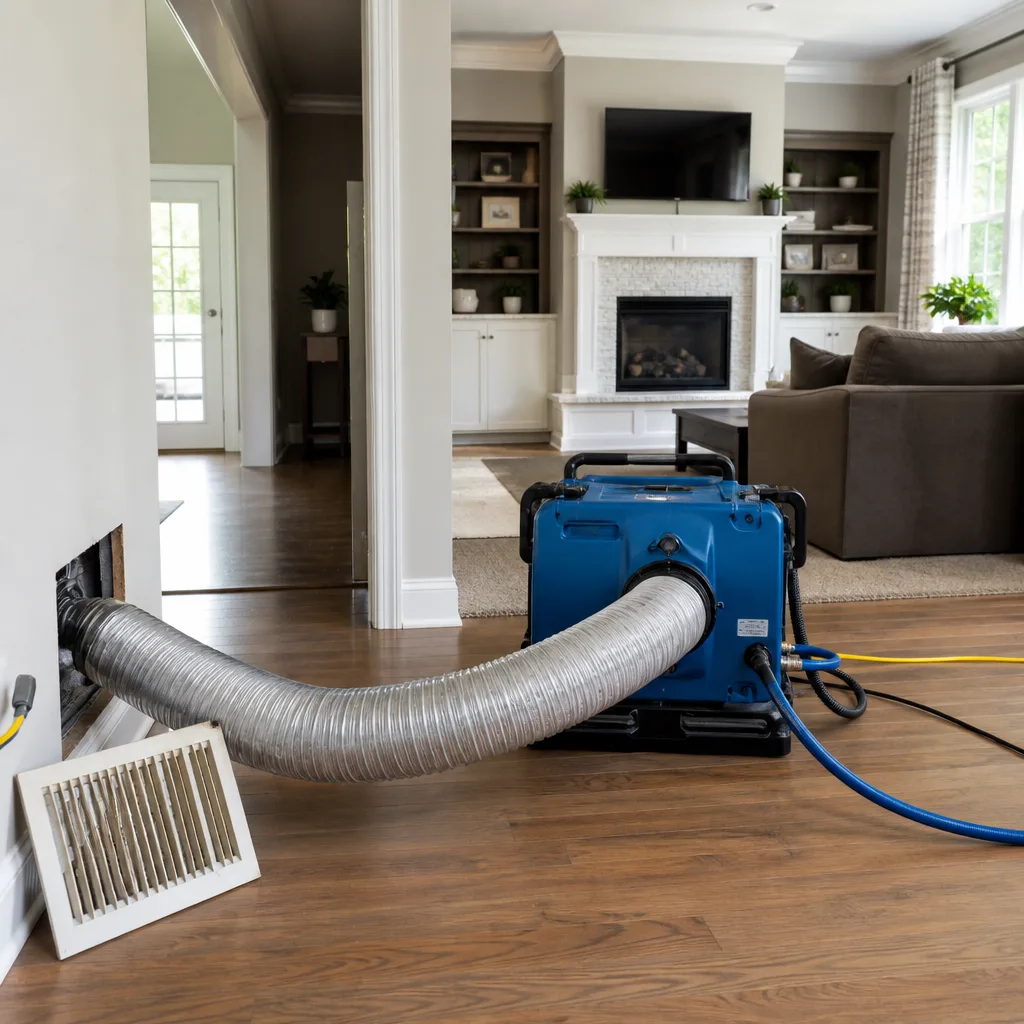
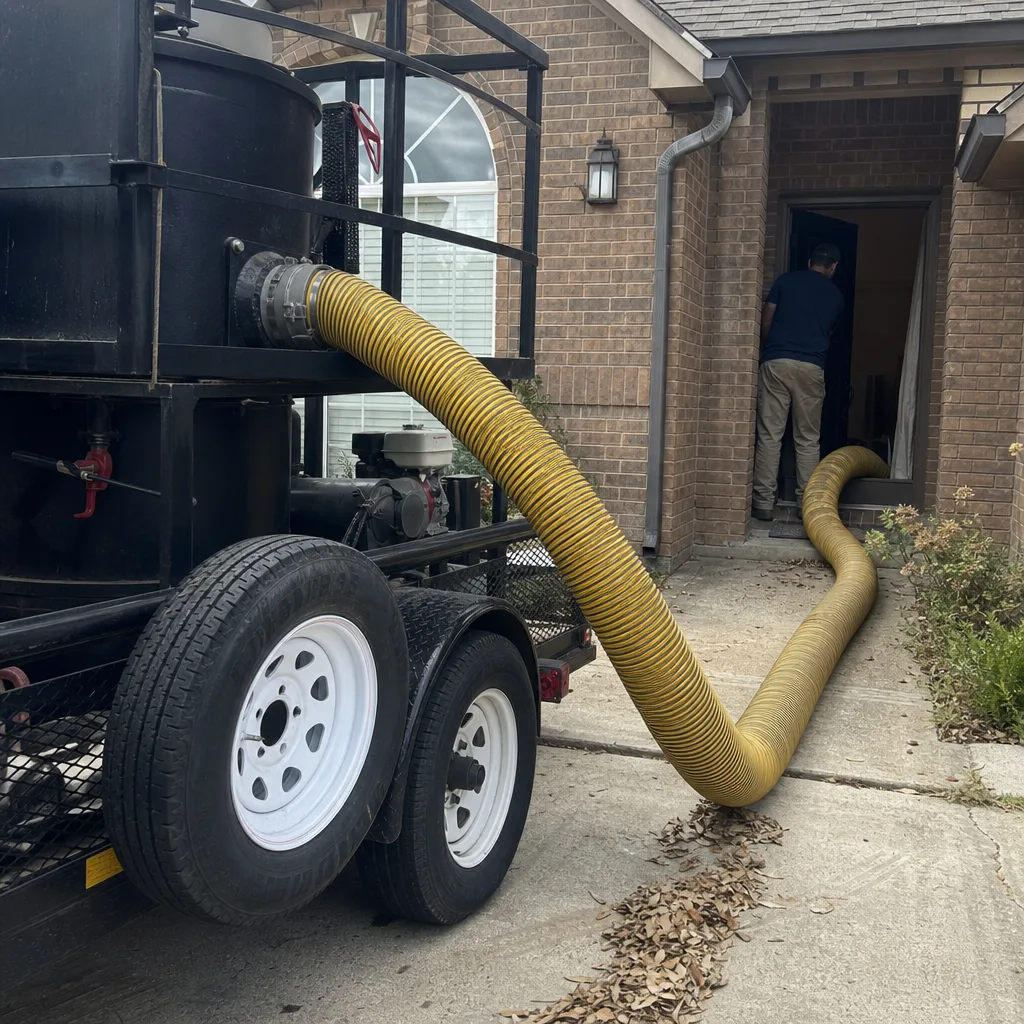
- Negative-pressure setup. A HEPA-filtered collection unit, typically mounted on a truck or as a portable unit from Nikro or Abatement Technologies, is connected to create suction throughout the system. This is not a shop vacuum. It’s a dedicated machine with sufficient airflow to maintain negative pressure across all duct runs simultaneously.
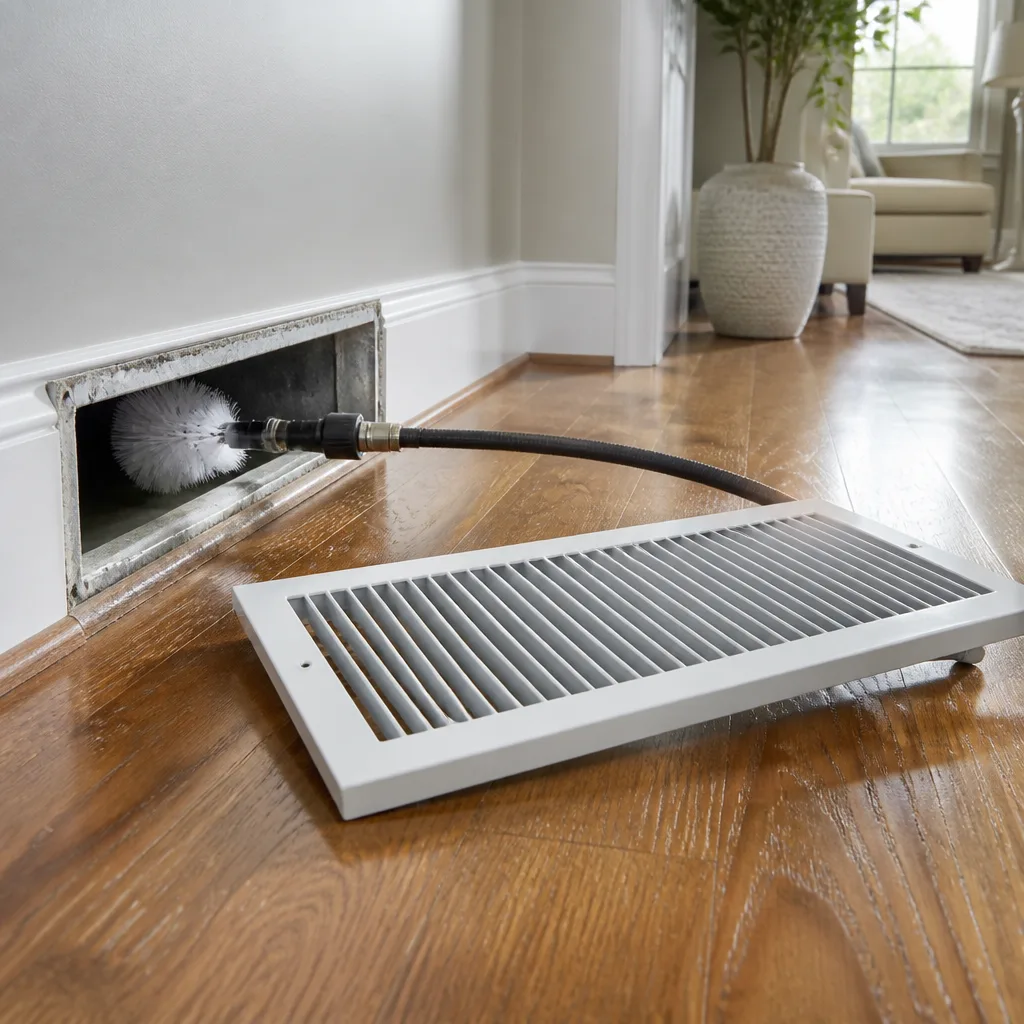
- Mechanical agitation. Powered brushes, pneumatic whips, or compressed air tools dislodge debris from duct walls. The agitation is controlled to avoid damage to flexible duct or sealed connections. The dislodged debris is immediately captured by the negative-pressure airflow.
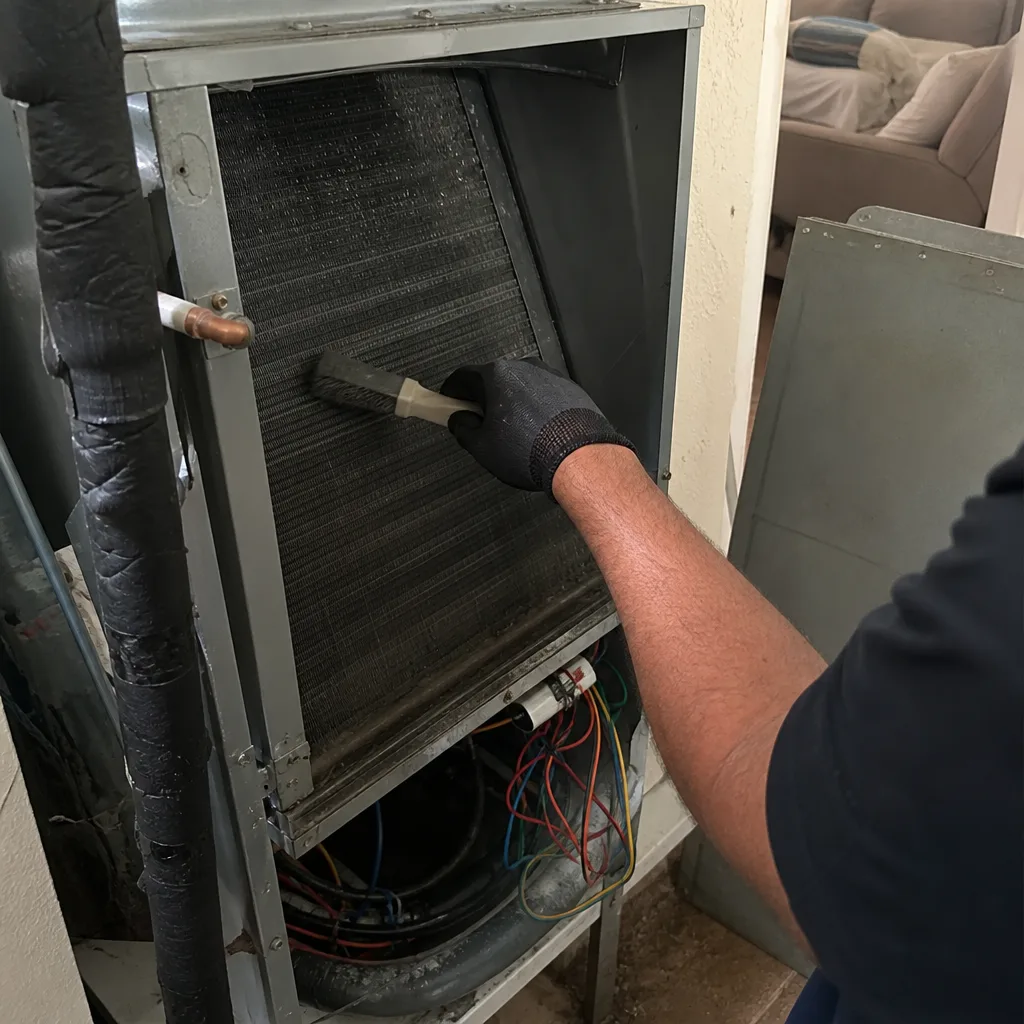
- Component cleaning. The plenum, registers, and accessible air handler components are cleaned. In Spring’s climate, we regularly find pollen accumulation and occasional biological growth at the first elbow, the initial bend in the duct run where airflow changes direction and debris settles.
- Post-cleaning verification and photo documentation. The borescope is reinserted in every run. After images are captured and compared to baseline. Airflow measurements confirm system performance. You receive the complete photo record as a standard deliverable.
This process takes time. A thorough cleaning of a typical Spring home, 2,000-2,500 square feet with 12-16 duct runs, requires 3-5 hours with a two-person crew. Offers of “whole house cleaning in 90 minutes” indicate superficial work at best.
What Air Duct Cleaning Costs in Spring
Honest pricing in the Spring market reflects equipment investment, labor time, and documentation standards; see our Air Duct Cleaning Cost Breakdown: The Spring Homeowner’s Reference for 2026. The ranges below are based on our experience serving this area since 2013 and our review of competitor estimates through our Free Second Opinion service. Prices assume a single HVAC system; homes with multiple systems, common in larger Spring properties in Benders Landing or Augusta Pines, scale accordingly.
| Home Size / System Type | Typical Range | What It Includes |
|---|---|---|
| Small home (under 1,500 sq ft), 8-10 duct runs | $350-$500 | Full system cleaning, air handler access, photo documentation, written scope |
| Mid-size home (1,500-2,500 sq ft), 12-16 duct runs | $450-$700 | Full system cleaning, air handler access, photo documentation, written scope |
| Large home (2,500-4,000 sq ft), 18-24 duct runs | $650-$950 | Full system cleaning, air handler access, photo documentation, written scope |
| Additional HVAC system (same property) | $300-$500 | Same specification as primary system |
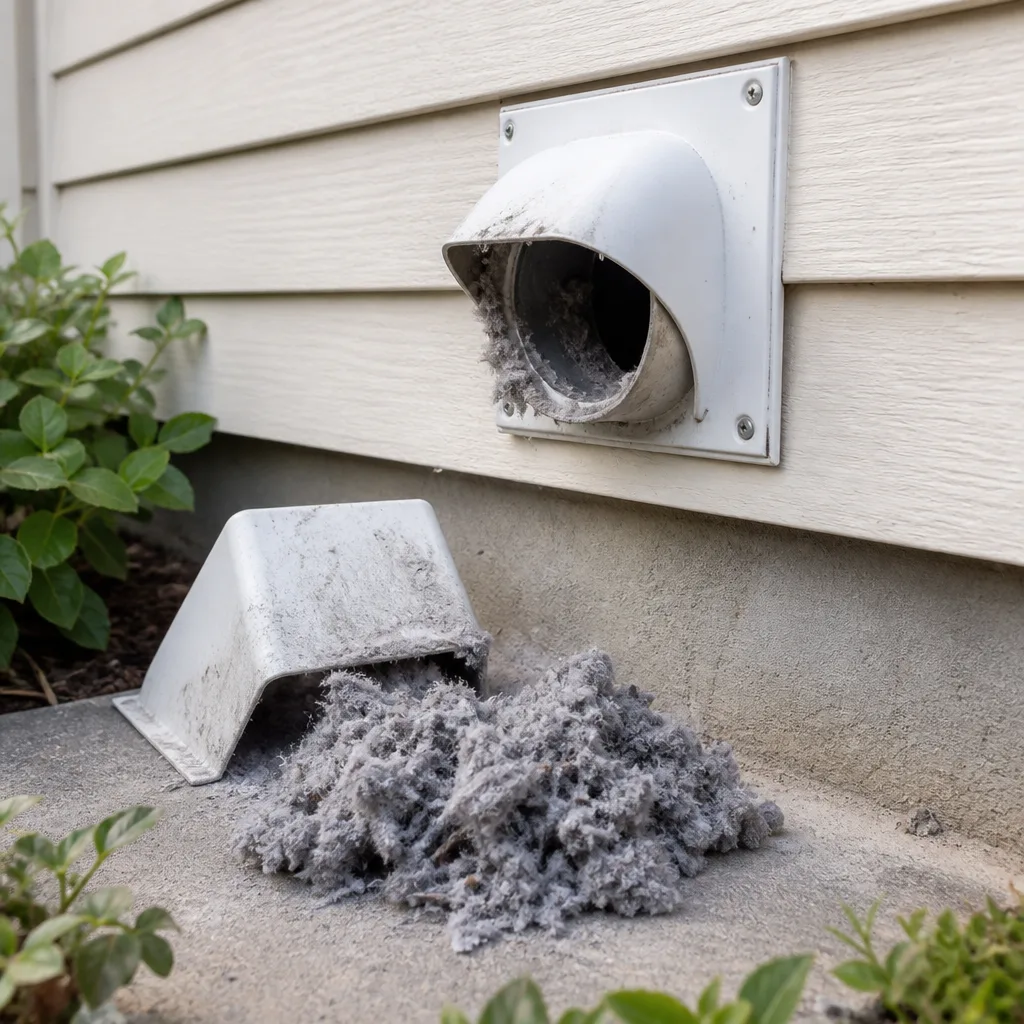
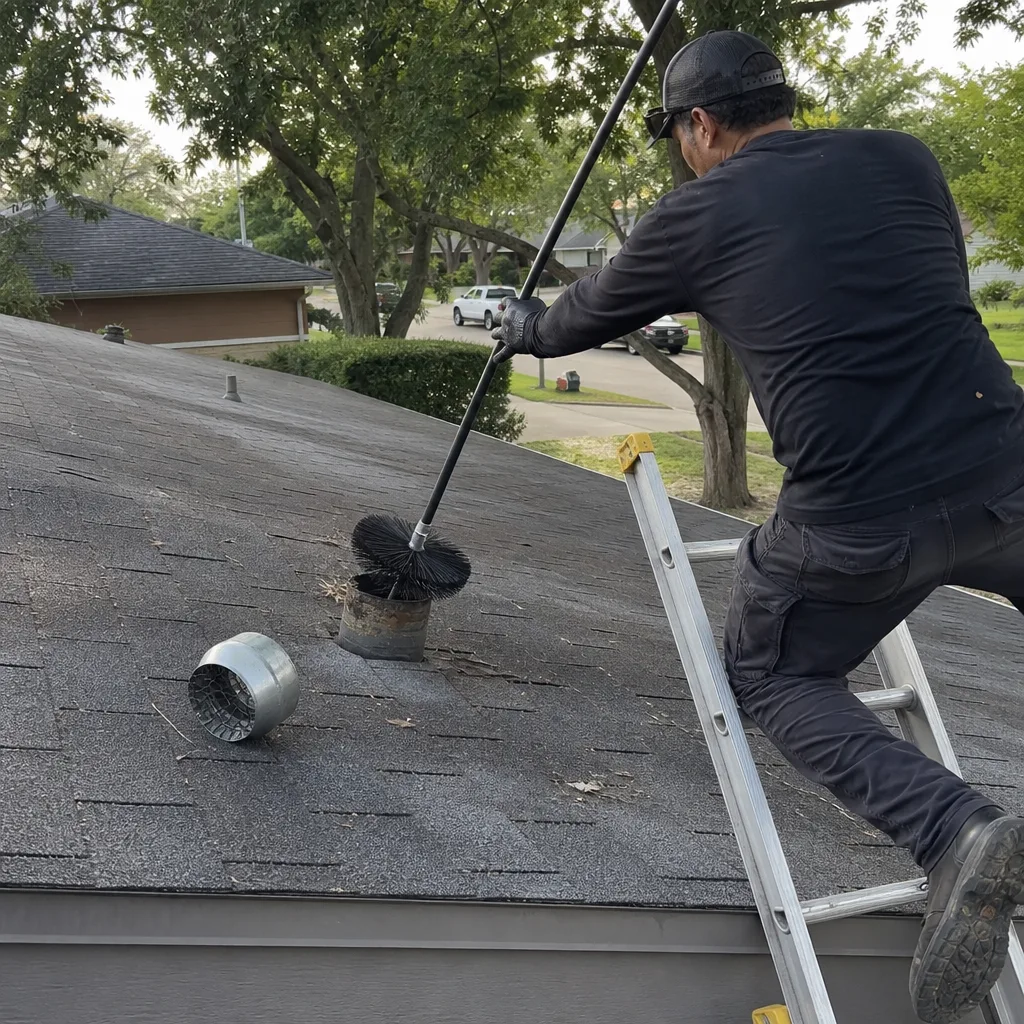
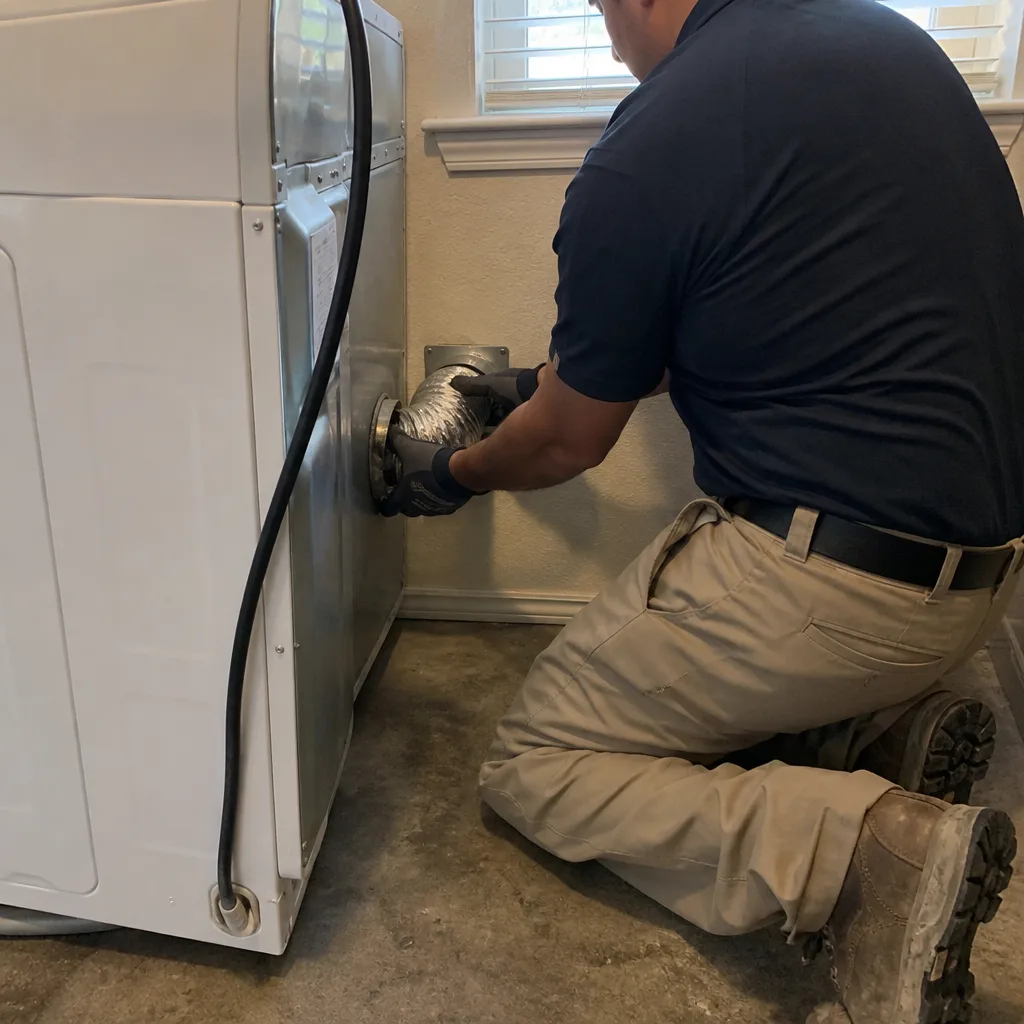
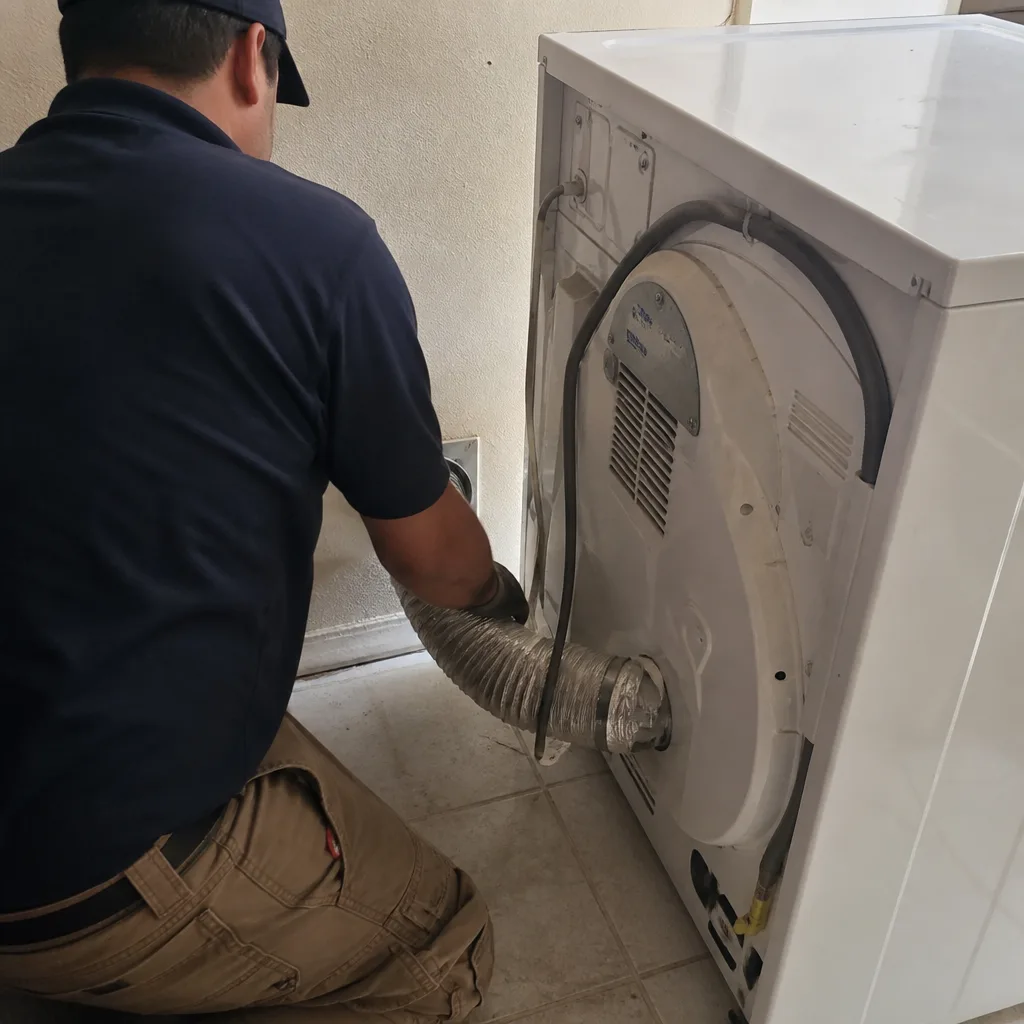
| Dryer vent cleaning (add-on or standalone) | $120-$200 | Full vent run cleaning from dryer to exterior termination |
These ranges reflect professional-grade equipment, HEPA filtration, documented photo records, and written warranties. Prices significantly below these thresholds indicate corners cut in equipment, labor, or documentation. Our Air Duct Cleaning in Spring page details our specific process and equipment.
For related services, see our pages on Dryer Vent Cleaning in Spring and HVAC Cleaning in Spring.
Common Mistakes to Avoid
- Booking based on coupon price without verifying equipment. The $79 special cannot fund proper negative-pressure extraction and HEPA filtration. We’ve opened systems after these visits and found the main trunk line packed with debris the shop vacuum never reached.
- Accepting verbal estimates. A price given over the phone without written confirmation leaves you vulnerable to on-site price increases. Spring’s competitive market attracts operators who specialize in this maneuver.
- Ignoring the photo record requirement. Without before-and-after images of every duct run, you have no evidence the work was performed. The photo record is your only protection against paying for vacuum noise.
- Assuming NADCA membership equals ACR compliance. Ask specifically for written confirmation of ACR standard adherence. Some members adopt selective practices while claiming full compliance.
- Failing to verify local presence. Out-of-area operators use Spring phone numbers while dispatching from distant locations. Local knowledge matters: understanding Spring’s clay soil and foundation movement helps technicians protect ductwork during access.
- Neglecting to ask about sanitizer chemistry. If sanitizing is offered, you have the right to know what’s being introduced into your air distribution system. Vague “EPA-approved” claims without specific product names are inadequate.
- Skipping the warranty document review. A “satisfaction guarantee” without written terms, defined standards, and a direct contact process is not enforceable protection.
When to Call a Professional
Certain conditions warrant immediate professional assessment rather than scheduled maintenance. Visible mold growth inside registers or on duct surfaces requires evaluation before cleaning disturbs spores. Persistent musty odors when the HVAC runs, especially in Spring’s humid months, suggest biological activity that simple debris removal won’t address. Significant dust accumulation immediately after renovation work indicates construction debris in the system that standard filtration won’t capture. And if you’ve never had ducts cleaned in a home built between 2015 and 2025, the construction debris load from that building period often exceeds what homeowners expect.
CleanRun Air Duct Cleaning Spring offers free estimates in Spring. Call (346) 423-3631 to schedule a written scope with no obligation to book. We’ll provide specific equipment details, a flat system price, and a documented photo record if you proceed.
Frequently Asked Questions
Professional air duct cleaning in Spring typically ranges from $350 for smaller homes to $950 for large properties with multiple systems, with mid-size homes falling between $450 and $700. Prices below $300 for whole-system cleaning indicate shop-vacuum-level equipment that cannot effectively clean duct runs beyond the first few feet. Call (346) 423-3631 for a written estimate with exact pricing for your specific system.
Low quotes rely on equipment that cannot perform the full scope of work, then recover revenue through aggressive upselling or by simply not cleaning most of the system. A shop vacuum and manual brush cannot generate the negative pressure or mechanical agitation required by the ACR standard. The true cost difference is between documented, thorough cleaning and superficial register vacuuming.
Require a documented photo record of every duct run before and after cleaning, with images that show identifiable landmarks like duct joints or elbows for verification. Without this documentation, you have no evidence that the interior ductwork was accessed. At CleanRun, the photo record is a standard deliverable on every job, included since 2013.
Most Spring homes benefit from cleaning every 3-5 years, with shorter intervals for homes with pets, recent renovation, or occupants with respiratory sensitivities. Spring’s high pollen loads and humidity can accelerate accumulation, particularly in homes with standard 1-inch filters rather than upgraded media filters. The camera doesn’t lie: when the borescope shows significant debris buildup, it’s time.
No. NADCA membership indicates financial commitment and access to industry standards, but it does not ensure ACR standard compliance on every job. You must ask for written confirmation that the contractor follows the full ACR standard, not “guidelines” or “best practices,” and verify their equipment matches that commitment.
Air duct cleaning addresses the distribution network: duct runs, plenum, and registers. HVAC cleaning includes the air handler components, the blower, evaporator coil, and heat exchanger. A complete service often combines both, particularly in Spring’s climate where coil contamination restricts airflow and reduces efficiency. Our HVAC Cleaning in Spring page details the full scope.
The Bottom Line
Hiring an air duct cleaning contractor in Spring requires active screening because Texas provides no regulatory shortcut; for additional help, explore our more guides & resources. The effective process is sequential: verify NADCA membership and written ACR commitment, test equipment knowledge with specific questions, demand a written estimate with five essential elements, eliminate operators who show red flags, and confirm the warranty has substance beyond a website phrase. The contractors who survive this process are the ones with invested equipment, documented practices, and accountability structures. They’re also the ones who’ve been serving Spring homeowners consistently, not arriving last week with a shop vacuum and a coupon printer.
Written by Tomas Reyes, Owner at CleanRun Air Duct Cleaning Spring, serving Spring since 2013.