
Last updated September 23, 2026
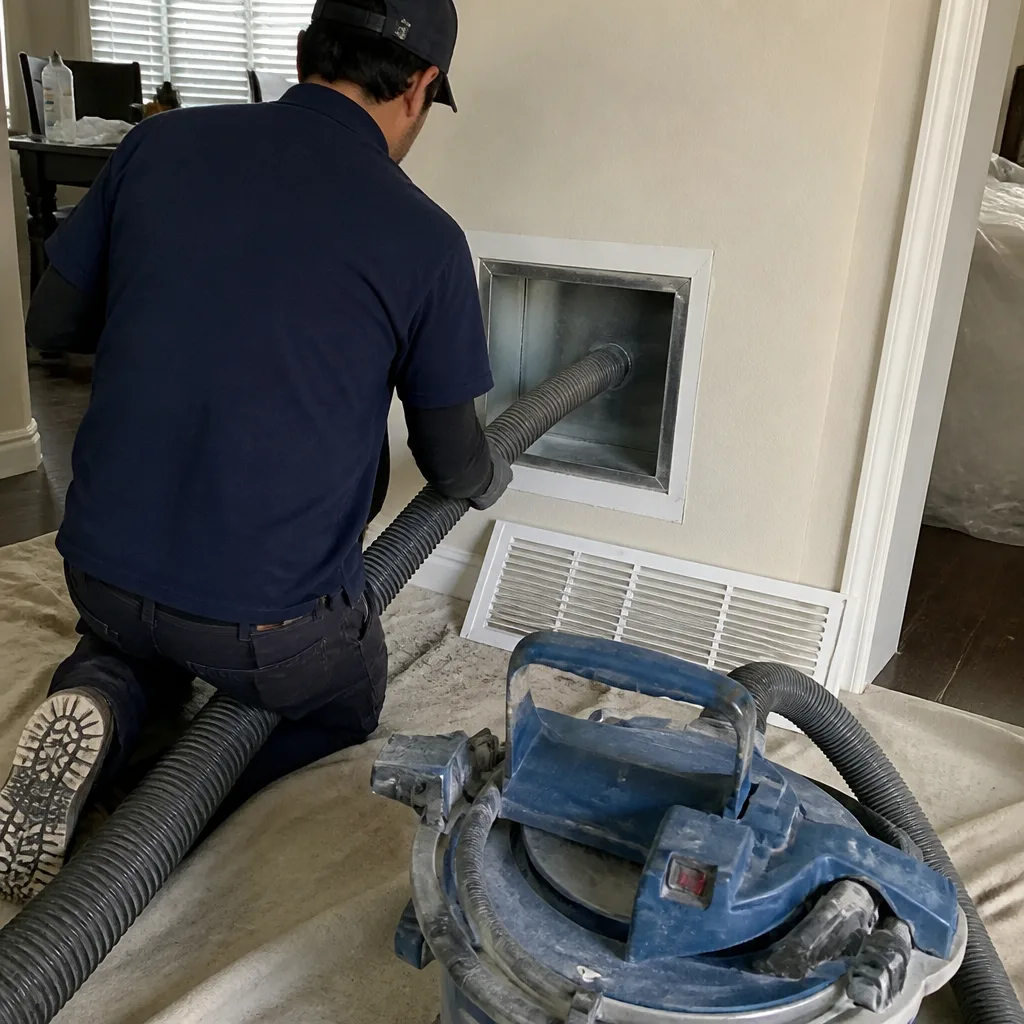
Whole-system duct and dryer vent check with before-and-after photos - you see exactly what came out of your vents
That "$99 whole-house special" is a bait ad - the real number appears once they are in your hallway, or the "clean" is a shop-vac at the register. We photograph the inside of your ducts before and after instead.
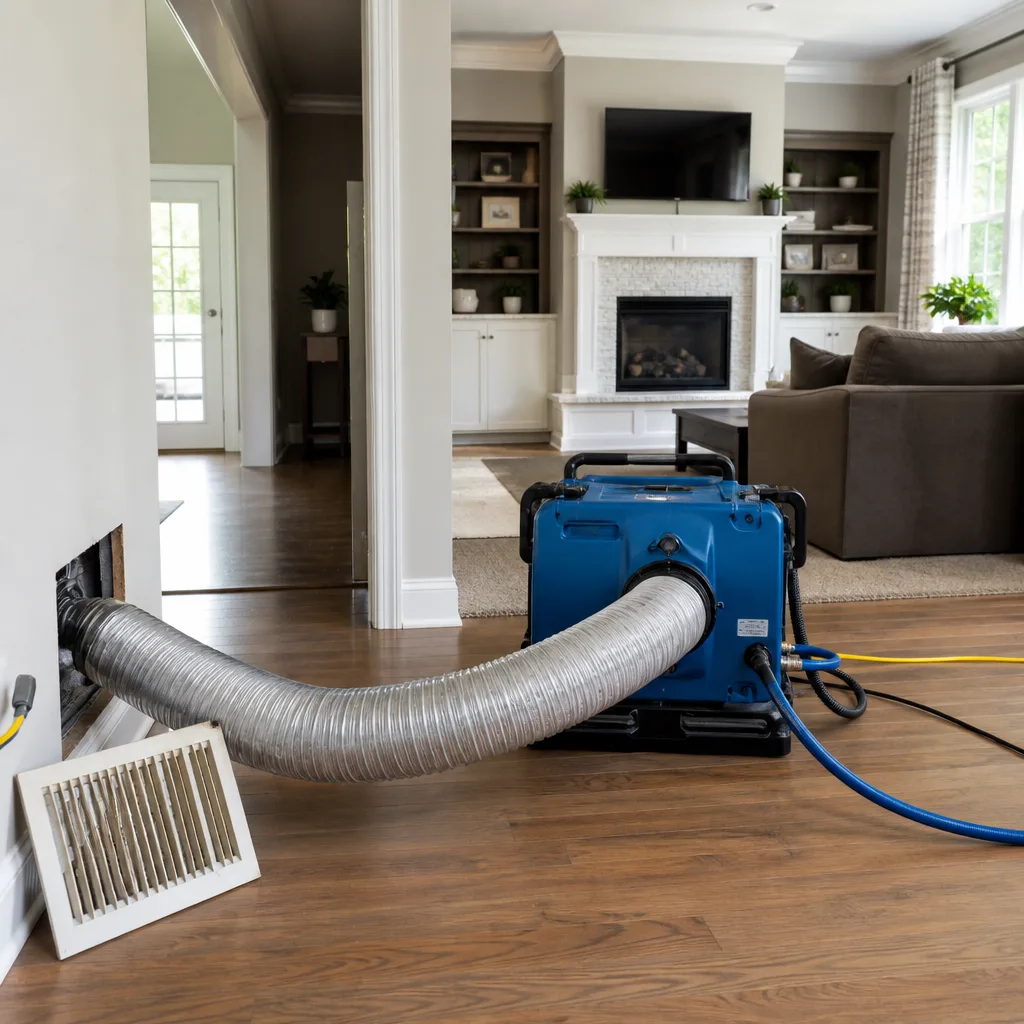
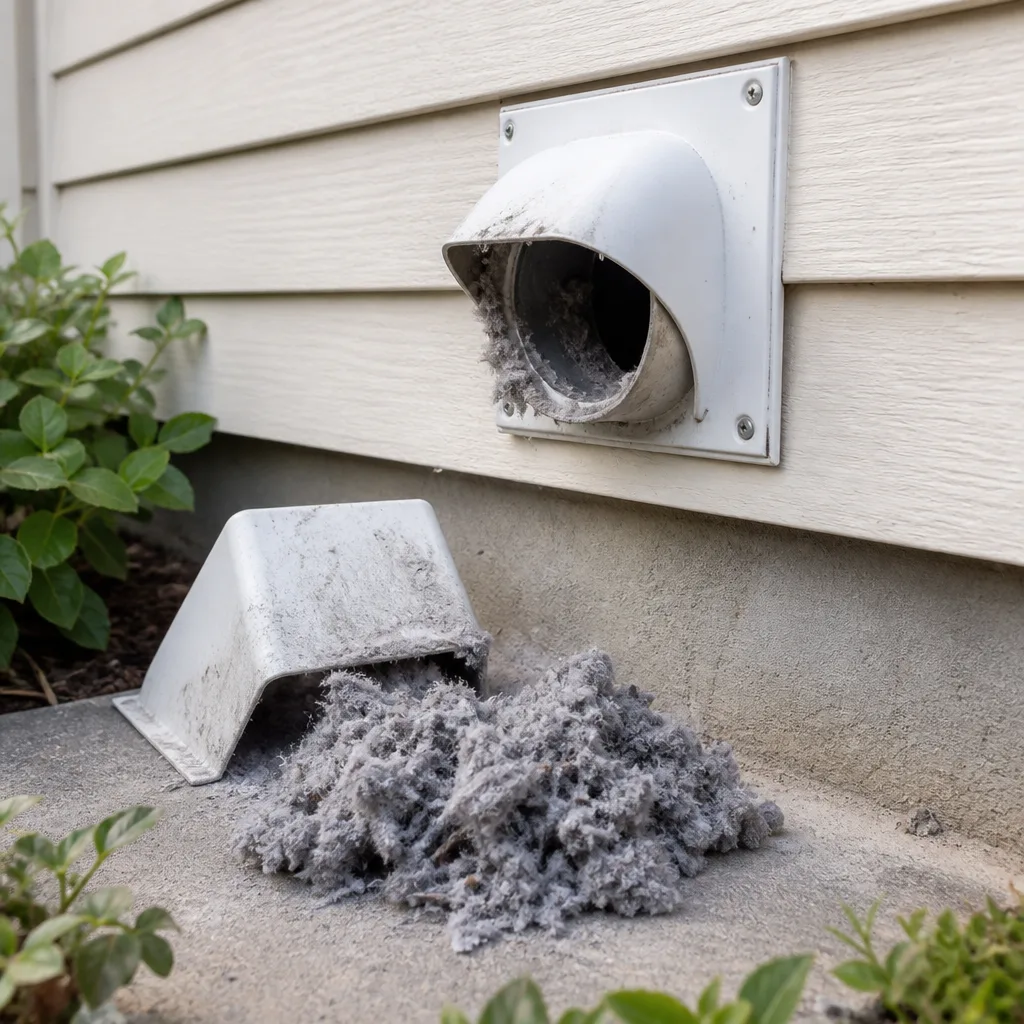
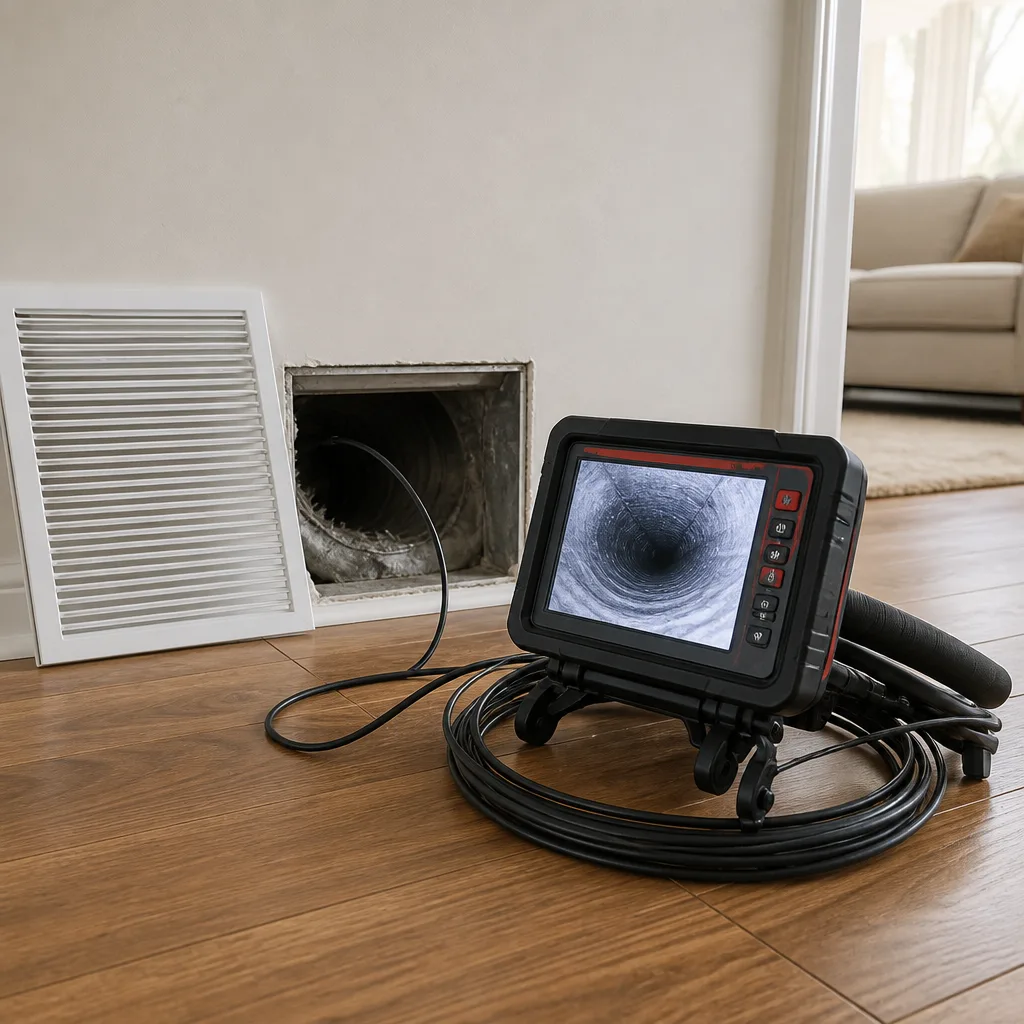
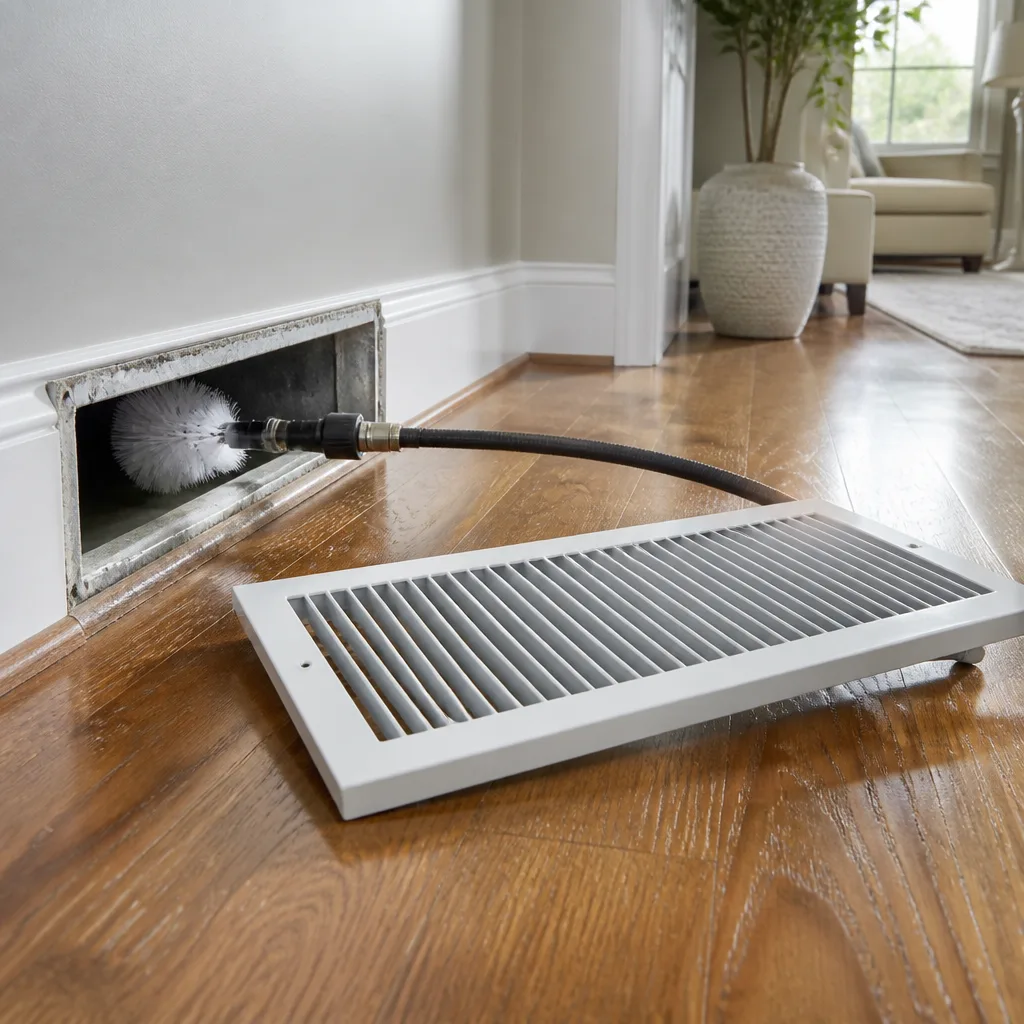
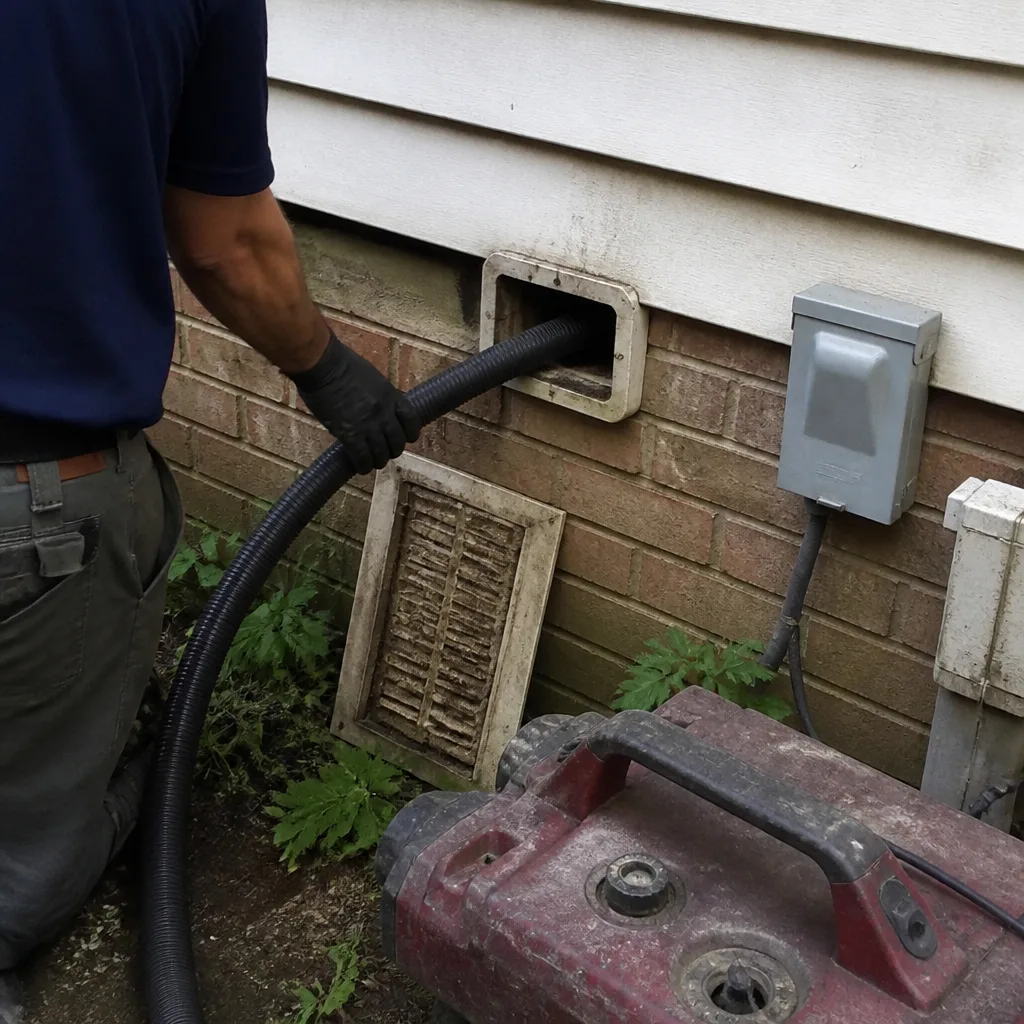 Before
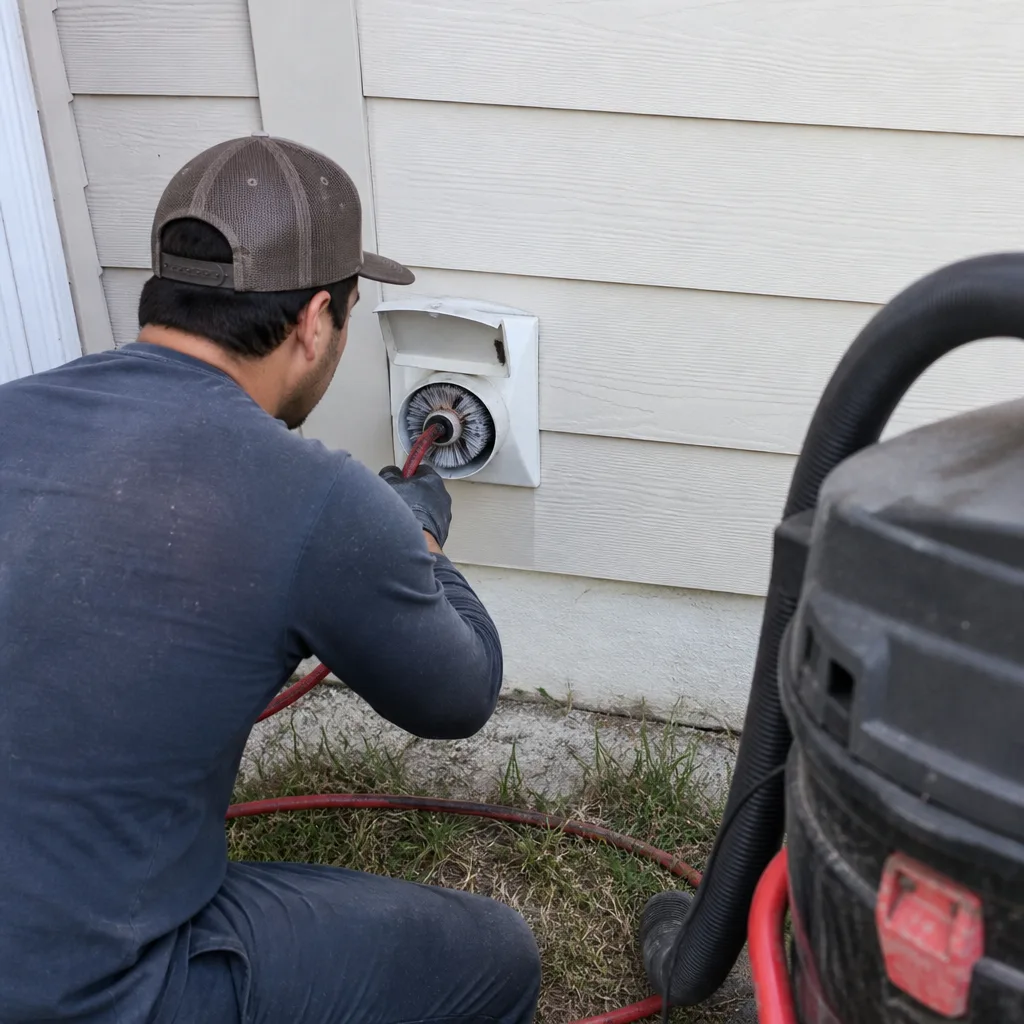 After
After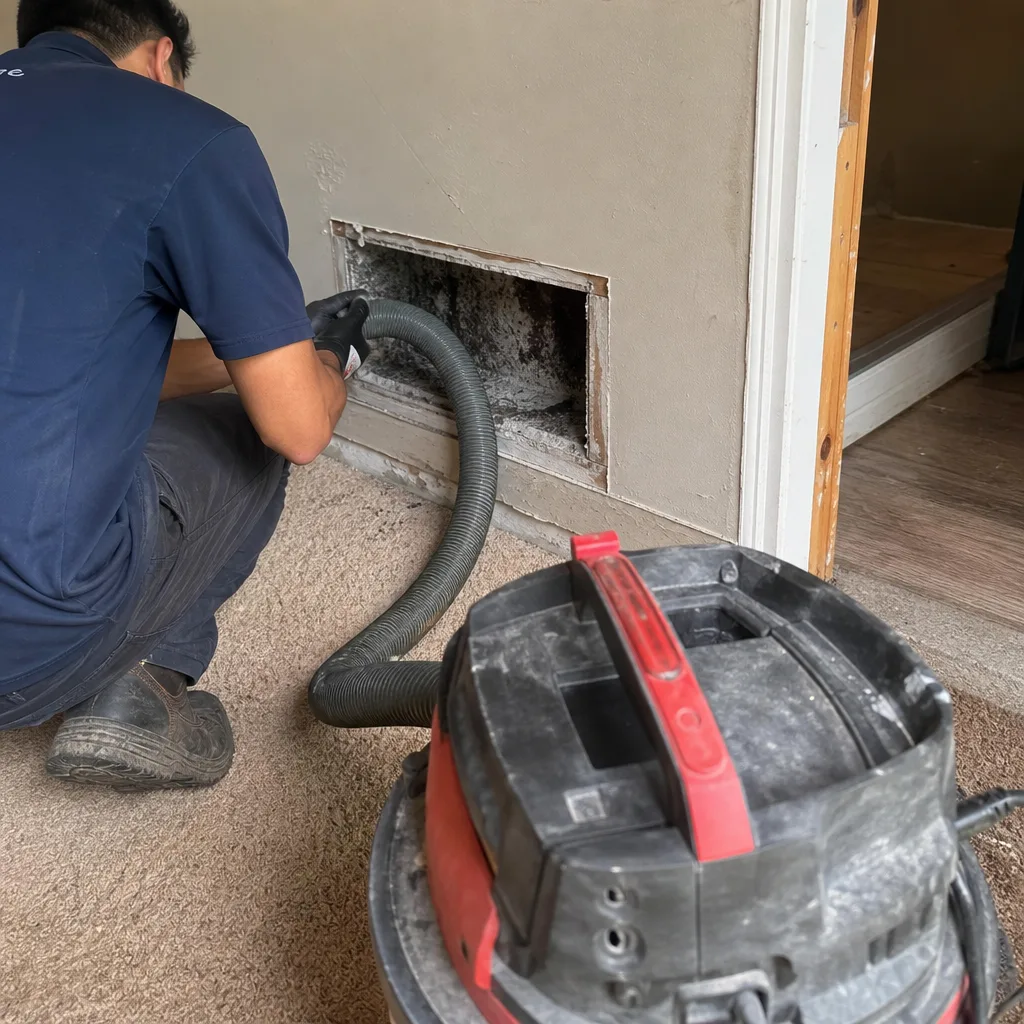 Before
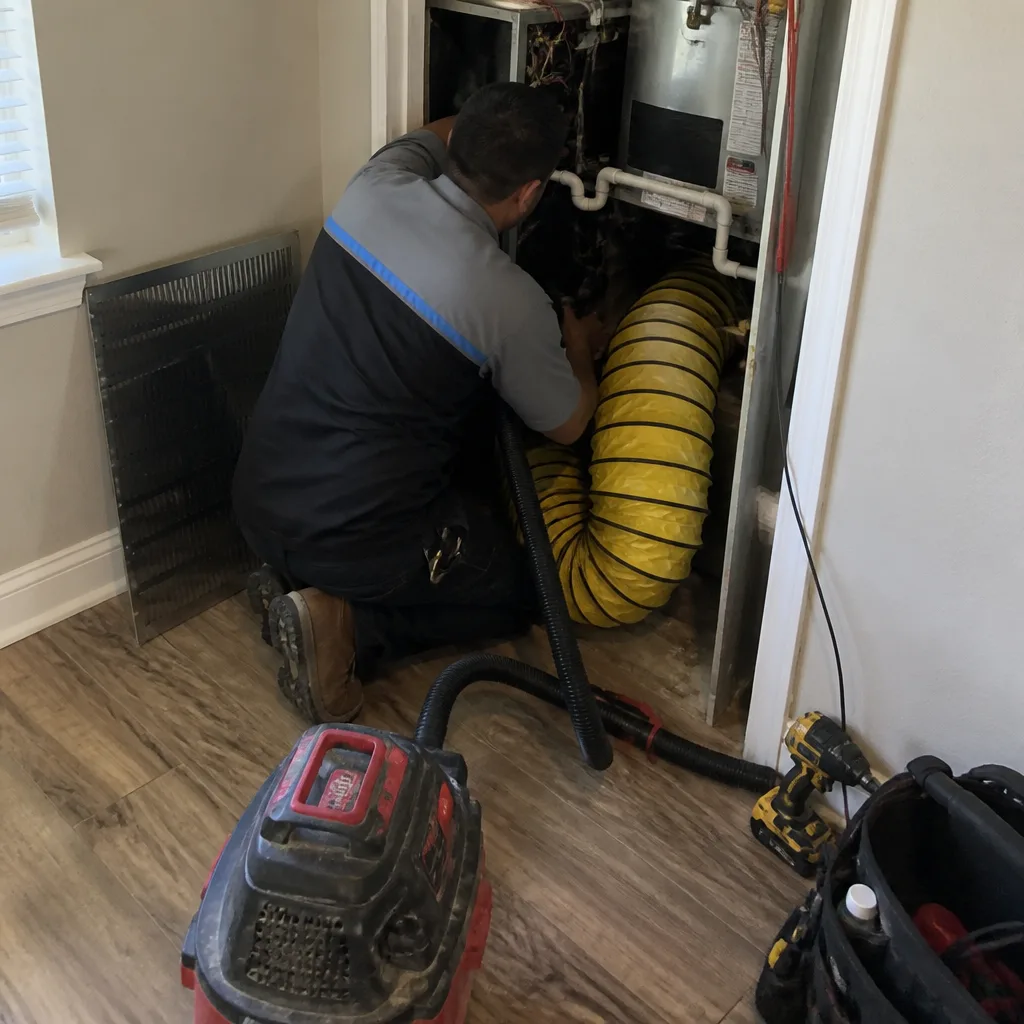 After
After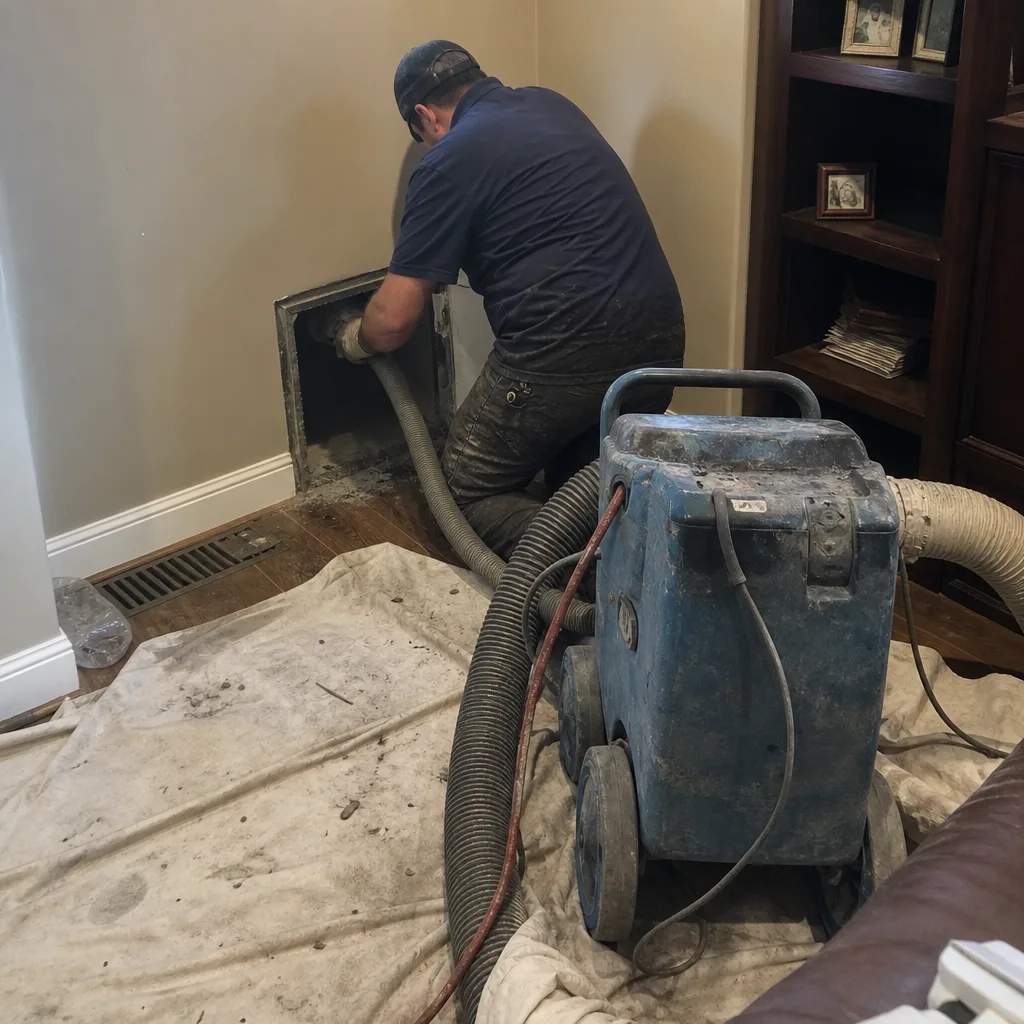 Before
 After
AfterAir Duct Cleaning Warning Signs: A Spring Homeowner’s Reference Guide
Here’s what most $79 coupon companies don’t want Spring homeowners to know: dusty register covers are normal. They’re not a warning sign, and wiping them down isn’t duct cleaning. The real indicators of dirty or damaged ductwork are physical, photographable conditions inside the duct runs themselves. In Spring’s market of slab-built homes with long horizontal flex duct runs through 95°F attics, we’ve documented seven specific observable conditions since 2013 that separate genuine problems from sales theater. This guide shows you exactly what to look for, how to document it yourself with a $15 tool, and which questions to ask before you agree to our Air Duct Cleaning services or any work.
Quick Answer
Seven documented warning signs indicate your Spring home’s ductwork needs professional attention: visible biological growth inside the duct, vermin evidence, post-renovation particulate buildup, substantial debris accumulation exceeding 1/4 inch, detached duct connections, moisture damage, and filter bypass patterns. Each condition is photographable from the register throat with a basic borescope camera, and any contractor who cannot or will not show you pre-cleaning documentation should be declined. For a deeper dive, see DIY vs Professional Air Duct Cleaning: The Spring Homeowner’s Decision Guide.
Table of Contents
- What Actually Counts: The Seven Documented Warning Signs
- What Does Not Count (And Why Salespeople Claim It Does)
- How to Document Interior Conditions Yourself
- Spring, TX Construction Factors That Accelerate Duct Problems
- The One Question That Exposes a Bad Contractor
- What Professional Cleaning Costs in Spring
- Common Mistakes to Avoid
- When to Call a Professional
- Frequently Asked Questions
BeforeAfterWhat Actually Counts: The Seven Documented Warning Signs
After 52,000 homes served across the Spring area since 2013, we’ve learned that legitimate duct problems leave physical evidence. The following seven conditions can be verified with a flashlight or phone-attached borescope camera before any contractor sets foot in your home.
1. Visible Biological Growth (Black or Green Discoloration)
Look past the register face into the duct throat, the short vertical section connecting your floor or ceiling vent to the horizontal duct run. Biological growth appears as irregular black, green, or gray patches on the interior surface, not as uniform dust coating. In Spring’s climate, this typically forms where attic-mounted air handlers create temperature differentials that produce condensation on duct interiors, especially in homes built between 1990 and 2010 where duct board was commonly installed.
The key distinction: uniform gray dust is particulate accumulation. Irregular dark patches with texture or color variation suggest microbial growth. We’ve photographed this condition in Spring neighborhoods including Gleannloch Farms, Windrose, and Augusta Pines, often in homes with oversized AC units that short-cycle and fail to dehumidify properly.
2. Vermin Evidence (Droppings, Nesting Material, or Chewed Insulation)
Rodents and insects use ductwork as highway systems. Evidence includes:
- Small dark pellets (mouse droppings) scattered at the bottom of horizontal runs
- Shredded paper or insulation compressed into a nest shape
- Chewed edges on flex duct insulation where squirrels or rats entered
- Insect casings or dead insects collected at low points in the system
In Spring’s older established neighborhoods like Old Town Spring and Cypress Trails, mature trees close to slab homes provide roof access for rodents. Once inside an attic, they exploit gaps at trunk line connections. This is not a cleaning issue alone; entry points must be sealed or the problem repeats within one season.
3. Post-Renovation Particulate (Drywall or Insulation Fibers)
Home renovations between 2015 and 2025 generated extraordinary duct contamination in Spring’s booming market. Drywall dust, fiberglass insulation fragments, and sawdust enter ductwork when contractors operate without proper isolation. The telltale sign: a uniform coating of fine white or pinkish material on horizontal duct runs, particularly in homes where the HVAC system was run during construction.
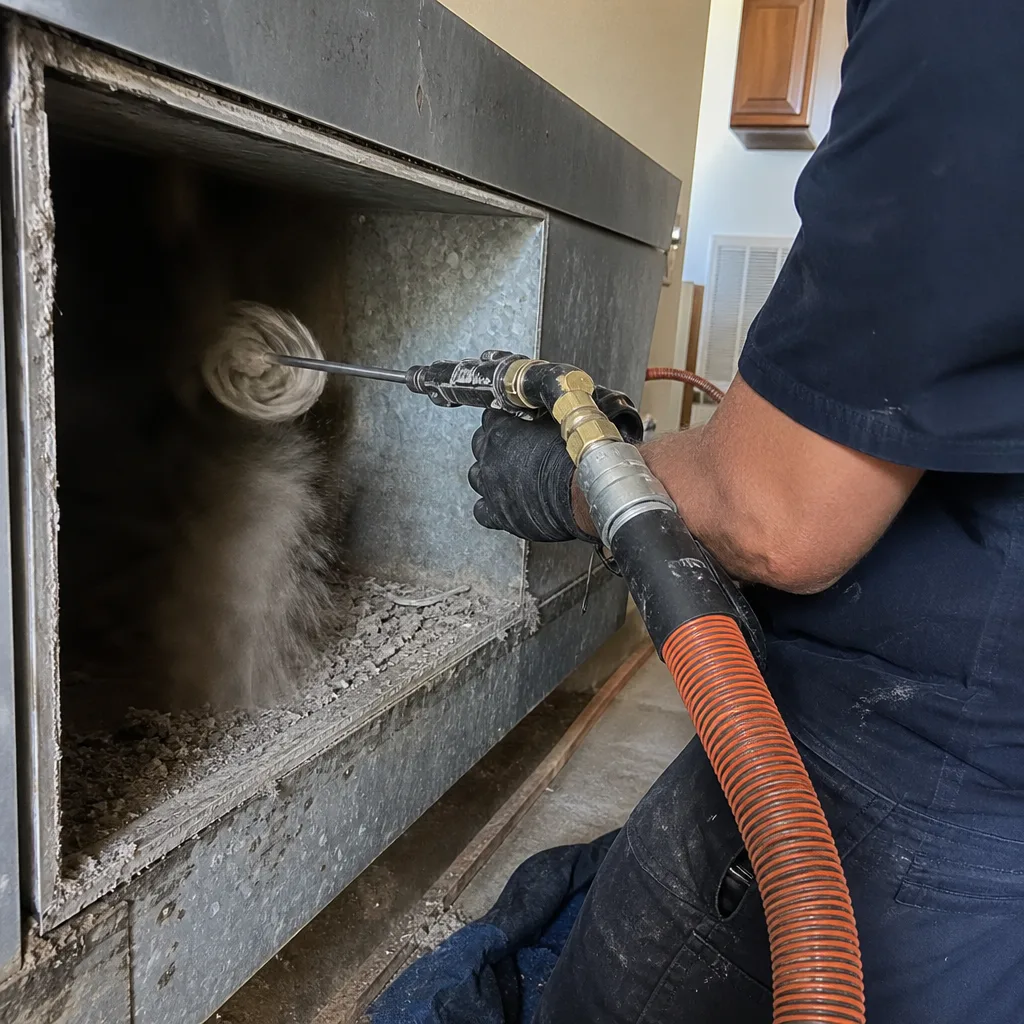
We’ve documented this extensively in newer Spring subdivisions including Harmony, Benders Landing, and Woodson’s Reserve. The particulate is lightweight and resetstles after cleaning if not removed with negative-pressure extraction equipment. A shop vacuum or rotary brush alone will not capture it; the material requires contained removal with professional-grade equipment like the CleanRun Air Duct Cleaning Spring home crews deploy.
4. Substantial Debris Accumulation (More Than 1/4 Inch)
Measure with any straight object inserted through the register opening. A quarter-inch of settled particulate in a horizontal run indicates years of accumulation or a filtration failure. The debris layer will be denser at low points and elbows where airflow velocity drops.
This is the condition most often misrepresented. A light dust film, measurable in millimeters, is normal in any system older than five years. A measurable quarter-inch or greater layer restricts airflow, increases static pressure on your blower motor, and can become a reservoir for odors and biological growth when moisture conditions are right.
5. Detached Duct Connections (Audible Air Hiss or Reduced CFM)
This warning sign manifests at the register, not inside the duct. Symptoms include:
- One or more registers producing noticeably weaker airflow than others in the same system
- An audible hiss or whistle when the blower operates, particularly at trunk line boots in the attic
- Rooms that are consistently 3-5 degrees warmer in summer despite open vents
- Dust accumulation on ceiling or wall surfaces near the register, indicating air being pushed into the wall cavity rather than through the duct
Spring’s attic temperatures, regularly exceeding 95°F from May through September, degrade the adhesive tapes and zip ties used in 1990s and 2000s construction. Flex duct connections separate slowly, often going unnoticed until energy bills rise or comfort complaints accumulate.
6. Moisture Damage (Rust on Metal Ducts or Dark Staining on Flex Duct)
Metal ductwork in Spring homes shows rust at low points where condensate collects. Flex duct displays dark water stains or sagging at supports where the insulation has absorbed moisture and compressed. Both conditions indicate that your system is producing or encountering liquid water inside the ductwork, which destroys thermal performance and creates conditions for biological growth.
This is particularly common in two-story Spring homes with upstairs air handlers, where condensate drain failures or improperly sloped emergency pans allow water into the return plenum. The damage is progressive: first staining, then insulation compression, then duct collapse if the flex sags sufficiently to restrict airflow entirely.
7. Filter Bypass (Debris Pattern Around the Filter Rack)
Remove your filter and examine the surrounding sheet metal. A dark debris pattern on the upstream side of the filter rack, or dust accumulation on the filter frame itself, indicates that air is moving around rather than through your filter. This occurs when:
- Filters are the wrong size and leave gaps
- Filter racks are damaged or improperly installed
- High-efficiency filters create excessive static pressure, causing the filter to bow or separate from its seal
The consequence is unfiltered air entering your blower and being distributed throughout the home. We’ve found this in approximately 30% of Spring homes we service, often in systems where homeowners upgraded to MERV 13 filters without verifying that their blower could handle the increased resistance.
What Does Not Count (And Why Salespeople Claim It Does)
The duct cleaning industry in Spring runs heavily on fear-based selling. Three conditions are routinely misrepresented as urgent problems when they are not.
Light Dust on Register Faces
Register covers are high-velocity air exit points. They collect airborne particles exactly as a window screen collects insects. Wiping them with a damp cloth is normal household maintenance. This dust did not come from inside your ductwork; it settled on the surface from room air. Any technician who photographs your register covers and calls this evidence of dirty ducts is either incompetent or dishonest.
A Single Odor Episode That Clears After 20 Minutes of Operation
HVAC systems occasionally produce brief odors when first activated after seasonal disuse. Dust that settled on heat exchangers or coil surfaces during the off-season burns off or becomes airborne temporarily. If the odor dissipates within 20 minutes and does not recur, this is not a duct contamination issue. Persistent odors, particularly musty or chemical smells that strengthen when the blower runs, are the relevant warning sign.
Neighbor’s Report That They Just Had Theirs Done
Duct cleaning is not dental hygiene. There is no recommended interval that applies universally. Homes with excellent filtration, no renovations, and no vermin issues may go 10-15 years without meaningful accumulation. Homes with multiple pets, recent construction, or filtration failures may need attention in 3-5 years. Your neighbor’s schedule is irrelevant to your home’s condition.
How to Document Interior Conditions Yourself
A $15 borescope camera, available from any hardware retailer or online marketplace, attaches to your phone and provides sufficient visibility to evaluate most warning signs without a service call. The procedure takes approximately 10 minutes per register.
- Remove the register cover and set it aside
- Insert the borescope slowly past the register throat into the horizontal duct run, typically 12-24 inches before encountering the first elbow or branch connection
- Capture video rather than still images; slow panning reveals texture and depth that single frames obscure
- Document the bottom surface of horizontal runs specifically; this is where debris settles and biological growth establishes
- Examine the flex duct interior for tears, compression, or discoloration of the plastic liner
- Record the date and register location for each video file
What you’re looking for: any of the seven conditions described above. What you’re ruling out: uniform light dust coating less than 1/8 inch, intact duct liner with normal aging coloration, and clear airflow paths without obstruction.
If your documentation shows no warning signs, you have evidence to decline any unsolicited sales pitch. If it shows one or more conditions, you have documentation to share with contractors and a basis for comparing their assessments against your own observations.
Spring, TX Construction Factors That Accelerate Duct Problems
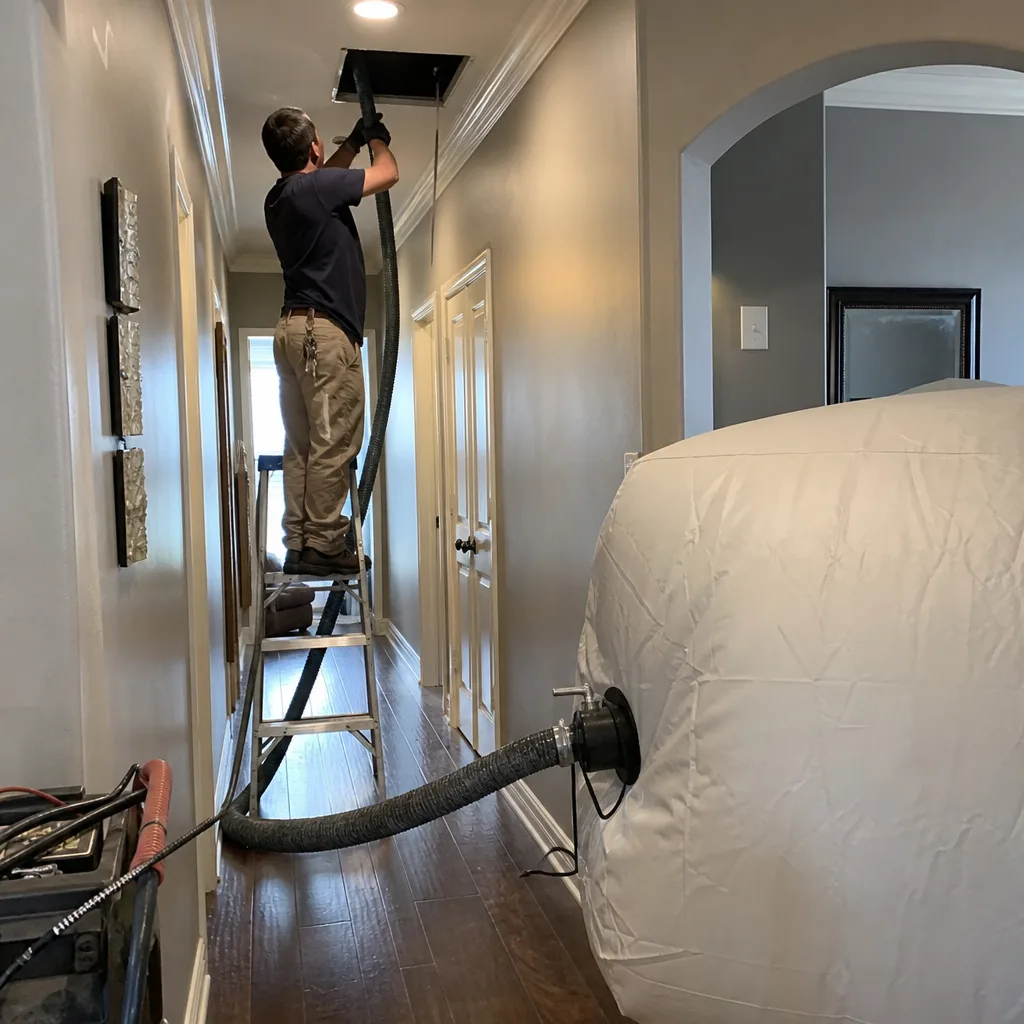
Spring’s housing stock and climate create specific duct vulnerabilities that homeowners in other markets may not face. Understanding these factors helps interpret warning signs in context, as detailed in The Complete Guide to Air Duct Cleaning in Spring.
Slab Construction with Long Horizontal Flex Runs
Most Spring homes built after 1980 are slab-on-grade with ductwork routed through attic spaces. The horizontal flex duct runs, often 30-50 feet from air handler to distant registers, have multiple low points where debris settles and moisture collects. The long runs also create more connection points where separation can occur. In two-story homes in neighborhoods like Lakes of Cypress Forest and Spring Trails, these runs frequently exceed manufacturer recommendations for unsupported span, leading to sagging and compression.
Attic-Mounted Air Handlers in Extreme Heat
Spring attic temperatures regularly reach 125-140°F in summer. Air handlers and ductwork in this environment experience accelerated material degradation. Flex duct insulation compresses over time, reducing R-value and increasing condensation potential. Adhesive tapes fail. Plastic duct liner becomes brittle. The thermal stress is constant and largely invisible until performance problems or warning signs appear at the register.
1990s-2000s Duct Board Construction
Homes built during Spring’s major expansion in the 1990s and early 2000s frequently used duct board, a fiberglass board with a foil facing, for trunk lines and plenums. After 20-30 years, this material degrades: the interior surface becomes friable, the fiberglass core exposes fibers to the airstream, and the structural integrity fails at connection points. We’ve replaced duct board systems in Spring’s Panther Creek and Bridgestone neighborhoods where the material had essentially disintegrated internally while appearing intact from the outside.
The One Question That Exposes a Bad Contractor
When any technician identifies a warning sign and recommends cleaning or repair, ask this exact question:
“Can you show me a photo of this condition from inside the duct before you clean it?”
The legitimate answer is immediate production of dated, location-labeled photographs from your specific ductwork. The technician should be able to identify which register, which duct run, and which condition is shown. At Air Duct Cleaning in Spring, this documentation is standard on every job under Haven Standard Clause 2: Documented Verification.
Refusal to photograph pre-cleaning conditions is itself a warning sign about the contractor. Common evasions and what they indicate:
- “Our camera is broken today” - Unprepared or dishonest operation
- “We don’t need photos, we can see it’s dirty” - Subjective assessment without accountability
- “We’ll take after photos to show you the improvement” - No baseline for measuring actual work performed
- “Photos cost extra” - Documentation treated as optional rather than standard practice
Since 2013, CleanRun has delivered a Documented Photo Record on every visit as a standard deliverable, not an upsell. The record includes before and after images of every duct run, labeled by location, provided to the customer before the crew departs. Any contractor unwilling to match this baseline standard of accountability should be declined.
What Professional Cleaning Costs in Spring
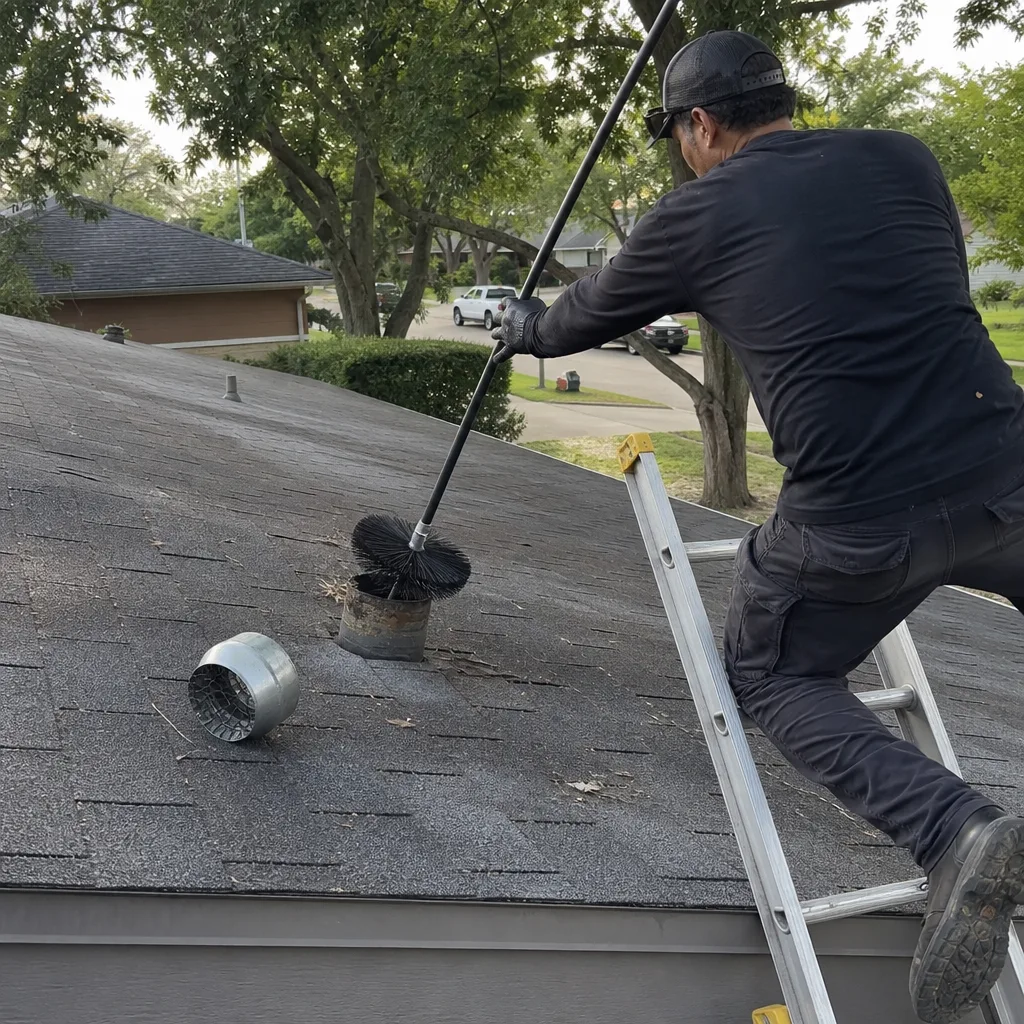
Honest pricing for whole-system duct cleaning in the Spring market, based on homes served since 2013:
| Home Size / System Configuration | Typical Range | What It Includes |
|---|---|---|
| Single-story, 1 system, 8-12 registers | $450-$650 | All supply and return duct runs, main trunk lines, plenum access, register cleaning, standard photo documentation |
| Two-story, 1 system, 12-18 registers | $650-$850 | Extended horizontal runs, additional access points, comprehensive photo record of all runs |
| Two-story, 2 systems, 16-28 registers | $1,100-$1,500 | Dual air handler service, complete documentation for both systems, written scope per Haven Standard Clause 1 |
| With dryer vent cleaning (recommended) | Add $150-$250 | Full lint removal from dryer exhaust duct to exterior termination, airflow verification |
What these prices reflect: professional-grade negative-pressure extraction equipment from manufacturers like Rotobrush and Nikro, background-checked and uniformed technicians operating under Haven Standard Clause 3: Verified Crews, and the 365-Day Done Right Promise backed in writing on every job.
What these prices do not include: per-vent surcharges, “deep cleaning” upsells, or antimicrobial treatments of unproven value. CleanRun’s written price, delivered before any work starts under Haven Standard Clause 1, is the complete price for the agreed scope.
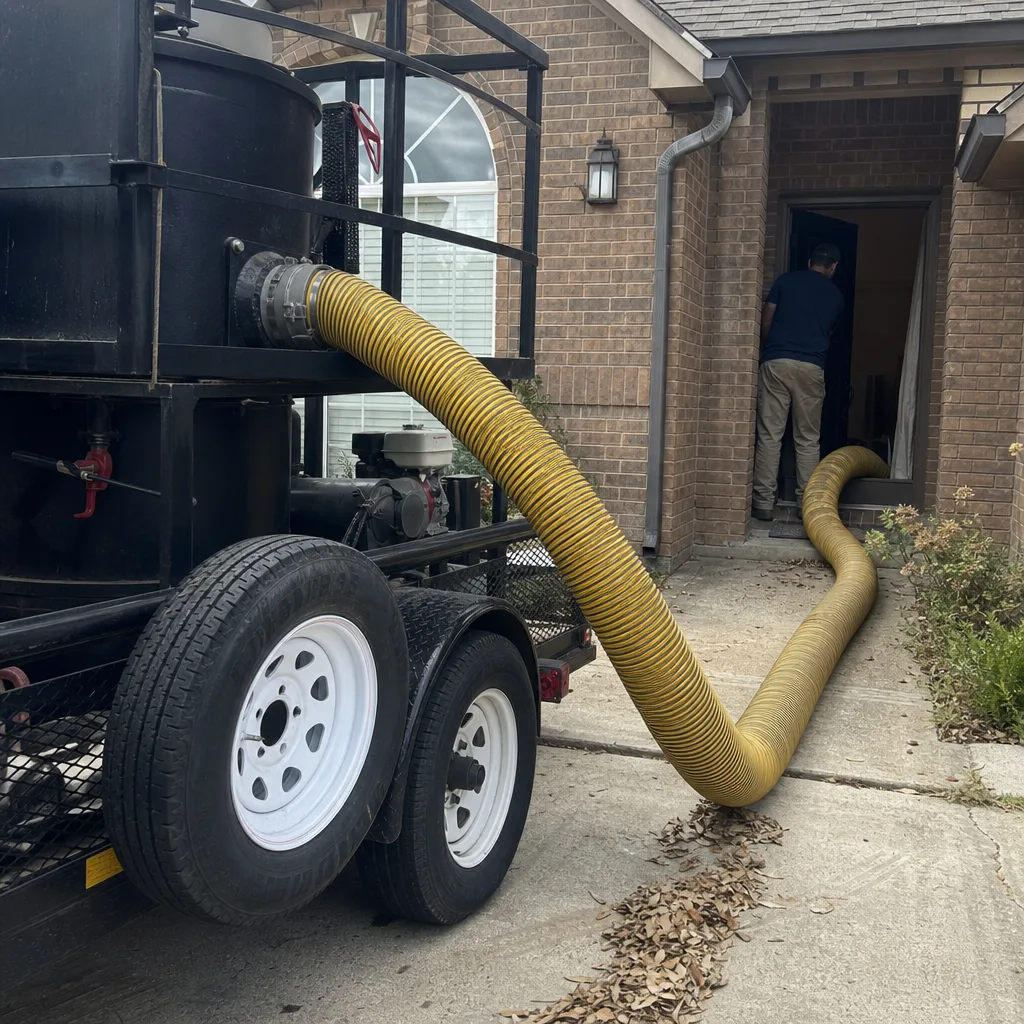
Competitor quotes that seem substantially lower typically rely on one of three models: bait-and-switch pricing where the initial quote covers only minimal work, unlicensed operators without insurance or bonding, or equipment no more sophisticated than a shop vacuum with a rotary brush attachment. The Dryer Vent Cleaning in Spring page details similar pricing integrity concerns for that service category.
Common Mistakes to Avoid
- Accepting a phone quote without a home evaluation. Duct configuration varies enormously in Spring homes. A legitimate contractor needs to verify system layout, access points, and actual conditions before committing to a written price. Anyone who quotes $199 over the phone will find reasons to charge more on arrival.
- Confusing register cleaning with duct cleaning. Removing and washing register covers is a 20-minute task any homeowner can perform. It has no effect on interior duct conditions. Contractors who emphasize register cleaning in their scope are avoiding the actual work.
- Ignoring the air handler and coil. The blower compartment and evaporator coil are integral to system hygiene. A duct-only cleaning that leaves a contaminated coil will recontaminate ductwork within weeks. The HVAC Cleaning in Spring page explains full-system service.
- Hiring based on coupon price alone. Spring’s market includes operators who advertise $79 whole-house cleaning. This price does not cover legitimate equipment costs, technician wages, insurance, or documentation. The resulting service is either a brief vacuuming of accessible areas or a pretext for aggressive upselling.
- Failing to verify documentation delivery. Promise of photos is not delivery of photos. Confirm before work begins that you will receive dated, labeled images of every duct run, and that this is included in the base price, not an additional charge.
- Neglecting to address the cause. Warning signs recur if underlying problems persist. Biological growth returns if moisture sources aren’t corrected. Vermen re-enter if access points aren’t sealed. Filter bypass continues with wrong-size filters. A cleaning-only approach without cause identification is temporary relief at best.
- Assuming new homes are clean. Post-construction duct contamination in Spring’s active building market is severe. We’ve documented substantial drywall dust and insulation debris in homes less than one year old, particularly where builders ran HVAC systems during final construction phases without filtration.
When to Call a Professional
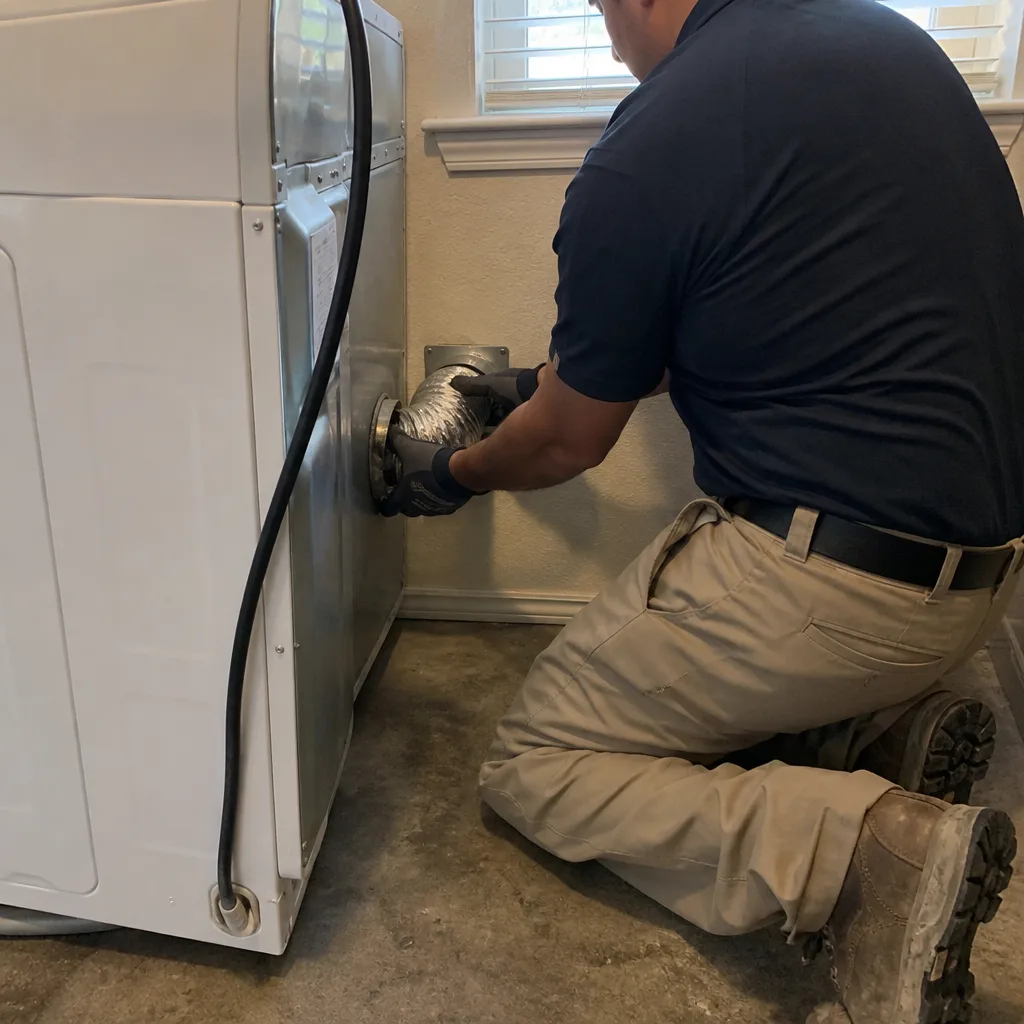
Call for evaluation when you’ve documented one or more of the seven warning signs, when energy bills have risen without explanation, or when rooms exhibit persistent temperature imbalance despite open vents and proper insulation. In Spring’s climate, moisture-related conditions warrant prompt attention to prevent progressive material damage.
CleanRun Air Duct Cleaning Spring offers free estimates with written pricing before any work begins. Explore more guides & resources on our blog. Our crews serve neighborhoods throughout Spring including Gleannloch Farms, Windrose, Augusta Pines, Harmony, and Old Town Spring. Every estimate includes a preliminary assessment of accessible conditions and a clear scope of recommended work. Call (346) 423-3631 to schedule.
Frequently Asked Questions
Whole-system duct cleaning for a typical Spring home ranges from $450 for a single-story system to $1,500 for a large two-story home with dual systems. The price depends on home size, number of duct runs, accessibility, and whether the air handler and coil require service. CleanRun provides a written price before any work starts, with no per-vent surcharges or hidden fees. Call (346) 423-3631 for a specific estimate at no cost.
Low quotes typically exclude necessary work, use inadequate equipment, or function as bait for aggressive upselling. A $79 coupon cannot cover professional negative-pressure extraction, trained technicians, insurance, and documentation. The operator either performs minimal surface cleaning or discovers “additional problems” on arrival that multiply the final invoice. Written upfront pricing, with scope defined before work begins, is the only protection against this model.
Demand a documented photo record of every duct run, before and after, with date and location labels. This is standard practice at CleanRun and has been since 2013. Without it, you have only the contractor’s word that work was performed throughout your system. A refusal to provide this documentation is reason enough to decline service.
There is no fixed interval. Homes with excellent filtration, no pets, no renovations, and no warning signs may not need service for 10-15 years. Homes with multiple pets, recent construction, vermin issues, or filtration failures may need attention in 3-5 years. The correct trigger is documented warning signs, not calendar time or neighbor recommendations.
A shop vacuum can remove loose debris from the register throat, approximately 12-18 inches past the vent opening. It cannot reach horizontal duct runs, trunk lines, or the plenum where substantial accumulation occurs. More importantly, uncontrolled agitation without negative-pressure containment releases particulate into your home. Professional equipment from manufacturers like Rotobrush and Nikro captures debris at the source with HEPA filtration.
Spring’s combination of high summer attic temperatures, humidity that supports biological growth, and a housing stock heavy on 1990s-2000s flex duct construction creates specific vulnerabilities. The 95°F+ attic conditions accelerate material degradation, while slab construction with long horizontal runs provides more points for debris accumulation and connection failure than pier-and-beam homes with shorter duct paths. These factors don’t make duct cleaning more frequent, but they do make proper documentation and correct diagnosis more important when service is needed.
The Bottom Line
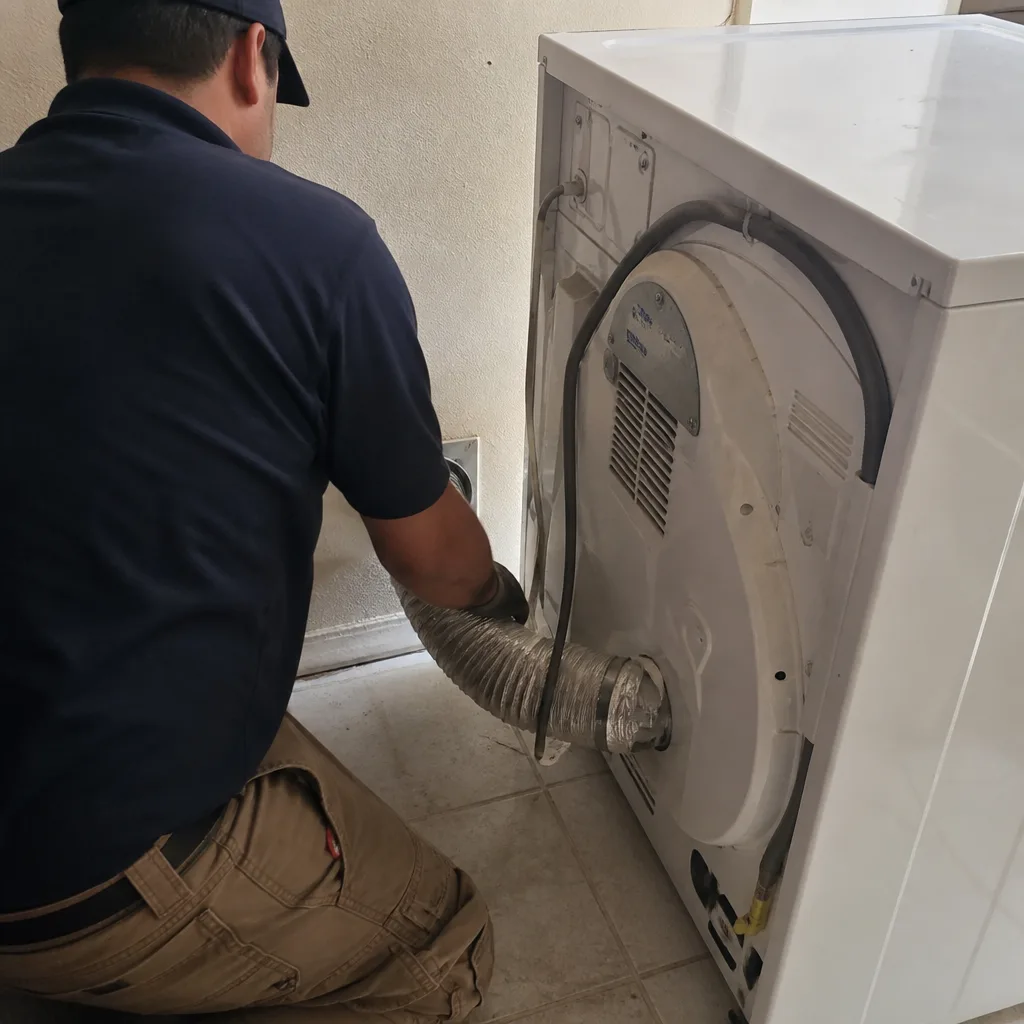
Dirty ductwork in Spring homes announces itself through seven specific, photographable conditions, not through dusty registers or a salesperson’s vague concern. A $15 borescope camera and 30 minutes of documentation can confirm or rule out most warning signs without a service call. When professional service is warranted, the deciding factor is accountability: written price before work, documented photo record after, and a guarantee that survives the crew’s departure. Anything less is vacuum noise.
Written by Tomas Reyes, Owner at CleanRun Air Duct Cleaning Spring, serving Spring since 2013.