
Whole-system duct and dryer vent check with before-and-after photos - you see exactly what came out of your vents
That "$99 whole-house special" is a bait ad - the real number appears once they are in your hallway, or the "clean" is a shop-vac at the register. We photograph the inside of your ducts before and after instead.
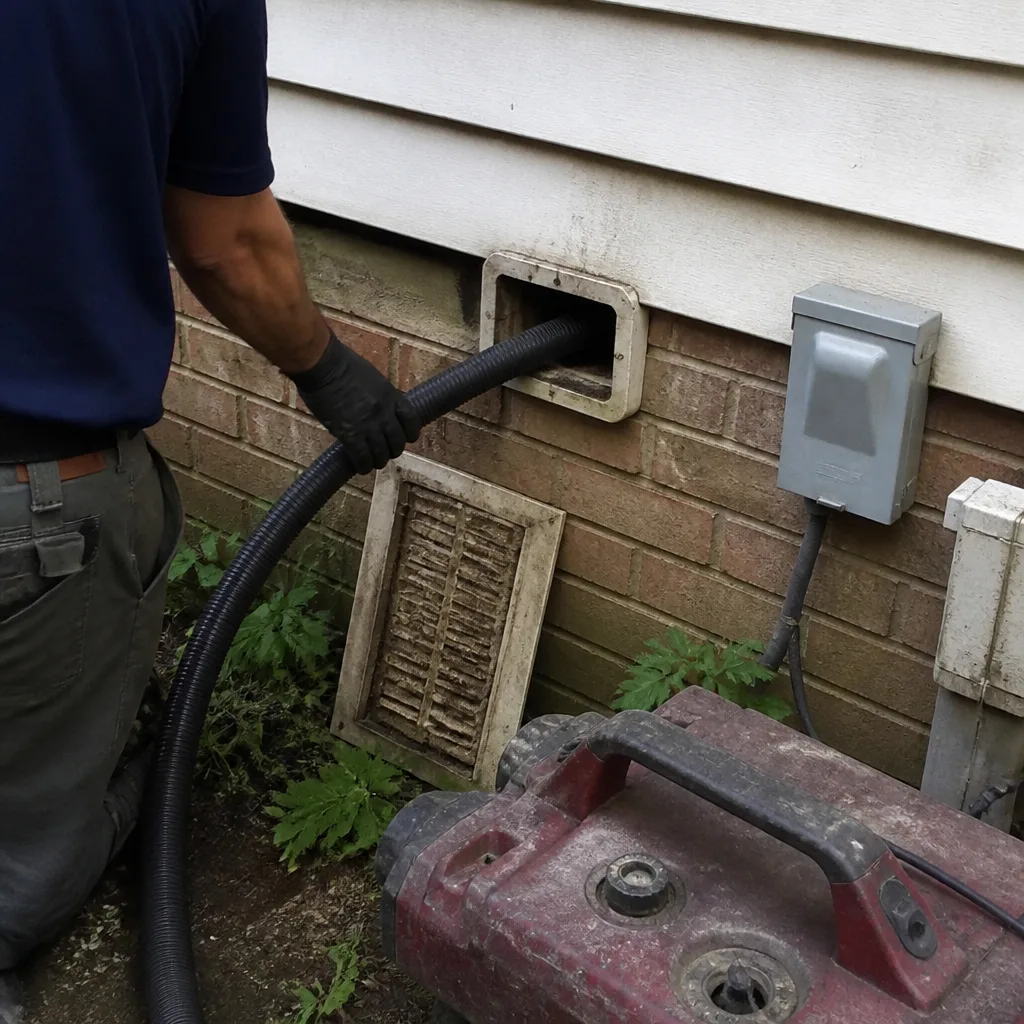 Before
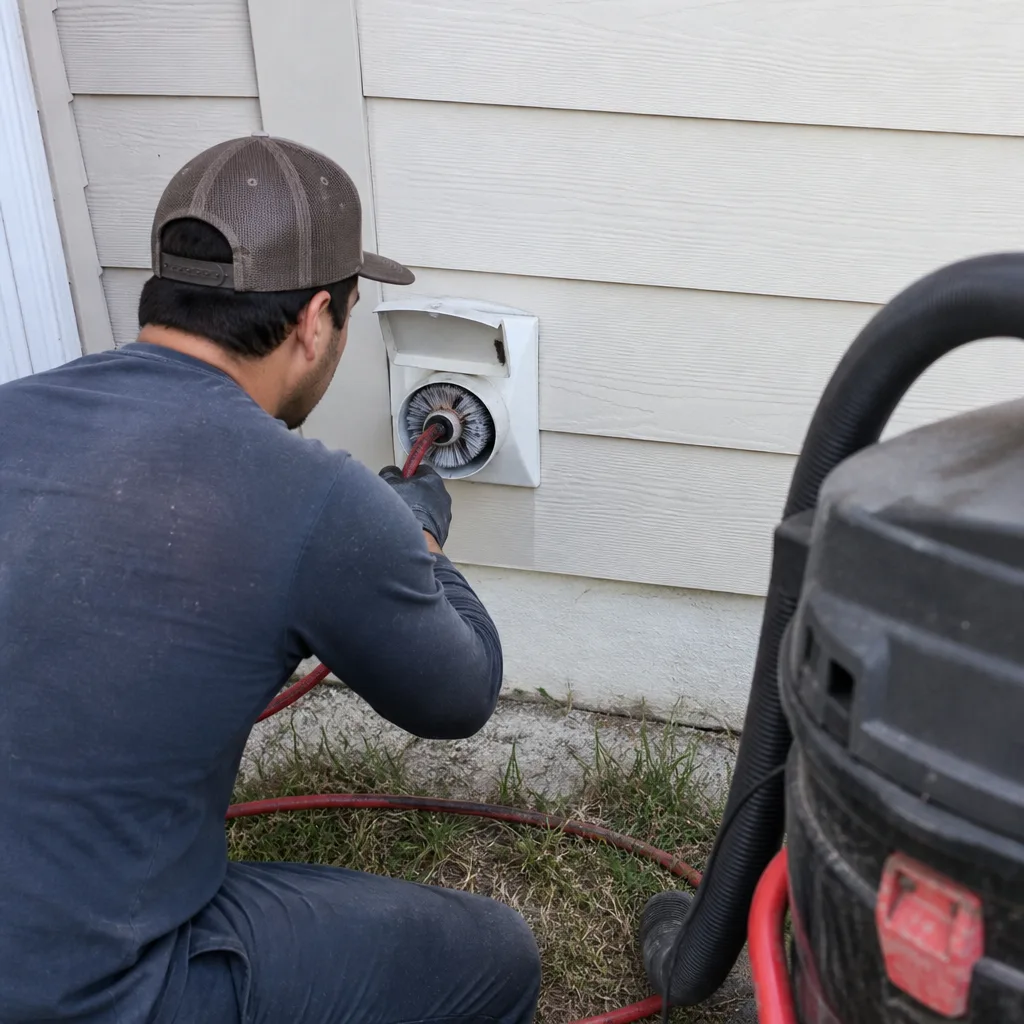 After
After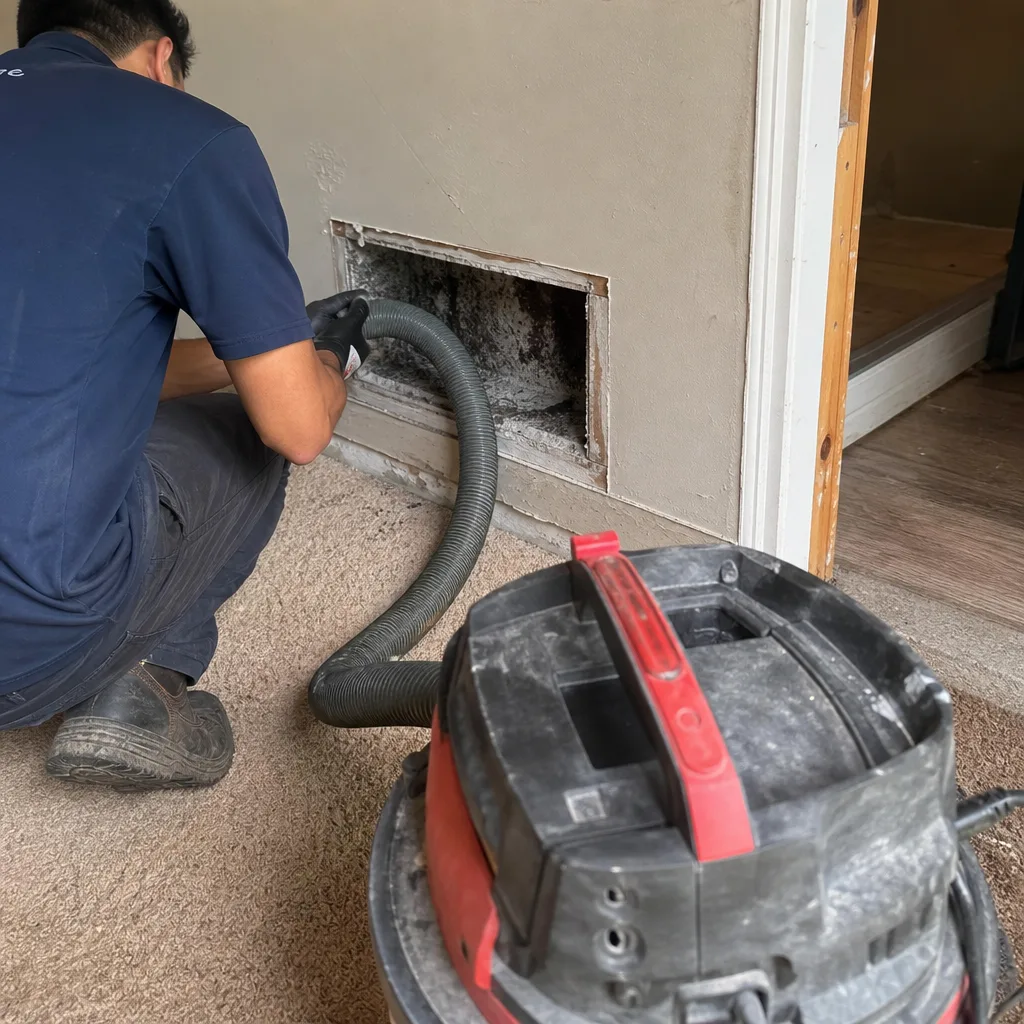 Before
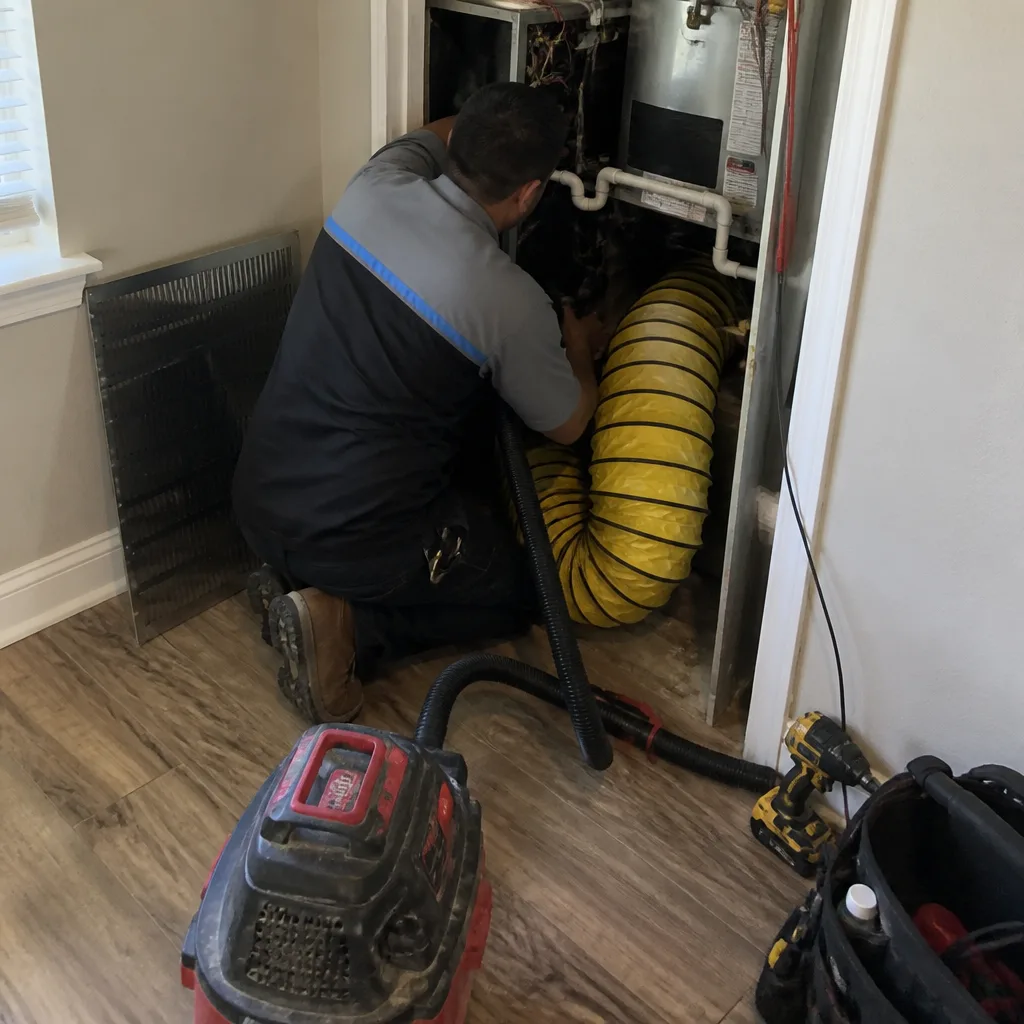 After
After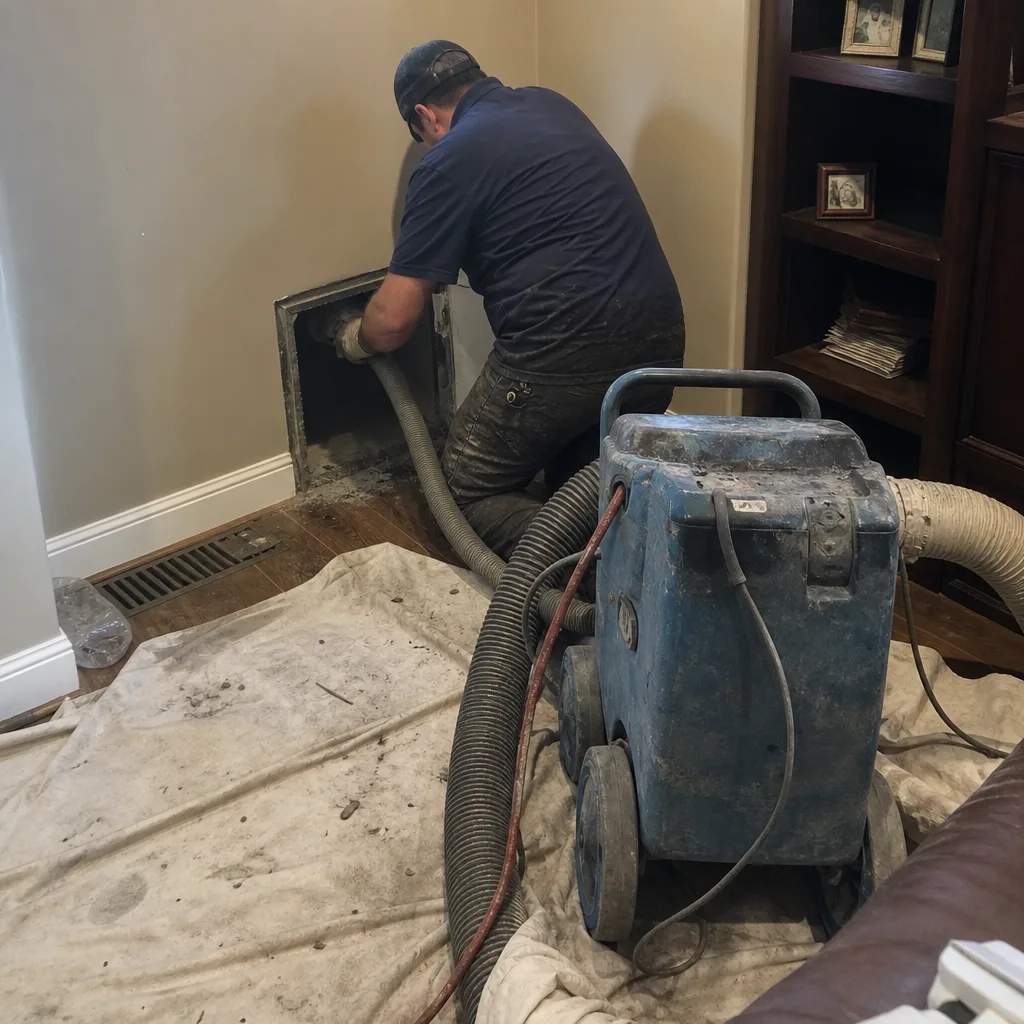 Before
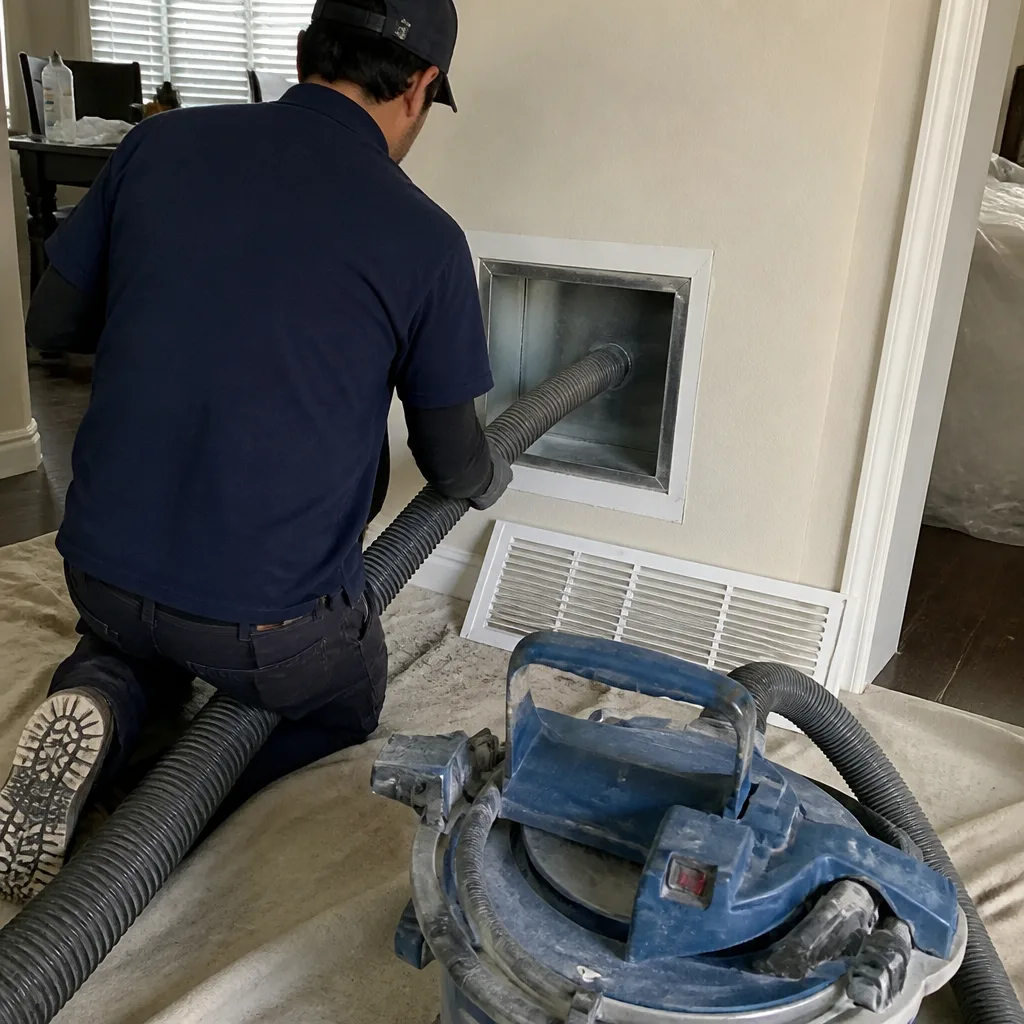 After
AfterDryer Vent Inspection in Spring, TX
A dryer vent inspection in Spring, TX typically takes 30 to 45 minutes and costs $75 to $125 as a standalone service. Our technician uses a flexible inspection camera to document the full length of the duct run – from the dryer cabinet connection to the exterior exhaust cap – before any cleaning recommendation is made. If you already have a written estimate from another company, bring it: we’ll put our own number next to it in writing at no charge.
Spring homeowners deal with a specific set of conditions that make dryer vent inspections more than a routine checkbox. The humidity that rolls in from the Gulf between April and October creates condensation inside duct runs, which turns lint from a dry, loose hazard into a damp, compacted one that Vent Cleaning with a standard shop-vac pass won’t remove. Add the fact that a large percentage of homes in Spring’s newer subdivisions – Gleannloch Farms, Harmony, Breckenridge Forest – were built between 2004 and 2018 with longer, multi-elbow duct paths to meet builder floor plans, and you have conditions where inspection matters before cleaning, not after.
CleanRun Duct Repair & Cleaning has been photographing the inside of duct runs since our first job in 2013 – over 52,000 homes served, every one with a written price before work started. Our Dryer Vent Cleaning in Spring service begins with a documented inspection because cleaning without knowing what you’re cleaning is guesswork. Call us at (346) 423-3631 – a live person answers every call – and we’ll schedule an inspection with a written price delivered before our technician touches anything.
When You Need a Dryer Vent Inspection
The following are the situations where scheduling an inspection in Spring is the right call. Some of them are obvious signs. Others are easy to dismiss until the camera shows you what’s actually inside the duct.
- Your dryer takes more than one cycle to fully dry a load. A full-size load of cotton towels should dry in 45 to 55 minutes on a standard residential dryer. If you’re running two cycles regularly, the exhaust path is likely restricted – the dryer isn’t failing; it can’t expel moisture fast enough through a partially blocked vent.
- The exterior exhaust cap doesn’t open fully or at all when the dryer is running. Hold your hand near the cap during a cycle. You should feel a steady, warm airflow strong enough to push the flap fully open. Weak or intermittent airflow at the cap is the most reliable field indicator that an obstruction exists somewhere in the duct run.
- Your laundry room feels humid or smells musty during a drying cycle. In Spring’s climate, this symptom shows up more often between May and September. It means exhaust is backing up into the room rather than exiting the home – a situation that deposits moisture into wall cavities over time.
- Your home was built before 2010 and the vent has never been professionally inspected. Many homes in Cypresswood, Gleannloch Farms, and the Spring branch of Klein ISD’s attendance zone were built with flexible foil duct – a material the National Fire Protection Association’s NFPA 211 standard does not recommend for dryer exhaust because it collapses at elbows and traps lint. An inspection will confirm whether foil duct is present and whether it needs to be replaced with rigid or semi-rigid metal.
- You’ve recently changed dryer models or relocated the appliance. A different dryer position or a new machine with a different CFM rating can change the pressure dynamics in an existing duct run. What vented adequately before may now accumulate lint faster or develop backflow at the first elbow.
- A previous cleaning was done without any photographic documentation. If a company cleaned your dryer vent and handed you no before-and-after photos, there’s no way to verify what was actually cleared. An inspection gives you a documented baseline so you know what the duct looks like right now.
Our Dryer Vent Inspection Process
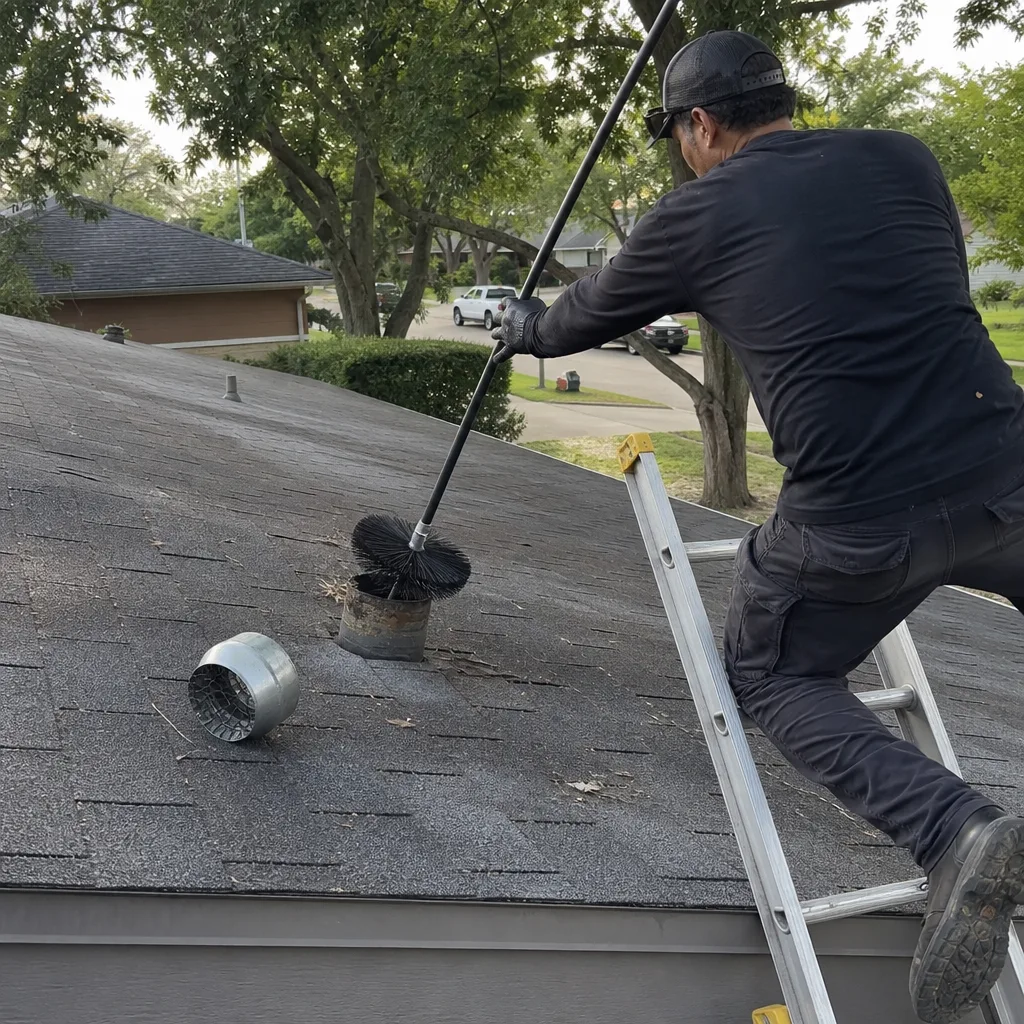
Every inspection CleanRun performs in Spring follows the same documented sequence. Nothing is skipped to save time, and the written price you receive before we start already accounts for every step below.
-
Pre-Inspection Interview and Visual Exterior Survey
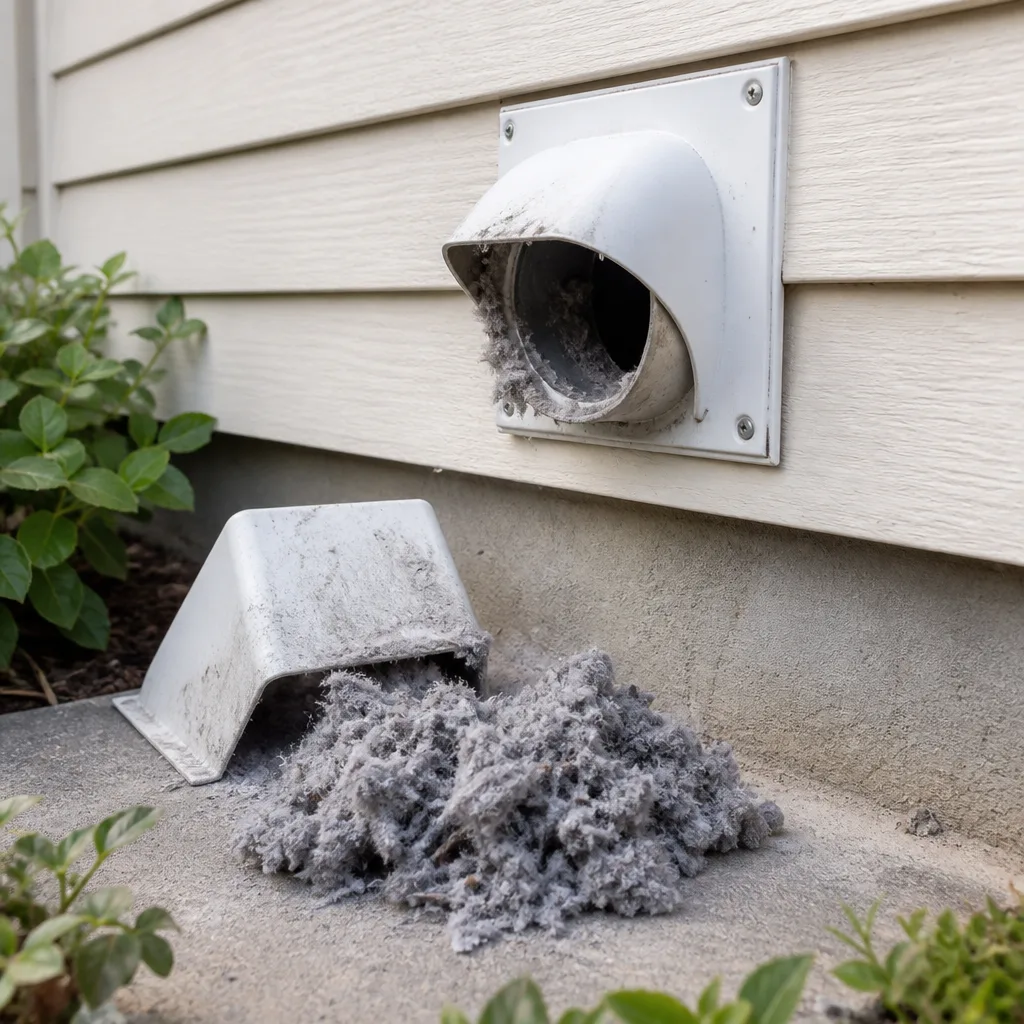
Our technician asks three questions before opening any panel: When was the vent last cleaned? Has the dryer been moved or replaced? Are there any rooms or walls the duct may pass through that we should know about? We then locate the exterior exhaust cap and photograph its condition – a clogged or bird-nested cap is one of the most common findings in Spring homes, particularly on the south- and west-facing walls where sparrows and mud daubers nest between February and July.
-
Airflow Baseline Measurement at the Exhaust Cap
We run the dryer and measure static pressure at the exterior cap. A clear, properly sized duct run should produce airflow consistent with the dryer’s rated CFM output. A significant drop from rated output tells us where in the inspection to look first – typically at the first elbow behind the machine or at a transition fitting inside the wall.
-
Camera Pass – Full Duct Run Documentation
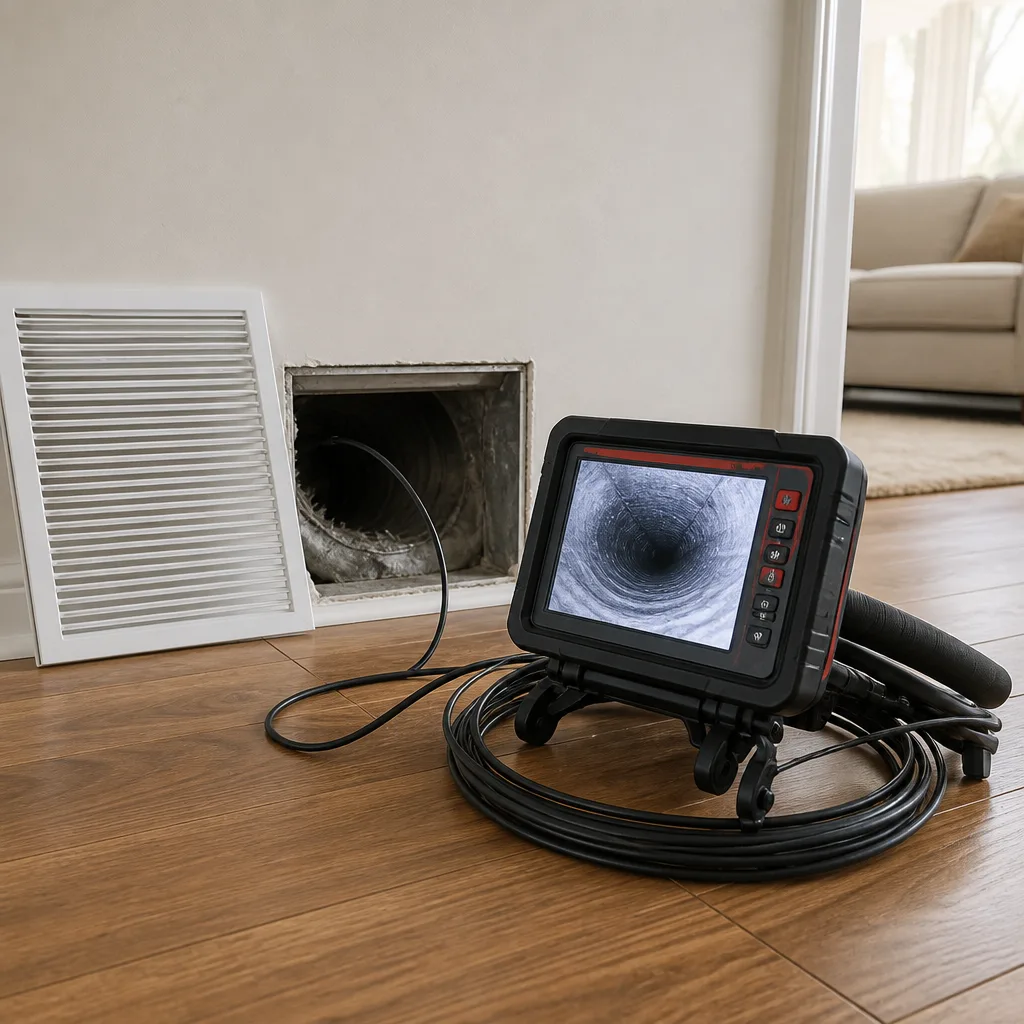
Using a flexible inspection camera, we photograph the full interior length of the duct: from the dryer collar, through every elbow and transition, to the exterior cap. Every frame is date-stamped and delivered to you as part of the standard job record. This is not a quick peek with a phone flashlight – it’s the same camera-first approach CleanRun has used on every job since 2013. The camera shows debris density, duct material condition, joint separation, and any moisture staining or animal nesting. If we find a 4-inch compacted lint mass at the second elbow, the photo shows it. You see what we see, before we say a word about what comes next.
-
Duct Material and Configuration Assessment
We confirm duct material (rigid metal, semi-rigid metal, or flexible foil/plastic), total duct length, number of elbows, and whether the run exceeds the maximum equivalent length for the dryer model – typically 25 feet of rigid duct with no more than four 90-degree elbows, per International Residential Code Section M1502. Spring homes with second-floor laundry rooms in the Gleannloch Farms and Breckenridge Forest areas frequently have runs of 18 to 24 feet before accounting for elbow deductions. We document whether your configuration is within code or whether it needs modification.
-
Written Findings Summary and Itemized Price Delivery
Before we leave the driveway, you receive a written findings summary and, if any work is needed, a written itemized price. Haven Standard Clause 1 applies to every CleanRun job: no “call for a quote,” no verbal estimates, no price surprises when the truck pulls away. If the inspection finds nothing that needs immediate attention, we document that in writing too – you get a clean bill of health in the same format as a findings report, so there’s a dated record either way.
-
Optional Same-Visit Cleaning
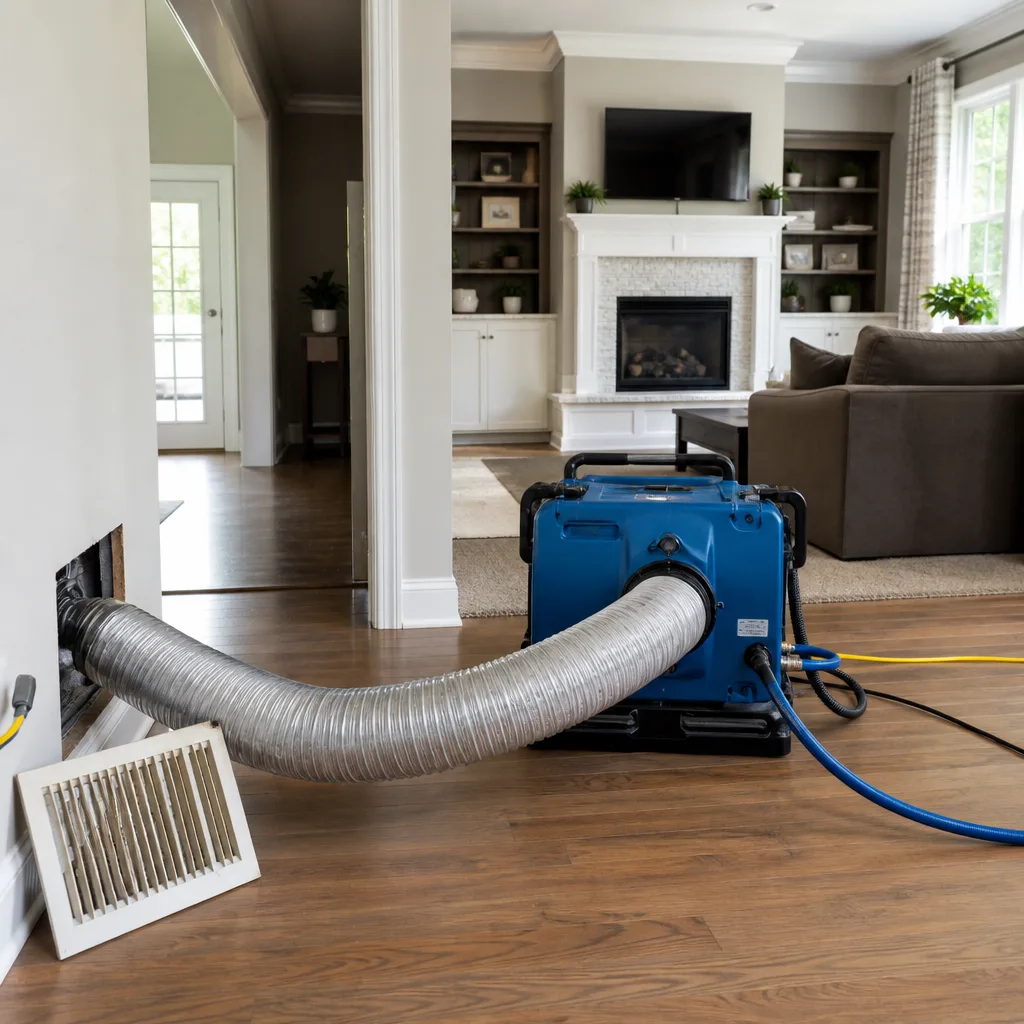
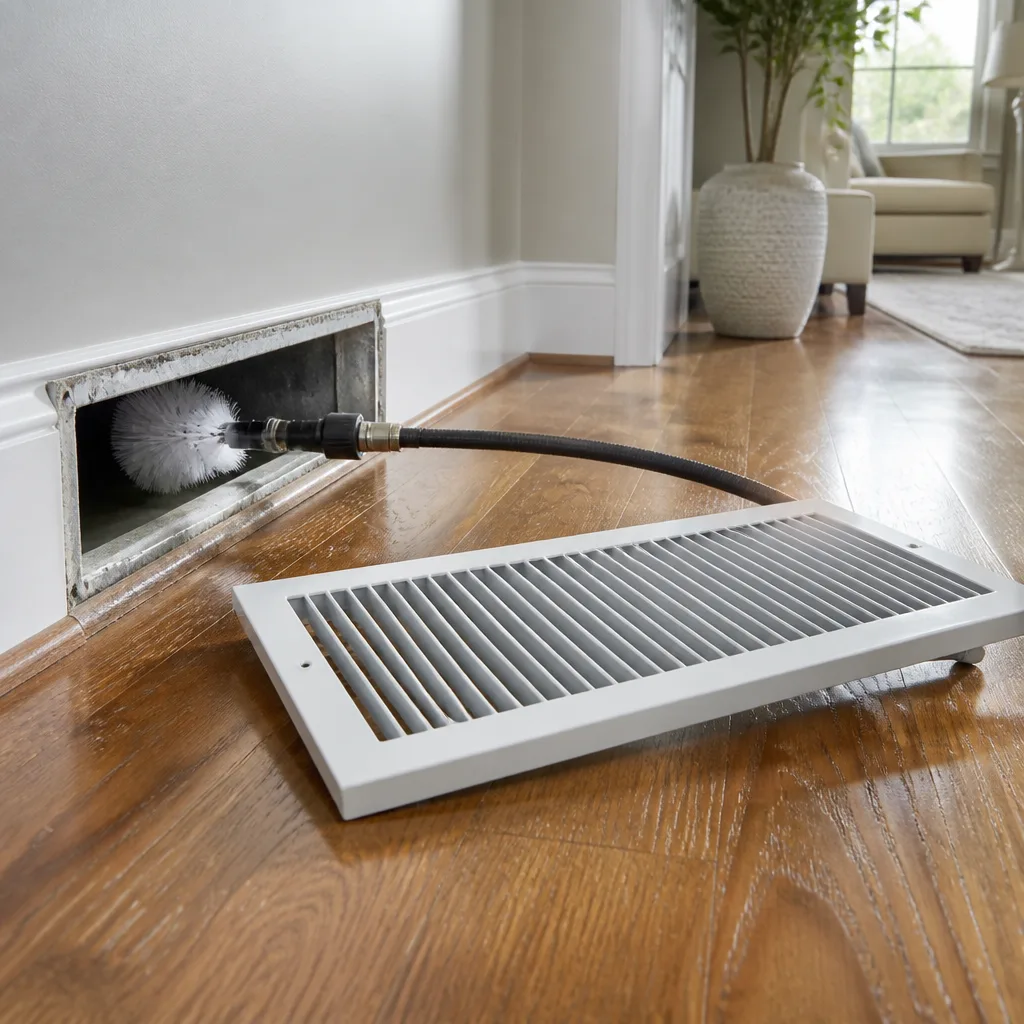
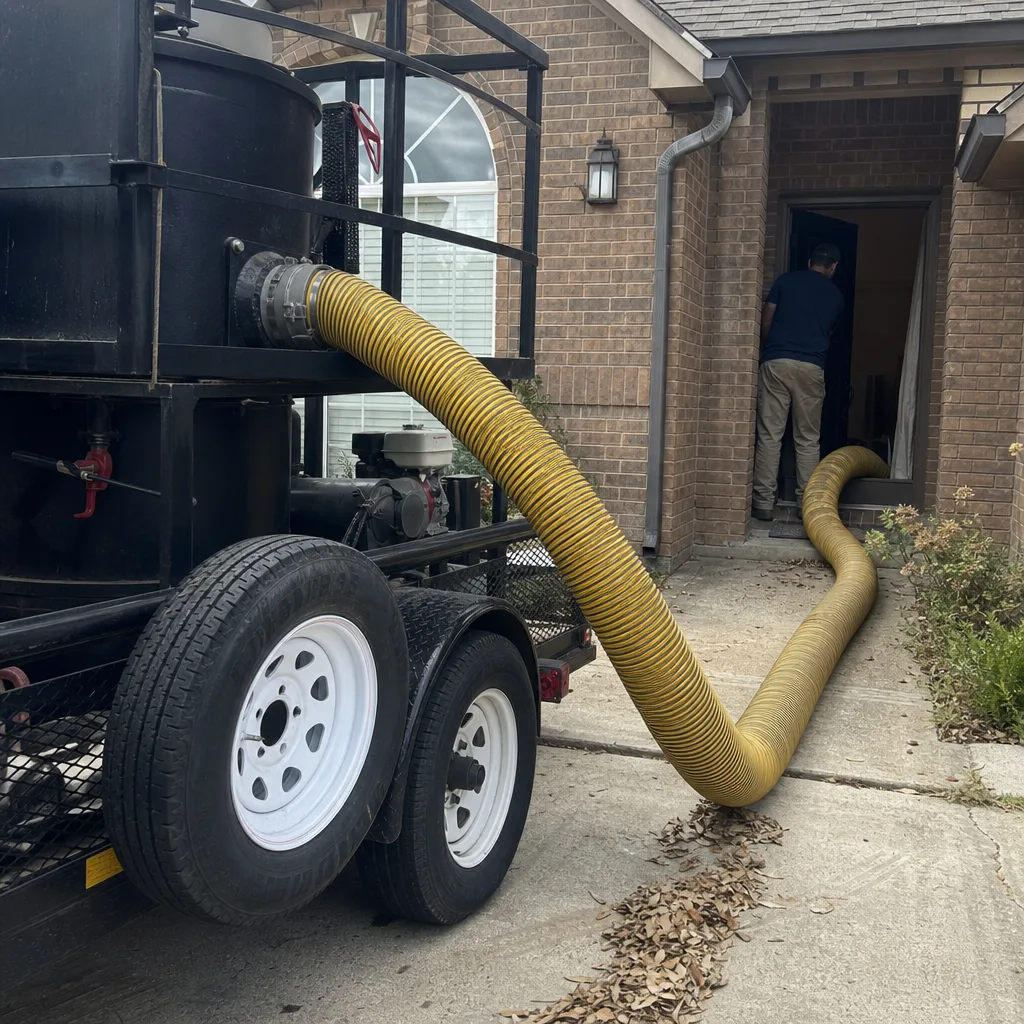
If the inspection findings warrant Dryer Vent Cleaning services and you want it done the same day, our technician uses Nikro professional-grade negative-pressure extraction equipment to clear the duct run. Negative-pressure extraction means lint is pulled through the system toward the machine rather than pushed into the room or deeper into the duct. After cleaning, a second camera pass is performed and photographed – the after image is delivered alongside the before image in your job record so you can see the documented difference.
BeforeAfterDryer Vent Inspection Pricing in Spring
A standalone dryer vent inspection in Spring costs $75 to $125. That range is a written price, not a starting-from figure. The written price you receive before any work begins covers every step of the documented process above – camera pass, airflow measurement, findings report, and photo record included.
If the inspection is bundled with a same-visit cleaning, the inspection charge is credited toward the cleaning total. Dryer vent cleaning in Spring typically runs $149 to $249 depending on duct length, number of elbows, and access conditions – see the full pricing breakdown on our Dryer Vent Cleaning in Spring page.
| Service | Typical Price Range (Spring, TX) | What Affects the Price |
|---|---|---|
| Dryer Vent Inspection (standalone) | $75 – $125 | Duct length, accessibility, number of elbows |
| Inspection + Cleaning (same visit) | $149 – $249 | Debris load, duct material, foil duct replacement if needed |
| Inspection + Duct Section Replacement | $229 – $349 | Length of section replaced, rigid vs. semi-rigid metal |
| Exterior Cap Replacement (add-on) | $45 – $85 | Cap type, mounting surface |
Variables that move the price within those ranges: total duct length (a second-floor laundry room in Spring adds 8 to 14 feet of run compared to a first-floor setup), the number of elbows in the path, whether the existing duct is foil flex that needs to be replaced with rigid metal, and whether the exterior cap needs replacement. All of that gets identified in the inspection and reflected in the written price before any cleaning or repair work begins.
CleanRun offers a free second opinion on any written estimate you’ve received from another company. We put our number next to theirs, in writing, at no cost. Call (346) 423-3631 and we’ll arrange it.
FAQs – Dryer Vent Inspection in Spring, TX
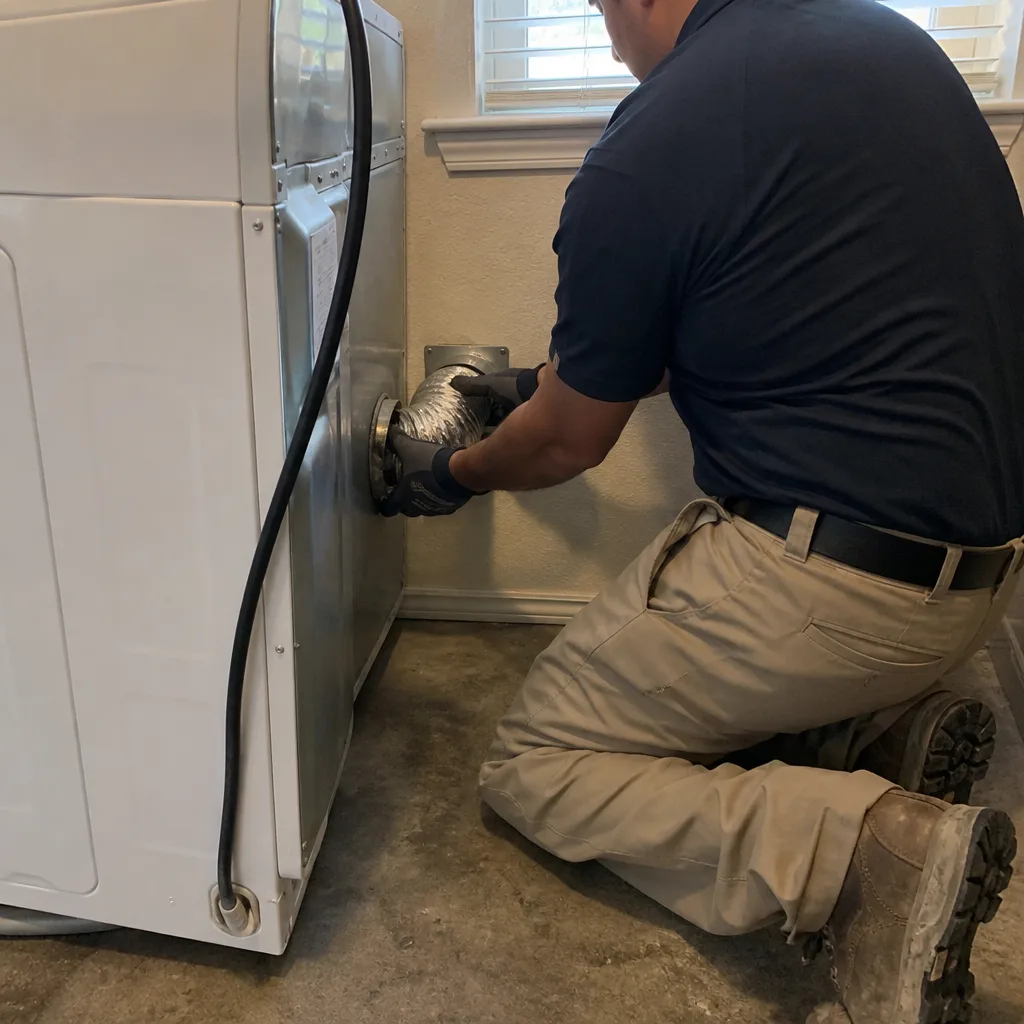
How often should I have my dryer vent inspected in Spring?
Inspect your dryer vent once per year if you run four or more loads per week, or every 18 months if usage is lighter. Spring’s climate adds a humidity variable that accelerates lint compaction compared to drier climates – if your duct run uses flexible foil duct rather than rigid metal, annual inspection is the right interval regardless of usage, because foil duct compresses at elbows and creates lint traps that aren’t visible from either end without a camera. Call (346) 423-3631 to schedule; we’ll give you the inspection interval in writing based on what the camera shows.
Is a dryer vent inspection the same as cleaning?
No – an inspection and a cleaning are separate steps, and doing them in the right order matters. An inspection uses a camera to document what’s inside the duct before any equipment is run. Cleaning then removes whatever the camera found, and a second camera pass confirms the duct is clear. A company that cleans without inspecting first has no documented baseline and no way to prove the duct is actually clear after the job. CleanRun separates these steps and photographs both – you receive the before image and the after image as part of every job record.
What does a dryer vent inspection actually show?
The inspection camera shows lint density and location along the duct run, duct material condition (cracks, joint separations, collapsed sections), moisture staining or rust that indicates condensation problems, animal nesting at the exterior cap or first elbow, and whether the duct material meets current residential code recommendations. In Spring, we regularly find bird nests packed into the exterior cap between March and June, and compacted damp lint at the first elbow directly behind the machine – both are findings that appear on camera before any cleaning equipment is introduced. The written findings summary you receive describes each finding with its location and the corresponding photo.
Can I inspect my own dryer vent without a camera?
You can do a basic field check – run the dryer, hold your hand at the exterior cap, and confirm the flap opens fully with steady warm airflow. That check takes two minutes and is a reasonable indicator of whether the duct is severely blocked. What a field check can’t show is partial obstruction at an interior elbow, a collapsed foil section inside the wall, joint separation that’s leaking exhaust into a wall cavity, or early-stage lint accumulation that hasn’t yet restricted airflow but will within one season. Safety note: dryer vents are a leading cause of residential fires in the U.S. per NFPA data, and the conditions that cause fires – compacted lint near a heat source, restricted exhaust, damaged duct material – are not visible from either end of the duct without a camera. A field check is a reasonable starting point; it is not a substitute for a documented camera inspection. Call (346) 423-3631 if the field check shows any concern – we’ll come out with a written price before the camera goes in.
Why Spring Homeowners Choose CleanRun for Dryer Vent Inspection
The dryer vent cleaning industry in Spring has a specific problem: $79 coupon offers that arrive without a camera, without documentation, and without a record of what was actually done. A technician with a shop-vac and a leaf blower can create a lot of noise and deliver nothing provable. CleanRun was built specifically as the answer to that model.
Every inspection we perform produces a dated photo record of the duct interior – before any cleaning, and after if cleaning is performed. That record is yours. It shows what was found at each point in the duct run, what material the duct is made of, and whether any section needs repair or replacement. It’s a document, not a promise.
Our technicians operate under the H.A.V.E.N. Standard. Haven Standard Clause 3 – Verified Crews – means every technician is background-checked, uniformed, and identified by name before arrival. Clause 1 means your written price is delivered before any panel comes off. The 365-Day Done Right Promise is written on every job ticket: if the work is not right, we make it right. That’s not subject to manager approval – it’s documented on the job record the technician leaves with you.
We’ve served over 52,000 homes since 2013, including a substantial number in Spring’s Gleannloch Farms, Harmony, Breckenridge Forest, Cypresswood, and Sterling Ridge areas. The duct configurations in these neighborhoods are ones we know well – the longer runs in two-story homes, the foil flex duct in pre-2010 builds, the condensation patterns that show up on cameras every summer. That experience is reflected in a faster inspection and a more accurate findings report.
If any of this sounds like what a dryer vent inspection should look like, call (346) 423-3631. Our full range of home air quality services starts with the same documented approach – written price first, photo record last, 365-day accountability in between.
Key Takeaways
- Dryer vent inspection in Spring costs $75 to $125 as a standalone service, with a written price delivered before any work begins.
- The inspection uses a flexible camera to document the full duct run – exterior cap to dryer collar – with date-stamped photos included in every job record.
- Spring’s humidity accelerates lint compaction; annual inspection is the right interval for homes with four or more dryer loads per week.
- Many Spring homes built before 2010 contain flexible foil duct that doesn’t meet current NFPA 211 recommendations – the inspection confirms what material is in the wall.
- The 365-Day Done Right Promise and Haven Standard Clause 1 (written upfront pricing) apply to every job, including a standalone inspection.
- A free second opinion on any written competitor estimate is available at no cost – call (346) 423-3631 to arrange it.
Ready to schedule a dryer vent inspection in Spring? Call CleanRun at (346) 423-3631 – a live person answers every call – and we’ll book your appointment with a written price confirmed before our technician arrives. No surprises, no verbal estimates, no shop-vac theater. Just a camera, a report, and a documented record of what’s actually in your vent.
Written by Tomas Reyes, Owner at CleanRun Air Duct Cleaning Spring, serving Spring.