
Whole-system duct and dryer vent check with before-and-after photos - you see exactly what came out of your vents
That "$99 whole-house special" is a bait ad - the real number appears once they are in your hallway, or the "clean" is a shop-vac at the register. We photograph the inside of your ducts before and after instead.
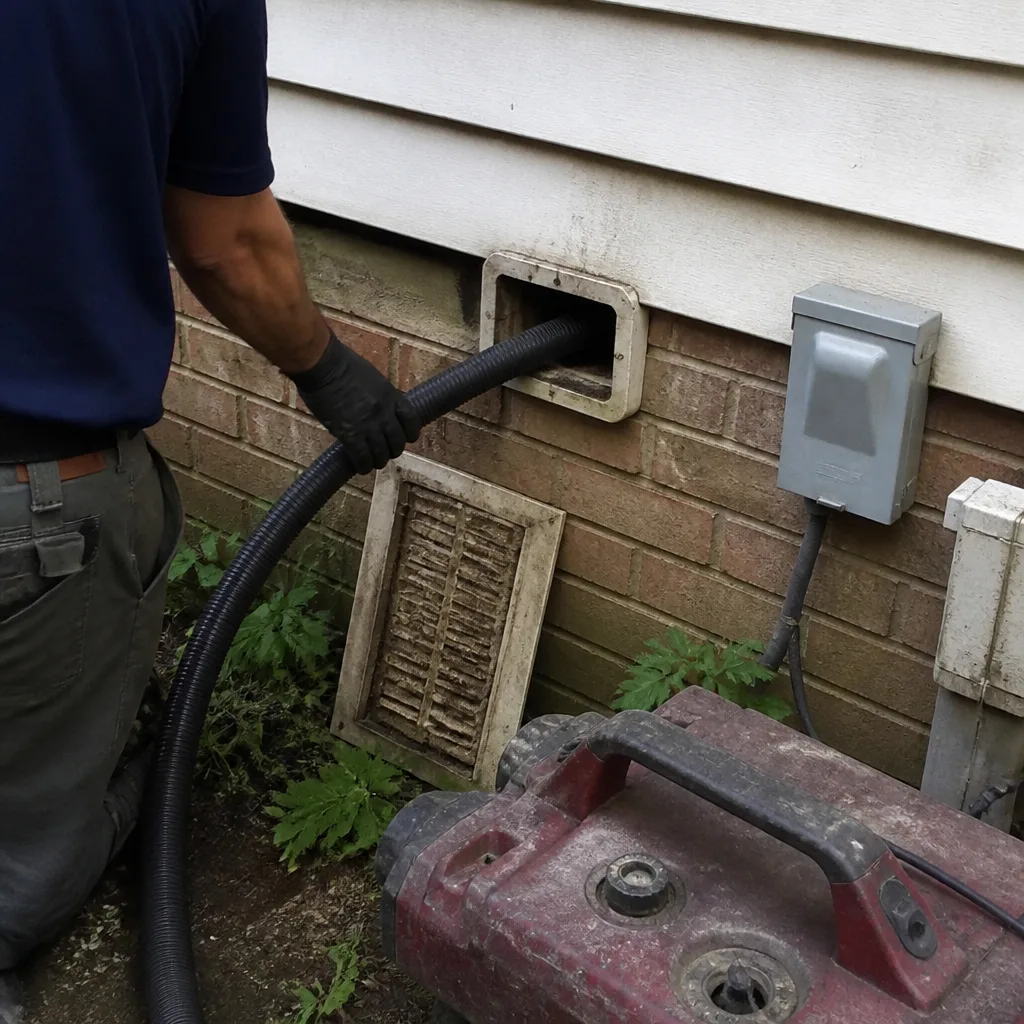 Before
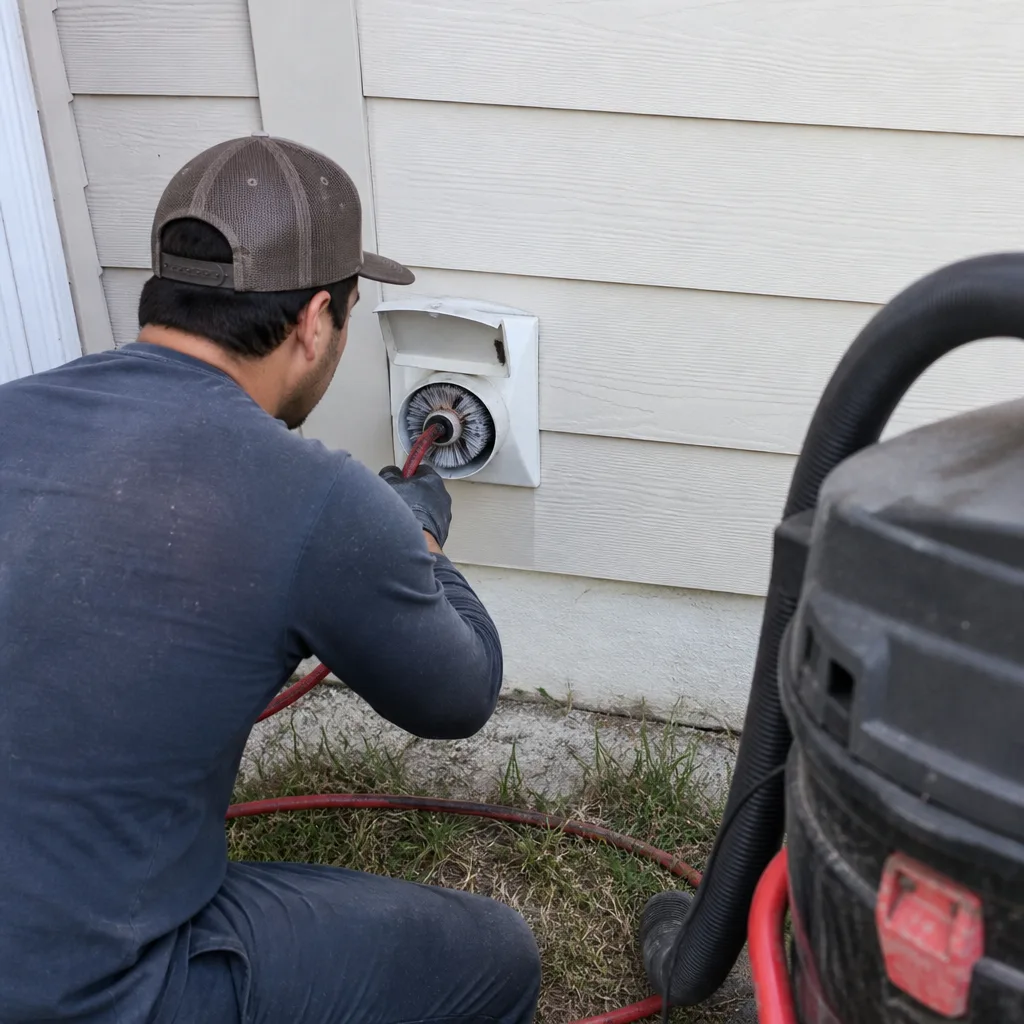 After
After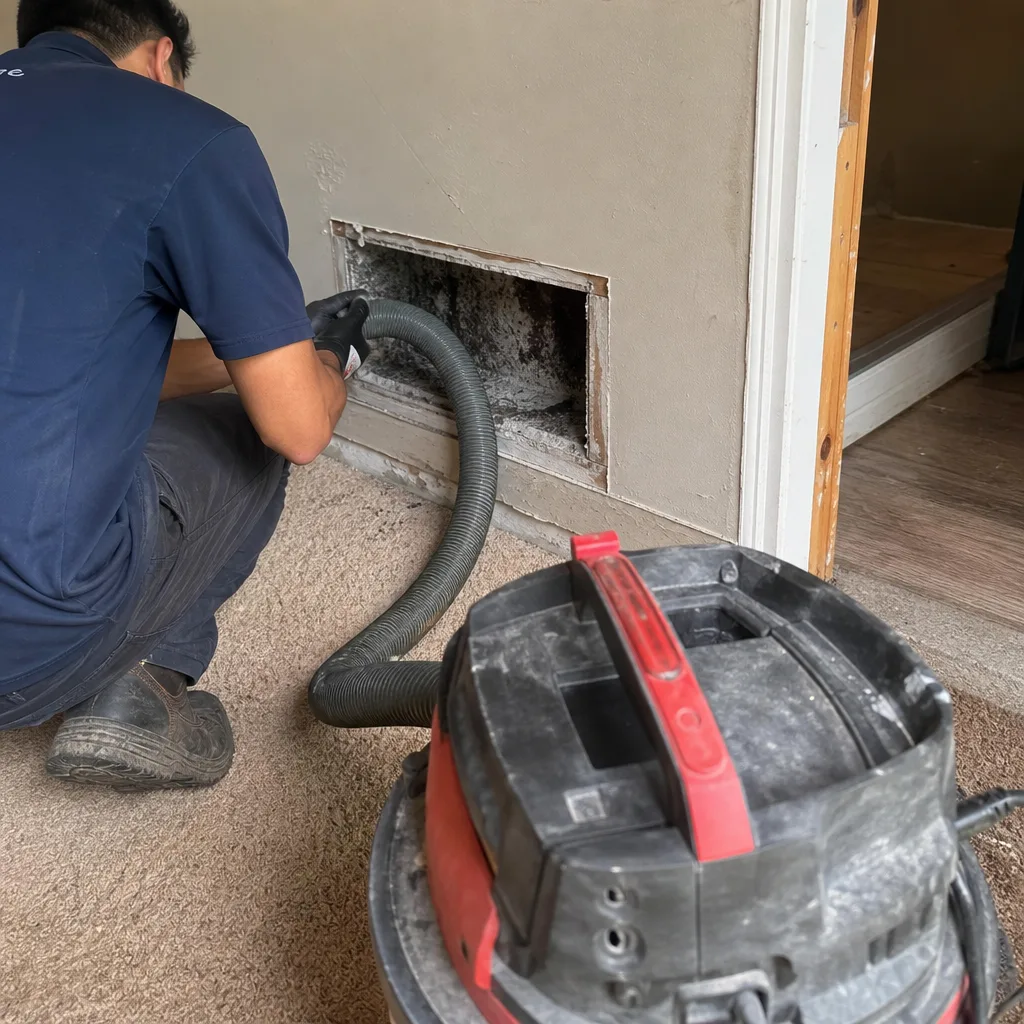 Before
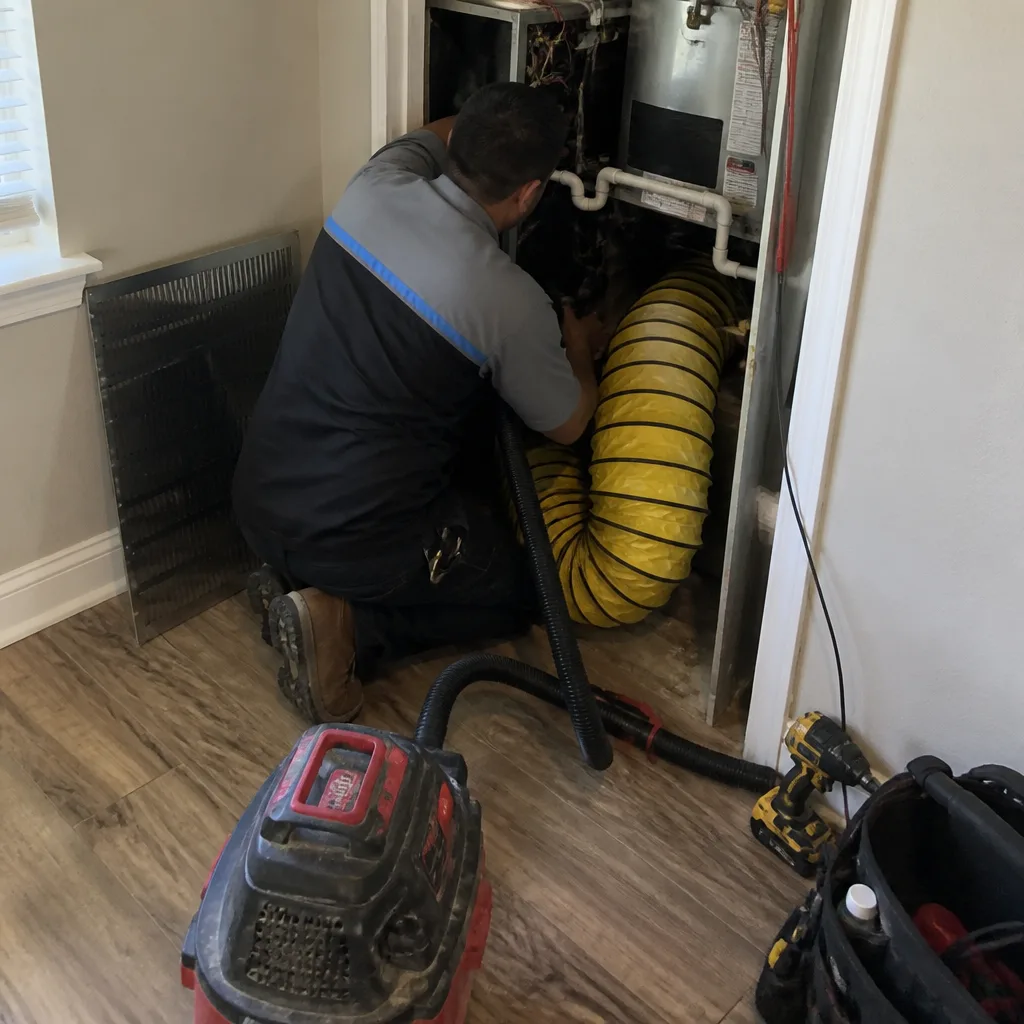 After
After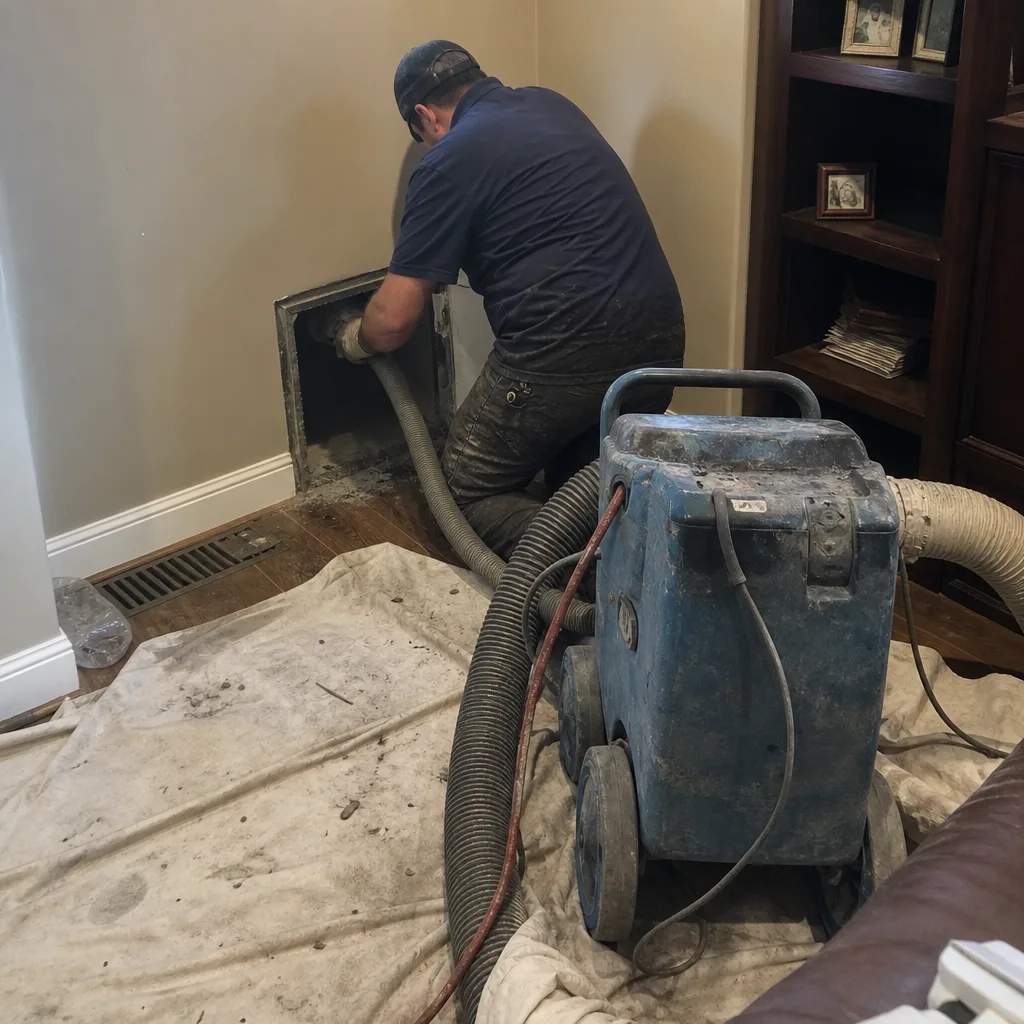 Before
 After
AfterVent Cleaning in Spring, TX
Dryer vent cleaning in Spring, TX typically runs $89-$229 depending on vent length, number of elbows, and whether the termination point is at ground level or through the roof. Most jobs are completed the same day, and every one starts with a written price before any work begins – that’s not a promotional offer, it’s Haven Standard Clause 1. If you’d rather talk through your situation first, call (346) 423-3631 and a live person will pick up.
Vent cleaning is the targeted process of clearing lint, debris, and airflow restrictions from a dryer’s exhaust vent system – from the back of the dryer to the exterior termination cap. It’s a sub-service of our broader Dryer Vent Cleaning in Spring work, focused specifically on the duct run itself: the transition hose, the rigid or semi-rigid duct behind the wall or ceiling, and the exterior hood where lint builds up and birds occasionally nest. When that run is blocked, your dryer can’t exhaust heat properly. The motor runs longer, utility costs climb, and in the worst cases, accumulated lint reaches ignition temperature.
CleanRun Air Duct Cleaning Spring has photographed the inside of dryer vent runs in Spring homes since 2013. In that time, we’ve seen what gets missed when a technician shows up with a shop vac and a flashlight – and documented exactly what professional extraction looks like by comparison. Tomas Reyes built this company on the principle that every customer should be able to see what we found, what we did, and what the duct looks like when we leave. That’s not marketing language. It’s a photo record, delivered to you at the end of every job.
When You Need Vent Cleaning
Spring’s humid subtropical climate means lint inside vent ducts retains moisture more readily than in drier regions. That moisture causes lint to clump and adhere to duct walls rather than pass through cleanly, which accelerates restriction buildup – especially in homes where the vent run includes multiple 90-degree elbows or exceeds 25 feet of total duct length. These are some of the clearest signs that the vent run needs attention:
- Clothes take two or more cycles to dry fully. A single normal load should dry in roughly 45 minutes. If you’re running the dryer twice for the same load, the exhaust duct is the first place to look – restricted airflow forces the dryer to work longer to remove the same amount of moisture.
- The dryer cabinet or laundry room feels noticeably hot during operation. Heat that can’t exit through the vent run backs up into the appliance and the surrounding space. In Spring’s summer months, when ambient temperatures already sit in the 90s, a hot laundry room during a drying cycle is a reliable indicator of exhaust restriction.
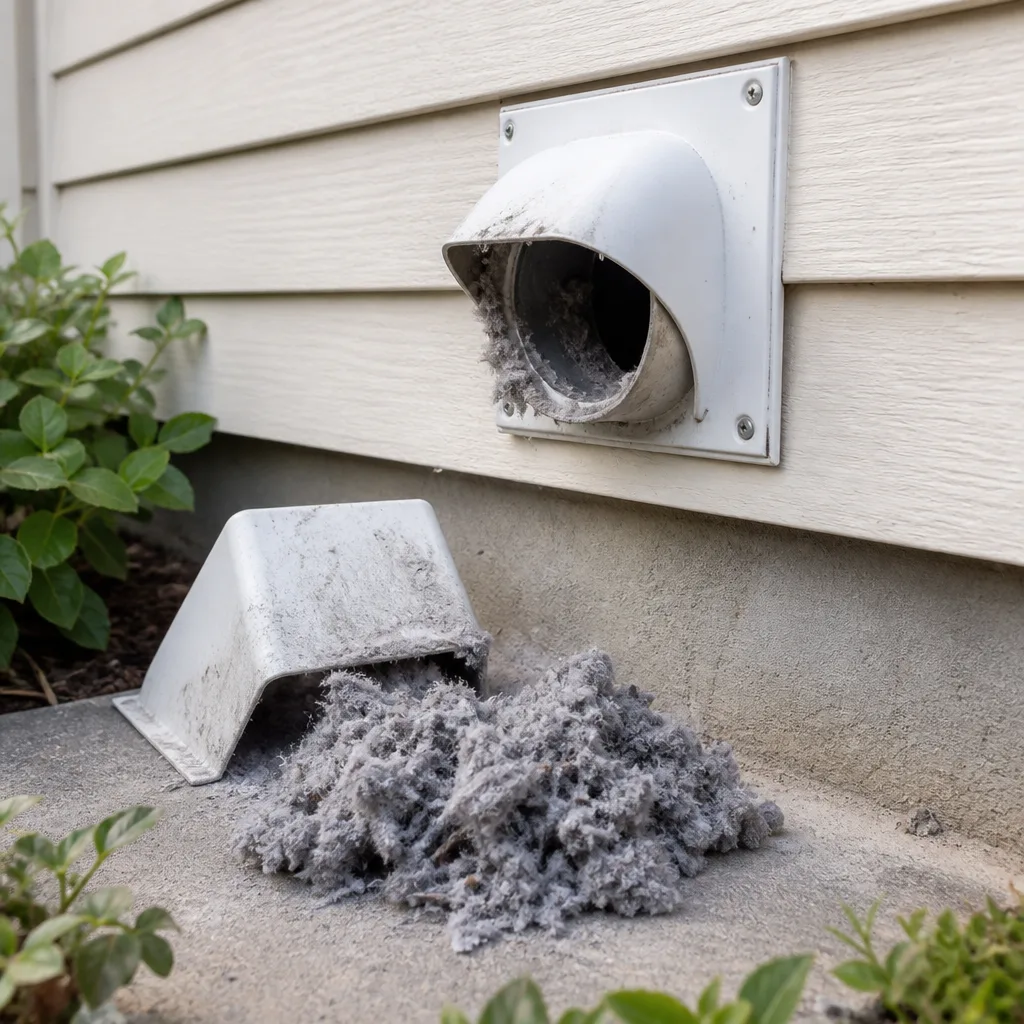
- You can see lint accumulation around the exterior termination cap. The hood on the outside wall or roofline is the end of the vent run. Lint visible around or inside the flap means the duct is shedding debris at the exit point – which usually means it’s already moving through a partially blocked run.
- The last professional cleaning was more than 12 months ago – or you have no record of one. The National Fire Protection Association recommends annual dryer vent inspection and cleaning. Many Spring homes we visit have never had the vent photographed, only vacuumed at the register.
- You’ve recently moved into a home built between 2000 and 2015 in Gleannloch Farms, Harmony, or Klein. These subdivisions commonly feature vent runs with two or three elbows routed through interior walls to reach an exterior exit point – configurations that trap lint at every bend and require rotary-brush extraction to clear properly.
- There’s a burning or musty smell during a drying cycle. A burning smell points toward lint approaching a heat source. A musty smell suggests moisture retention inside the duct – both warrant an immediate inspection, not a wait-and-see approach.
Our Vent Cleaning Process
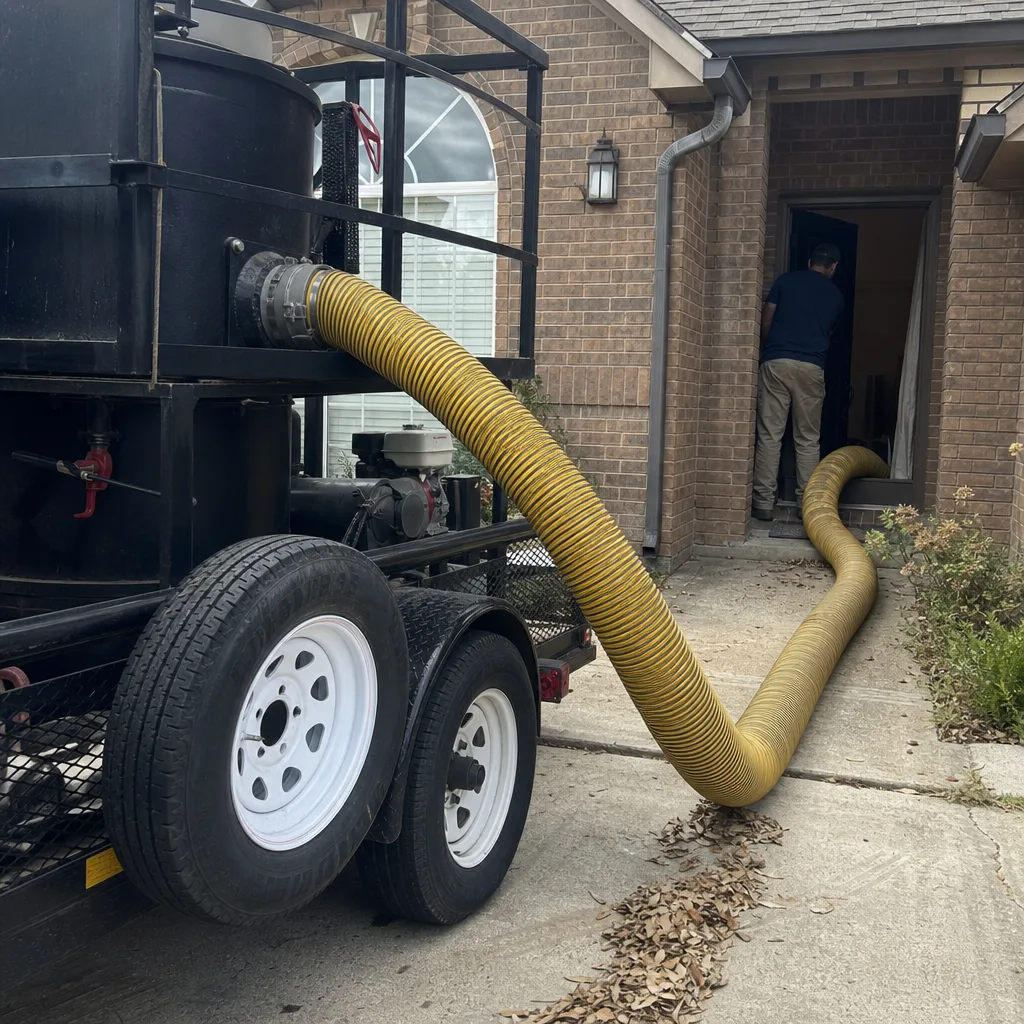
We follow a fixed sequence on every job. The steps don’t change based on the size of the house or the price of the service tier. What changes is how long each step takes, depending on what we find.
- Written scope and price before any panel comes off. A CleanRun technician walks the vent run – from the dryer connection point to the exterior termination – and identifies duct length, material (foil flex, semi-rigid aluminum, or rigid galvanized), number of elbows, and termination type. You receive a written price before work begins. No verbal estimates, no ranges that shift after the job starts. Haven Standard Clause 1, every time.
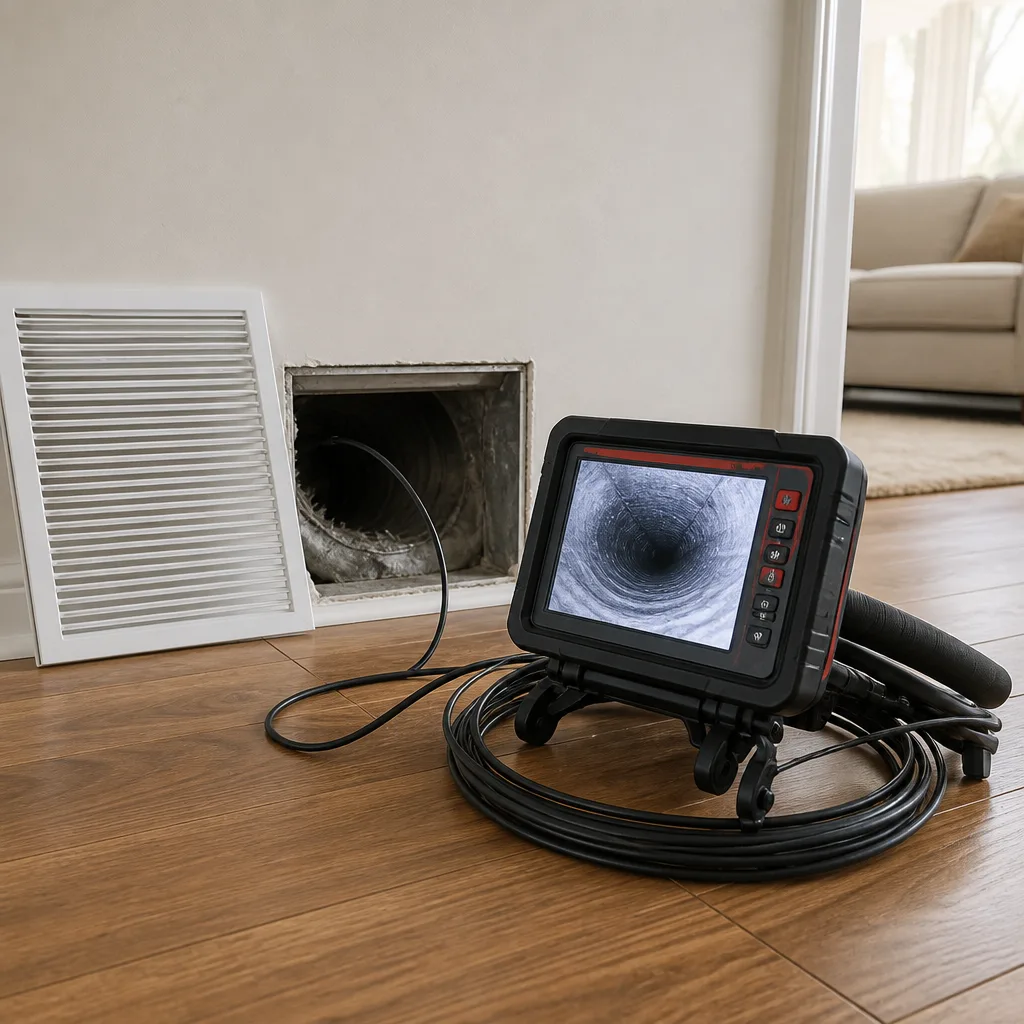
- Pre-work interior photography. The camera goes into the duct run before any cleaning equipment does. We photograph the transition hose condition, any visible obstruction at the first elbow, and the interior wall of the duct at mid-run if access allows. These images are timestamped and become part of the job record you receive at completion.
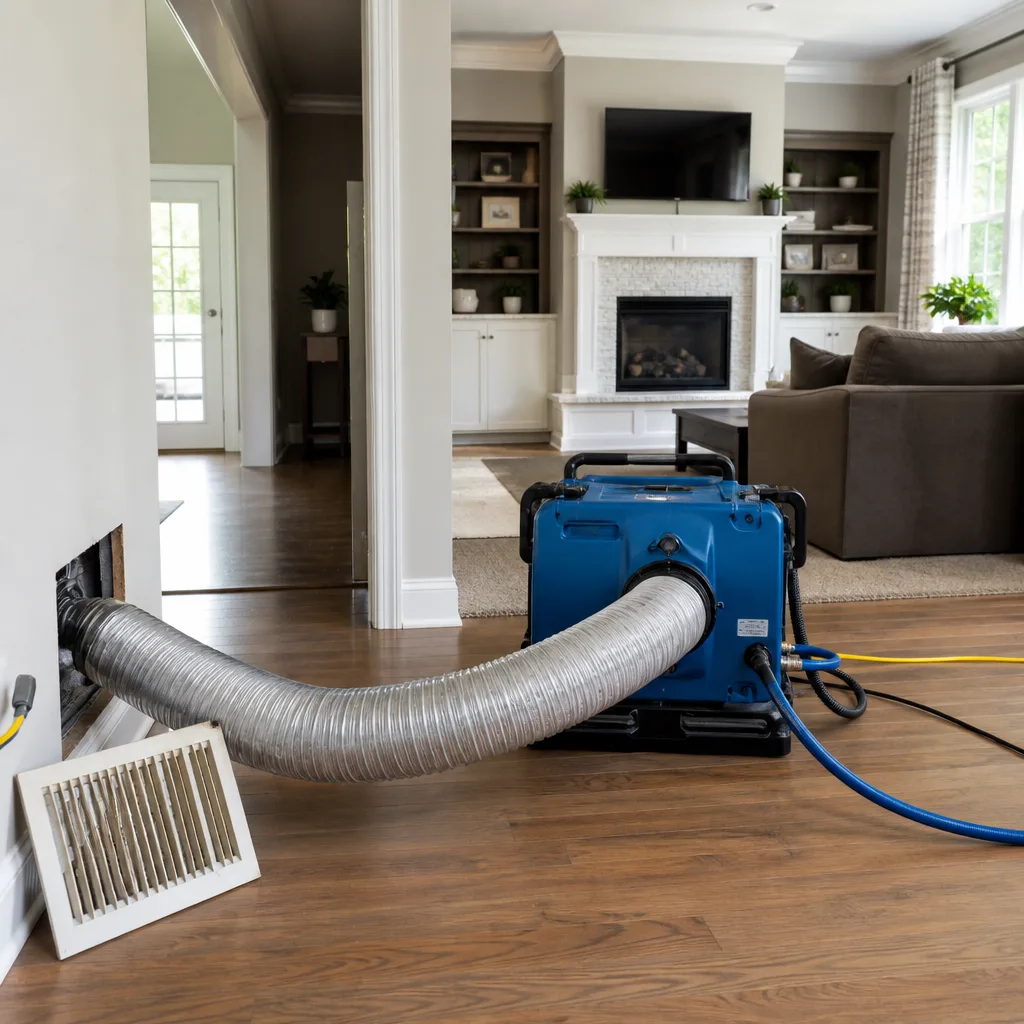
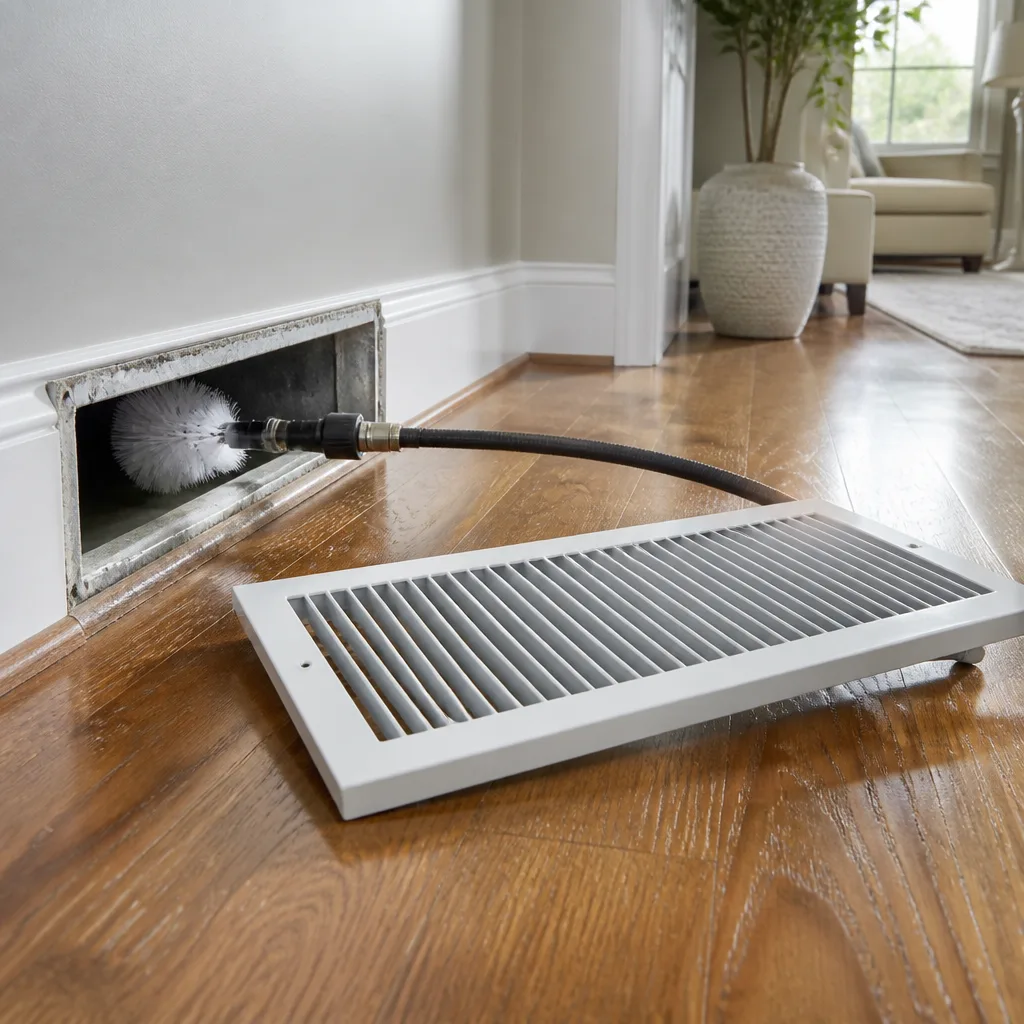
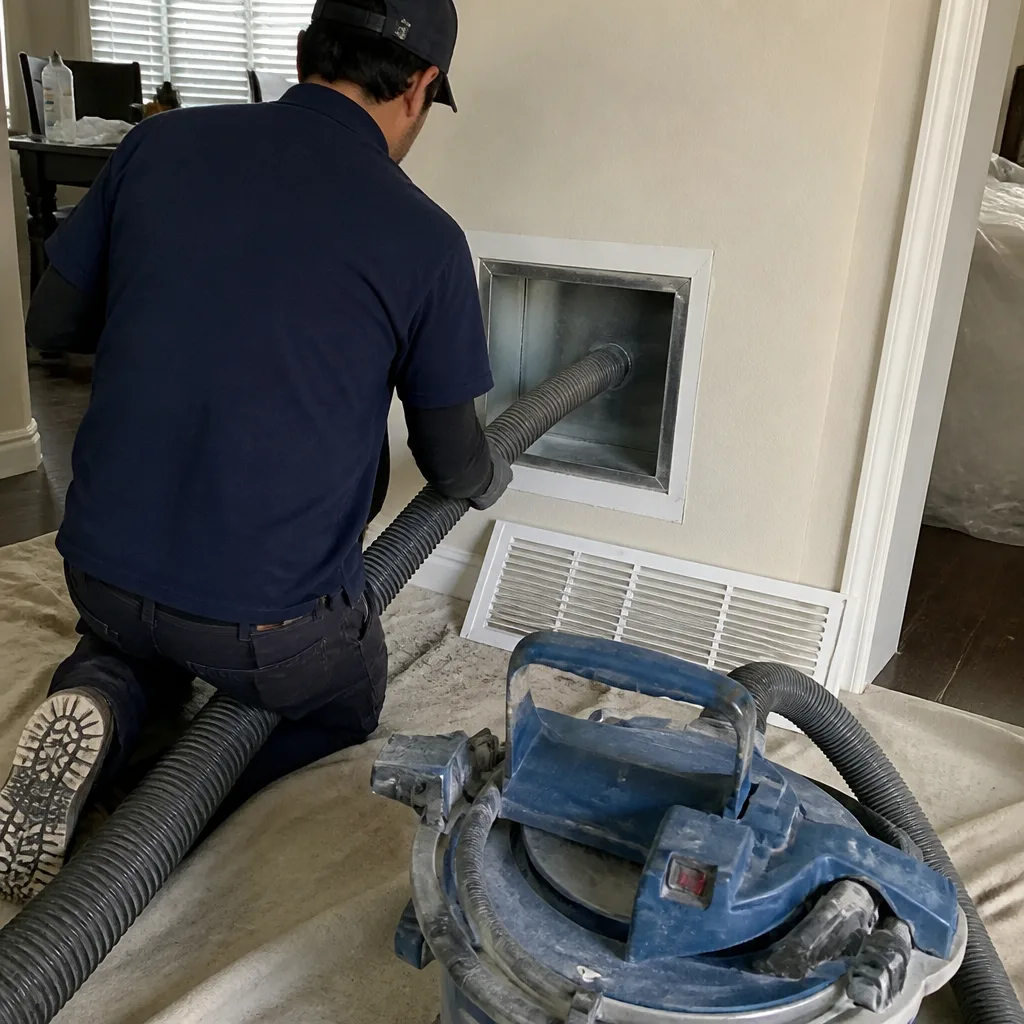
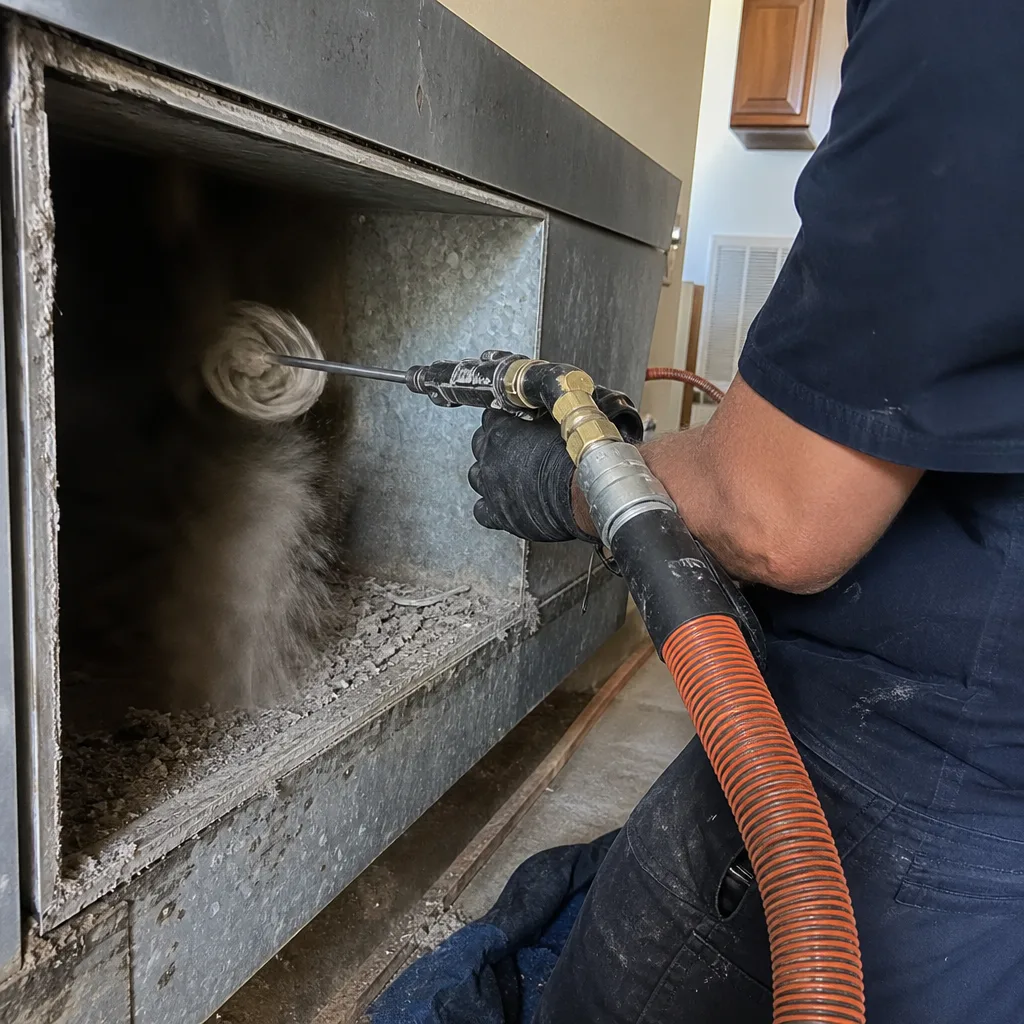
- Rotary brush extraction through the full duct run. We use Nikro equipment to drive a rotating brush through the duct while simultaneous negative-pressure extraction – essentially a powerful vacuum pulling air from the exterior termination inward – captures dislodged lint and debris before it can settle back into the duct or enter the room. This is not a shop-vac-and-dryer-sheet service. The rotary brush breaks adhesion between lint and duct wall; the negative pressure removes it.
- Exterior termination cap cleaning and inspection. The exterior hood is cleared of lint, debris, and any obstruction – including bird nest material, which we find several times each spring season in Spring homes, particularly in Copperfield-adjacent neighborhoods and along Louetta Road where older housing stock has wider-gauge termination hoods. The damper flap is tested to confirm it opens freely and closes completely.
- Airflow verification. After extraction is complete, we measure airflow at the termination point and compare it against the dryer manufacturer’s minimum exhaust velocity specification. A clean vent run on a properly functioning dryer produces measurable, consistent airflow at the exit hood. If the number is low after cleaning, it usually indicates a crushed flex section or a duct configuration problem – both of which we document and quote separately rather than dismiss.
- Post-work photography and job record delivery. The camera goes back into the duct run. Every run photographed before cleaning is photographed again after. The before-and-after image set, the written scope, and the written 365-Day Done Right Promise are delivered to you as part of the standard job record before the technician leaves. You don’t have to ask for documentation. It’s built into the job.
BeforeAfterVent Cleaning Pricing in Spring, TX
Dryer vent cleaning in Spring is priced based on what the job actually requires – not on a coupon rate that expands after the technician arrives. The written price is delivered before any work begins. Here are the factors that move the number and the ranges you can expect in this market.
| Job Type | Typical Price Range |
|---|---|
| Standard vent run, ground-level termination, up to 25 ft | $89 – $139 |
| Extended run (25-50 ft) or 3+ elbows | $139 – $179 |
| Roof termination or second-story access required | $169 – $229 |
| Bird nest or foreign obstruction removal | $35 – $65 added to base |
| Transition hose replacement (flex to semi-rigid) | $45 – $85 added to base |
| Exterior cap replacement | $40 – $75 added to base |
A few factors specific to Spring that affect where your job lands in these ranges: homes in the Gleannloch Farms and Harmony master-planned communities often have longer vent runs due to interior laundry room placement; townhomes along Spring Cypress Road frequently route dryer vents through tight utility chases with additional elbows; and homes built before 2005 in the Klein area occasionally still have vinyl flex duct, which is no longer code-compliant and which we document and quote for replacement separately. Harris County does not currently require a permit for standard dryer vent cleaning, but replacement of duct material to meet current IRC M1502 specifications may involve a notation on the job record.
If you’ve received a written estimate from another company, bring it. CleanRun offers a free second opinion on any written estimate – we put our own number next to it in writing, and you decide. Call (346) 423-3631 to schedule or ask a question. Estimates are always free.
FAQs – Vent Cleaning in Spring, TX
How often should a dryer vent be cleaned in Spring, TX?
Once per year is the standard recommendation for most households, and Spring’s climate makes that interval worth taking seriously. High ambient humidity means lint inside the duct run holds moisture and mats against duct walls more aggressively than in drier climates. Households that run the dryer more than once daily – common in Spring homes with multiple children or active outdoor schedules – may benefit from cleaning every six months. If your last cleaning was more than 14 months ago, or you have no documentation that one was ever done, schedule one before the summer heat season. Call (346) 423-3631 and we’ll get you on the schedule with a written price before anything else happens.
What’s the difference between dryer vent cleaning and duct cleaning?
Dryer vent cleaning addresses the exhaust duct that runs from the back of your dryer to the exterior of the house – it moves hot, moist air and lint out of the appliance. Air duct cleaning addresses the supply and return ductwork of your HVAC system – the network of ducts that circulates conditioned air through every room. These are completely separate systems with different equipment requirements, different debris types, and different service intervals. CleanRun handles both, but they are quoted and performed separately. If you’re unsure which one you need, describe what you’re seeing and we’ll tell you which system it points to before quoting anything. Our full service overview is on the home page.
Can a clogged dryer vent cause a fire?
Yes, and the mechanism is direct: lint is highly combustible, and a blocked vent run causes heat to build up inside the dryer and the duct. When lint accumulation at an elbow or inside the duct wall reaches the ignition point of surrounding material, a fire can start inside the wall cavity. The U.S. Fire Administration attributes roughly 2,900 residential dryer fires per year to failure to clean the vent. This is not a scare tactic – it’s the reason annual inspection and cleaning is a code recommendation, not just a manufacturer suggestion. If you smell burning during a drying cycle, stop using the dryer and call (346) 423-3631 the same day. We photograph the duct interior before touching anything so you can see exactly what’s present and where.
Do I need to be home during the cleaning?
Yes, for a dryer vent cleaning – because we need access to both the dryer connection point and the exterior termination, and because we deliver the written job record and photo documentation to you directly before leaving. All CleanRun technicians are background-checked and arrive in uniform, identified by name before the appointment under Haven Standard Clause 3. If scheduling is complicated, call (346) 423-3631 and we’ll work out a window that fits. Someone answers every call around the clock.
Why Spring Homeowners Choose CleanRun for Vent Cleaning
There’s no shortage of vent cleaning offers in Spring. The $79 coupon companies run ads constantly, and the pitch is familiar: quick visit, shop vac, done. What you don’t see in that transaction is a before photo, a written scope, or any documentation of what the duct looked like when they left – because none of those things exist in that model.
CleanRun has served more than 52,000 homes since 2013, every one of them with a written price before work started and a photo record delivered at completion. That’s not a recent policy update. Tomas Reyes built the company that way on the first job, and it hasn’t changed. The 365-Day Done Right Promise means that if something we cleaned needs attention again within a year because it wasn’t done right, we make it right – in writing, not subject to a manager’s discretion.
We use Nikro equipment and Abatement Technologies negative-pressure systems on dryer vent jobs – tools a homeowner can look up independently to understand what they’re getting. We name the equipment because we want you to be able to verify it, not because it’s a marketing point. The same logic applies to the photo record, the written warranty, and the published price ranges on this page. Evidence does the persuading here. The truck shows up, the camera goes in, and you see exactly what was there before we touched anything.
For dryer vent cleaning that covers the full duct run – not just the accessible portion near the dryer – see our complete Dryer Vent Cleaning in Spring service page, which covers the parent service in full.
To schedule Dryer Vent Cleaning services in Spring or get a written price before committing to anything, call (346) 423-3631. A live person answers. You’ll have a written price before any work begins – that’s how every CleanRun job starts, without exception.
Written by Tomas Reyes, Owner at CleanRun Air Duct Cleaning Spring, serving Spring since 2013.